Address
304 North Cardinal St.
Dorchester Center, MA 02124
Work Hours
Monday to Friday: 7AM - 7PM
Weekend: 10AM - 5PM

Address
304 North Cardinal St.
Dorchester Center, MA 02124
Work Hours
Monday to Friday: 7AM - 7PM
Weekend: 10AM - 5PM
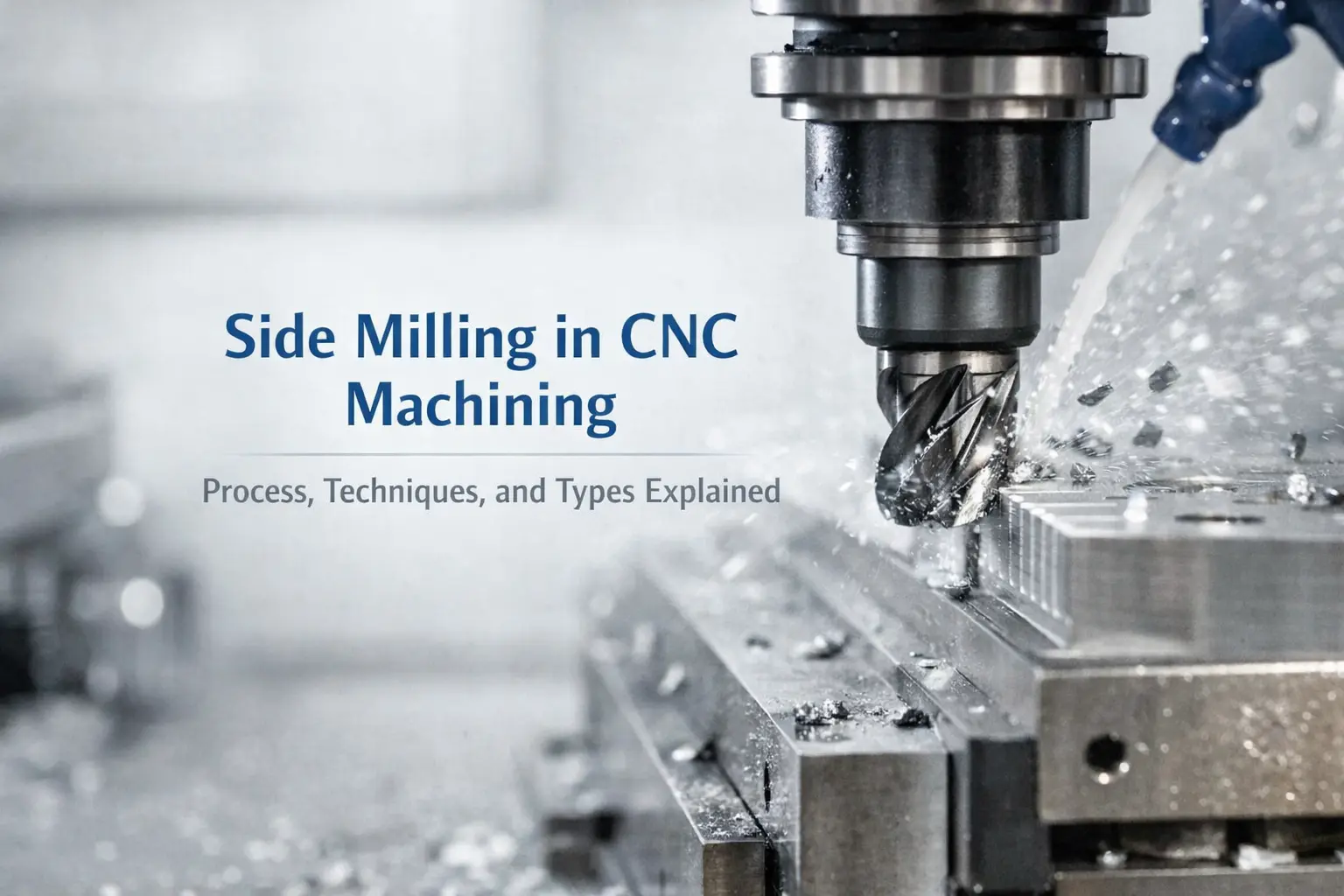
Side milling is a fundamental machining process in the realm of CNC (Computer Numerical Control) manufacturing, widely used across industries for its precision, efficiency, and versatility. At its core, side milling involves the use of a cutter with teeth on its periphery as well as along the sides to remove material from a workpiece. Unlike face milling, where the cutting action occurs primarily at the face of the cutter, side milling engages the sides of the cutter with the workpiece to produce precise vertical surfaces, slots, or contours. This makes side milling particularly suitable for applications requiring detailed profiling, step features, and parallel surface machining. The process can handle a wide range of materials including steel, aluminum, brass, and even hardened alloys, provided the correct cutter and parameters are chosen.
From a manufacturing perspective, side milling enables engineers and machinists to achieve high accuracy in terms of dimension, surface finish, and geometric consistency. Its ability to produce both roughing and finishing passes makes it a versatile choice for many production stages. Moreover, CNC side milling allows automated, repeatable machining operations that reduce the likelihood of human error, improve overall productivity, and maintain tight tolerances. This makes side milling an indispensable technique in industries such as aerospace, automotive, electronics, and industrial machinery, where precision and repeatability are critical.
The relevance of side milling in modern manufacturing stems from its unique combination of precision, flexibility, and efficiency. Unlike other machining methods, side milling provides the capability to handle complex geometries and deep features that are difficult to achieve with simple end milling. For instance, in automotive part production, side milling is essential for shaping engine components, gear housings, and transmission parts with exacting tolerances. In aerospace manufacturing, it allows for the creation of structural components that require highly accurate vertical walls and intricate contours, supporting both lightweight and strength requirements.
Additionally, side milling contributes to cost-effective manufacturing. By enabling material removal from multiple directions, it reduces the need for secondary operations and minimizes handling, which saves both time and labor costs. The ability to use multi-axis CNC machines for side milling further enhances efficiency, as multiple faces or complex features can be machined in a single setup. The process also improves tool life and reduces wear through optimized cutting strategies, such as climb or conventional milling, which directly affects the longevity of production tools and reduces operational costs.
When comparing side milling to other milling methods, several advantages stand out. Firstly, side milling excels at producing precise vertical and parallel surfaces, which is difficult to achieve with face milling or drilling alone. Secondly, it allows for the machining of slots, grooves, and contours in a single pass, increasing efficiency and reducing cycle time. Thirdly, side milling enables high material removal rates without compromising surface quality, making it ideal for both roughing and finishing operations. Finally, CNC side milling provides unmatched repeatability, ensuring that identical components meet strict specifications across large production runs. These advantages make side milling not only a practical choice for manufacturers but also a strategic one in terms of maintaining competitiveness, quality, and operational efficiency in today’s fast-paced production environments.
The side milling process begins with careful planning and setup, including the selection of the appropriate CNC machine, cutter, and workholding method. The process starts by securing the workpiece on a stable fixture to prevent movement during cutting. Proper alignment ensures that the cutter engages the material at the correct orientation. Once the machine is programmed with the desired tool path, cutting parameters such as spindle speed, feed rate, and depth of cut are defined according to material properties and design requirements.
During operation, the side milling cutter rotates along its axis while moving across the side of the workpiece. The teeth along the sides of the cutter engage the material, gradually removing excess stock to achieve the desired shape. In many applications, the process involves multiple passes: roughing passes to remove the bulk of material quickly, followed by finishing passes to achieve precise dimensions and high surface quality. The depth of cut and feed rate are carefully controlled to minimize tool deflection, avoid chatter, and maintain dimensional accuracy. The ability to adjust parameters dynamically is a key benefit of CNC-controlled side milling, allowing operators to optimize the process for efficiency and precision.
In side milling, the cutter plays a pivotal role. Side milling cutters are typically cylindrical with teeth along both the periphery and the sides, allowing them to cut vertical surfaces while maintaining stability. The cutter’s material and coating—such as high-speed steel, carbide, or titanium nitride coating—directly influence cutting performance, tool life, and surface finish. Selecting the right cutter geometry, including tooth pitch and helix angle, is essential for achieving optimal results with minimal tool wear.
Equally important is the machine setup. CNC machines used for side milling must be rigid and capable of precise movement in multiple axes to ensure accuracy. Proper fixturing of the workpiece prevents vibration and movement, which could otherwise compromise surface finish and dimensional tolerances. Additionally, ensuring that the tool holder and spindle are correctly aligned with the workpiece is crucial to maintaining cutting efficiency and avoiding excessive tool wear or breakage. A well-planned setup significantly enhances the reliability and quality of the side milling process, particularly in high-volume production or when machining difficult materials.
Cutting parameters are critical factors in side milling. Spindle speed, feed rate, and depth of cut must be carefully balanced to optimize productivity, surface finish, and tool life. Spindle speed determines the rotational velocity of the cutter, influencing chip formation and heat generation. Feed rate controls the movement of the cutter relative to the workpiece, affecting surface smoothness and the likelihood of chatter. Depth of cut dictates how much material is removed per pass, impacting overall cycle time and cutting force.
For different materials, these parameters must be adjusted carefully. For example, machining aluminum allows higher spindle speeds and deeper cuts due to its lower hardness, while steel or titanium alloys require slower speeds and shallower passes to prevent tool damage and excessive heat. Modern CNC machines often include adaptive control features that automatically adjust parameters in real time based on cutting conditions, further enhancing efficiency and precision. Mastery of these parameters is essential for achieving consistent results in side milling operations and ensuring the quality and longevity of both the tool and the workpiece.
Side milling operations can be categorized into conventional (up) milling and climb (down) milling. In conventional milling, the cutter rotates against the direction of feed, which can result in gradual tool wear and slightly rougher surfaces but is suitable for harder materials or setups with less rigidity. Climb milling, on the other hand, rotates the cutter in the same direction as the feed, reducing cutting forces, improving surface finish, and extending tool life. The choice between these two depends on the material, machine rigidity, and desired surface quality, and it plays a significant role in the efficiency and precision of side milling.
One of the primary operations in side milling is slotting, where narrow, elongated cuts are made into the workpiece. Grooving is similar but may include varying widths or depths to accommodate design features such as keyways or cooling channels. Side milling enables these operations with high accuracy, particularly when using multi-tooth side cutters that can remove material efficiently in a single pass. Proper cutter selection, feed rate, and depth of cut are critical to prevent tool deflection, minimize burrs, and achieve the desired slot dimensions.
Contour and profile milling are additional side milling operations used to produce complex geometries and precise vertical walls. By following a programmed tool path, the side milling cutter can machine curved profiles, stepped surfaces, and intricate shapes with excellent repeatability. This capability is essential for parts requiring tight tolerances and consistent surface quality, such as aerospace brackets, automotive housings, or medical components. CNC-controlled side milling ensures that these contours are machined consistently, reducing the need for secondary finishing operations and improving overall manufacturing efficiency.
Advanced CNC machines allow multi-axis side milling, enabling simultaneous movement along multiple axes for complex part geometries. This operation reduces setup times, minimizes repositioning errors, and increases machining efficiency. Multi-axis side milling is particularly valuable for high-precision components with irregular shapes or multiple vertical surfaces, as it allows the cutter to maintain optimal engagement with the material throughout the operation. This advanced technique demonstrates the versatility and efficiency of side milling in modern manufacturing environments.Side Milling in CNC Machining: Process, Techniques, and Types Explained
Plain side milling is the most basic form of side milling, where a single cutter removes material from the vertical surface of a workpiece. This technique is widely used for machining simple vertical faces, flat walls, and slots. The cutter rotates along its axis while its sides engage the workpiece, creating a uniform surface finish. Plain side milling is often used for both roughing and finishing passes, depending on the required tolerance. Its simplicity makes it suitable for beginners and for applications where the geometry does not require complex contours or profiles.
Despite its simplicity, plain side milling requires careful control of cutting parameters to prevent tool deflection or vibration. Feed rate, spindle speed, and depth of cut must be optimized according to the material being machined. For instance, aluminum allows higher cutting speeds and deeper cuts, whereas harder materials like stainless steel or titanium require slower speeds and shallower passes. In CNC applications, plain side milling can be programmed for multiple passes, ensuring even material removal and reducing the likelihood of surface irregularities.
Staggered tooth side milling involves a cutter with teeth that are intentionally offset along the cutter’s face. This design reduces the cutting load on individual teeth and allows for smoother material removal, particularly in harder materials or when machining thick sections. The staggered teeth help in chip evacuation, reduce heat buildup, and minimize tool wear. This technique is particularly effective for high-speed milling operations where tool life and surface quality are critical.
The staggered tooth design also improves cutting stability and reduces chatter, making it suitable for machining parts with high precision requirements. CNC programming for staggered tooth cutters requires careful attention to tool paths to ensure that the teeth engage the material at optimal angles, maintaining efficiency and accuracy throughout the operation. Industries such as aerospace and automotive often rely on staggered tooth side milling for components that require intricate detailing and consistent surface finish.
Gang milling is a technique where multiple side cutters are mounted on a single arbor to perform simultaneous machining operations. This allows several surfaces, grooves, or slots to be machined at once, significantly reducing production time. Gang milling is ideal for high-volume production where repeatability and efficiency are critical. The key to success in gang milling is precise alignment of all cutters and proper fixturing of the workpiece.
CNC machines facilitate gang milling by enabling precise synchronization of tool movement and feed rate. This technique also reduces the need for multiple setups, minimizing repositioning errors and enhancing dimensional accuracy. Gang milling is commonly used for manufacturing components with parallel features, such as gear blanks, mold inserts, and industrial housings.
Straddle milling uses two side cutters mounted on opposite sides of a workpiece, allowing simultaneous machining of two parallel surfaces. This method is highly efficient for producing uniform widths, stepped features, or channels. Straddle milling requires a rigid setup to prevent cutter deflection, but when done correctly, it offers high productivity and excellent surface finish. CNC programming ensures precise spacing and alignment between the two cutters, which is essential for maintaining dimensional consistency.
Form milling is a specialized side milling technique where the cutter is designed to produce a specific shape or contour. This can include complex profiles, curved surfaces, or decorative edges. Form milling with side cutters is widely used in mold making, die manufacturing, and precision components requiring intricate geometry. The technique demands careful cutter selection, precise CNC programming, and controlled cutting parameters to achieve the desired results without compromising surface quality.
Side milling relies on a variety of cutters, each designed for specific applications. Cylindrical cutters with teeth on the sides and periphery are the most common. Variants include plain, staggered, gang, straddle, and form cutters, each optimized for different material removal strategies. Cutter diameter, tooth pitch, helix angle, and flute design all influence cutting efficiency and surface finish. Selecting the appropriate cutter type is critical for achieving precision and prolonging tool life.
Side milling cutters are made from materials such as high-speed steel (HSS), carbide, and coated carbides. Coatings like titanium nitride (TiN) or aluminum titanium nitride (AlTiN) enhance hardness, reduce friction, and improve wear resistance. For tough materials like stainless steel or titanium, coated carbide cutters are preferred due to their ability to maintain sharp cutting edges under high heat and stress. Proper tool material selection directly affects machining efficiency, surface finish, and overall operational cost.
The choice of cutter depends on factors such as material hardness, feature geometry, depth of cut, and desired surface finish. For example, staggered tooth cutters are preferred for hard alloys, while plain side cutters work well for aluminum or soft steel. Multi-tooth cutters are ideal for high-volume production where material removal rates are critical. CNC programming also influences tool selection, as tool path complexity and feed strategies must align with the cutter’s geometry and capabilities.
Side milling can be performed on both vertical and horizontal CNC mills. Horizontal mills are generally preferred for gang or straddle milling due to the ease of arbor mounting, while vertical mills offer flexibility for contour and profile milling. Modern multi-axis CNC machines allow complex side milling operations in a single setup, reducing cycle time and improving part accuracy. Rigid machine construction, precise spindle alignment, and high-quality fixturing are essential for minimizing vibration and ensuring consistent results.
Side milling offers exceptional precision, making it ideal for parts requiring tight tolerances and smooth vertical surfaces. Its versatility allows both roughing and finishing operations, reducing the need for multiple setups. CNC side milling provides repeatable results across large production runs, ensuring dimensional consistency. The ability to machine multiple features simultaneously using gang or straddle milling significantly improves productivity.
By reducing the number of secondary operations and minimizing setup time, side milling lowers manufacturing costs. Efficient material removal strategies, coupled with advanced CNC programming, enhance operational efficiency. Proper tool selection and optimized cutting parameters reduce tool wear and prolong cutter life, further contributing to cost savings.
Despite its advantages, side milling has limitations. Large or unsupported cutters may experience deflection, affecting accuracy and surface finish. Hard materials require slower speeds and careful tool selection, which can increase cycle time. Complex geometries may necessitate specialized cutters or multi-axis CNC machines, adding to equipment costs. Additionally, improper fixturing or inadequate machine rigidity can lead to chatter, tool breakage, and inconsistent results.
To address these challenges, manufacturers must focus on proper setup, tool selection, and parameter optimization. Rigid fixturing, correct cutter alignment, and careful depth of cut management prevent deflection and chatter. Multi-axis CNC machines allow complex geometries to be machined in a single setup, minimizing errors. Regular tool maintenance and monitoring ensure consistent performance and extend cutter life.
Designing parts for side milling requires careful consideration of geometry to ensure accessibility and efficient material removal. Vertical surfaces, slots, and stepped features should be oriented to allow smooth cutter engagement. Avoiding overly deep or narrow features reduces tool deflection and machining time. Proper design simplifies fixturing and improves overall machining efficiency.
Side milling can achieve high precision, but tolerances and surface finish requirements must be defined clearly during the design phase. Specifying achievable tolerances based on cutter size, material, and machine capabilities ensures quality and reduces rework. Surface finish can be improved by optimizing cutting parameters, using finishing passes, and selecting appropriate cutter coatings.
Tool wear and deflection are significant concerns in side milling. Selecting the right cutter geometry, material, and coating reduces wear, while proper fixturing and controlled depth of cut minimize deflection. Adaptive CNC strategies, such as variable feed rates and climb milling, can further enhance tool life and part quality.
Efficient side milling design focuses on reducing cycle time and material waste. Grouping similar features, using gang or straddle milling where possible, and designing for easy tool access all contribute to cost-effective production. Early collaboration between design and manufacturing teams ensures that parts are optimized for CNC side milling, balancing quality, speed, and cost.
Side milling is extensively used in aerospace manufacturing due to its ability to achieve high precision, tight tolerances, and complex geometries. Components such as wing spars, fuselage brackets, and engine mounts often require vertical surfaces and stepped features, which are ideally machined using side milling. CNC side milling ensures repeatability across multiple components, critical for aerospace assembly, where even slight deviations can compromise safety and performance. Moreover, materials commonly used in aerospace, such as aluminum alloys, titanium, and high-strength steels, can be efficiently machined using appropriate side milling cutters and parameters. The adaptability of multi-axis CNC machines allows for machining intricate parts in a single setup, reducing cycle time and minimizing handling errors.
In the automotive industry, side milling is used to produce engine components, transmission housings, chassis parts, and precision brackets. Side milling allows manufacturers to create slots, grooves, and precise vertical surfaces required for assembly and functionality. With modern CNC machines, gang and straddle milling techniques enable high-volume production while maintaining consistent dimensional accuracy. For example, side milling is essential for machining gear housings where parallel surfaces and slots must be machined simultaneously, enhancing both efficiency and precision. Additionally, the process helps reduce production costs by minimizing the need for secondary operations.
Industrial machinery relies heavily on side milling for components that require accurate vertical faces, grooves, or complex contours. Parts such as machine bases, frames, and tooling components benefit from the efficiency and precision offered by side milling. The ability to perform roughing and finishing passes in a single setup, coupled with CNC automation, ensures that these parts meet stringent tolerances and surface finish requirements. Straddle milling, gang milling, and multi-axis operations are often employed to produce features that would otherwise require multiple setups, reducing lead time and increasing manufacturing efficiency.
Medical devices often require high-precision components with intricate geometries, such as surgical instruments, implants, and housings for diagnostic equipment. Side milling is ideal for producing these parts due to its ability to machine complex vertical surfaces, slots, and contours while maintaining tight tolerances. Materials such as stainless steel, titanium, and specialized alloys can be machined efficiently with proper tool selection and CNC programming. The repeatability and consistency offered by CNC side milling ensure that each part meets rigorous medical standards, reducing the risk of defects and improving patient safety.
One of the most frequent mistakes in side milling is choosing the wrong cutter for the material or operation. Using a plain cutter for a hard alloy or a cutter with insufficient rigidity can lead to tool deflection, poor surface finish, and reduced dimensional accuracy. Selecting the appropriate cutter material, geometry, and coating is critical for ensuring consistent results. For guidance on tool selection and specialized side milling services, manufacturers can refer to WeYoung CNC contact page.
Incorrect spindle speed, feed rate, or depth of cut can compromise machining efficiency and part quality. Excessive cutting speeds may cause tool wear or overheating, while too low feed rates can reduce productivity and produce poor surface finish. Optimizing parameters based on material, cutter type, and workpiece geometry is essential to achieving high-quality results. Adaptive CNC strategies can help mitigate these issues by automatically adjusting feed rates and speeds during operation.
Insufficient or unstable workholding can lead to vibration, chatter, and part movement during side milling. This affects both surface finish and dimensional accuracy. Proper fixturing, including clamps, vices, or custom jigs, is necessary to maintain stability and minimize errors. For complex parts or multi-axis operations, specialized fixtures may be required to secure the workpiece while allowing full tool access.
Regular inspection and maintenance of side milling cutters are crucial to maintain precision and efficiency. Worn tools reduce cutting performance, increase cycle time, and can lead to defects or scrap parts. Monitoring tool wear, replacing cutters when necessary, and applying proper lubrication or coolant strategies are essential practices for successful side milling operations.
WeYoung CNC specializes in delivering high-quality side milling services with exceptionally fast lead times. Our expertise in rapid prototyping, pre-production, and low-volume production allows clients to accelerate product development and meet tight deadlines. By combining advanced CNC machinery with optimized workflow strategies, we reduce setup times and cycle times without compromising quality.
Our facility is equipped with state-of-the-art CNC machines capable of multi-axis side milling operations, including gang, straddle, and form milling. Skilled operators and engineers ensure precise programming, tool selection, and parameter optimization for every project. This expertise allows us to handle complex geometries, tight tolerances, and high-precision requirements across various industries.
WeYoung CNC offers side milling services for a broad range of materials, including aluminum, steel, brass, titanium, and specialized alloys. Whether machining soft metals for prototypes or hard materials for production, we provide the right cutters, speeds, and feeds to achieve excellent surface finish and dimensional accuracy. Our knowledge of material properties ensures optimal performance and tool life.
Quality is at the core of our side milling services. Every part undergoes rigorous inspection and quality control to ensure it meets design specifications and industry standards. By integrating advanced metrology tools, process monitoring, and CNC precision, we guarantee consistent results for both prototype and production components. Clients can rely on WeYoung CNC for reliable, repeatable, and high-quality side milling solutions.
Side milling is a versatile and essential process in CNC machining, capable of producing precise vertical surfaces, slots, grooves, and complex contours. Its flexibility, precision, and efficiency make it ideal for industries ranging from aerospace to medical devices.
Selecting the appropriate cutter, machining parameters, and CNC techniques is critical for achieving desired results. Considerations include material type, part geometry, tolerance requirements, and production volume. Multi-axis operations, gang milling, and straddle milling can significantly improve efficiency for complex parts.
By understanding the side milling process, selecting the correct tools, and applying best practices in fixturing and parameter optimization, manufacturers can maximize productivity, reduce costs, and maintain high-quality standards. Partnering with experienced providers like WeYoung CNC ensures rapid, precise, and reliable side milling services for any project.
