Address
304 North Cardinal St.
Dorchester Center, MA 02124
Work Hours
Monday to Friday: 7AM - 7PM
Weekend: 10AM - 5PM

Address
304 North Cardinal St.
Dorchester Center, MA 02124
Work Hours
Monday to Friday: 7AM - 7PM
Weekend: 10AM - 5PM
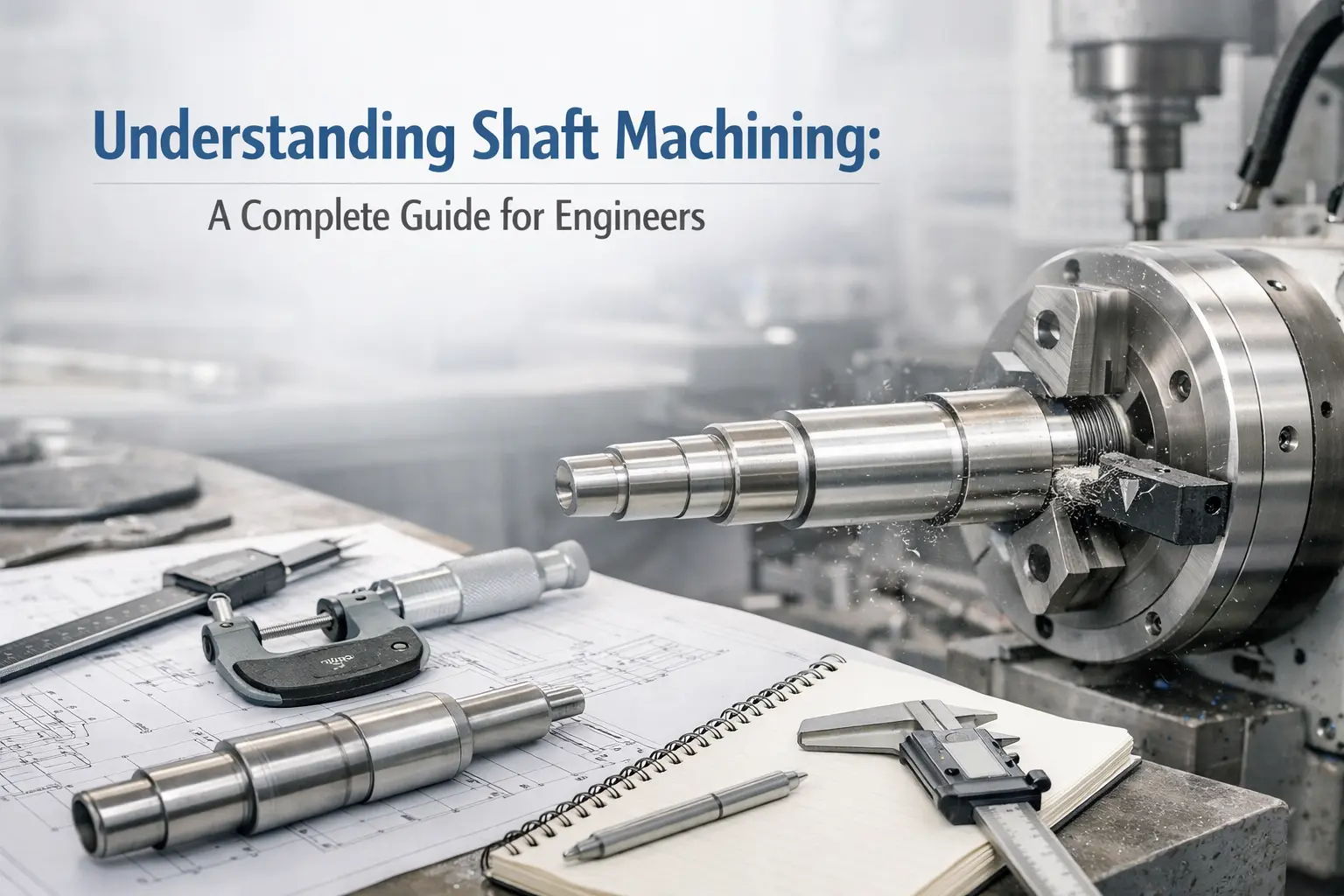
Shaft machining is a cornerstone of modern manufacturing, playing a critical role in industries ranging from automotive and aerospace to industrial equipment and robotics. Shafts serve as the primary components that transmit power, rotational motion, and torque, ensuring that machines operate efficiently and reliably. Without precision in shaft manufacturing, even small misalignments or inaccuracies can result in excessive wear, vibration, and ultimately, mechanical failure. High-quality shafts contribute not only to the longevity of machines but also to their overall performance, safety, and energy efficiency.
In modern manufacturing, the demand for complex, high-precision shafts has increased dramatically. Shafts are no longer simple cylindrical components; they often include multiple diameters, grooves, keyways, threads, and complex profiles. This complexity requires advanced CNC machining techniques to achieve the required tolerances and surface finishes. Manufacturing these components demands a combination of material expertise, cutting-edge machinery, and meticulous quality control. For companies producing low-volume or customized parts, the ability to rapidly and accurately machine shafts is a key differentiator, reducing lead times and production costs while ensuring high performance.
Furthermore, with the rise of industries such as electric vehicles, robotics, and aerospace, the expectations for shaft performance have grown. Modern applications demand lighter, stronger, and more durable shafts, often made from high-strength alloys or specialized materials. Precision machining ensures that these requirements are met, maintaining dimensional stability and optimal surface finish. The integration of digital design, CAD/CAM programming, and multi-axis CNC machinery has revolutionized shaft manufacturing, enabling complex geometries that were previously difficult or impossible to achieve.
Partnering with an experienced manufacturer like WeYoung CNC can make a significant difference in achieving these high standards. With expertise in low-volume production, multi-axis machining, and a wide range of materials, WeYoung CNC ensures that every shaft meets exacting specifications. Their team works closely with clients to understand application requirements, optimize designs for manufacturability, and deliver parts with exceptionally short lead times. In today’s competitive manufacturing environment, high-precision shaft machining is not just a requirement—it’s a strategic advantage.
Shafts are integral to a wide variety of mechanical systems, and their types vary depending on their specific applications. The most common types include transmission shafts, motor shafts, industrial equipment shafts, and custom or specialized shafts. Transmission shafts, for example, are designed to transfer torque and rotational motion from one component to another, such as in gearboxes or drive trains. They must withstand high torsional forces and maintain precise alignment to prevent vibrations, wear, and potential system failure. Proper design and machining are critical to ensure smooth power transmission and long operational life.
Motor shafts are typically used in electric motors, generators, and other rotary devices. These shafts need to maintain exact concentricity and minimal runout to prevent imbalance and noise, especially in high-speed applications. Any deviation can lead to significant performance issues, including reduced efficiency and premature bearing wear. Industrial equipment shafts are often subjected to heavy loads, constant rotation, and harsh operating conditions. Examples include shafts in pumps, compressors, conveyor systems, and large machinery. These components require robust materials and precise machining to ensure reliability under demanding conditions.
Custom or specialized shafts are designed for unique applications such as aerospace actuators, robotics, medical devices, or precision instruments. These shafts may feature complex geometries, multiple diameters, keyways, or integrated threads, all of which require advanced CNC machining techniques. Regardless of type, shafts share a common requirement: dimensional accuracy and surface quality are critical. Poorly machined shafts can lead to misalignment, noise, vibration, and even catastrophic failure in mechanical systems.
With modern manufacturing demands, understanding the specific application of a shaft is crucial for determining its design, material, and machining strategy. Factors such as load type, rotational speed, environmental conditions, and expected lifespan influence every aspect of the machining process. WeYoung CNC specializes in machining a broad range of shaft types, from standard transmission shafts to custom-engineered solutions. Their expertise ensures that each shaft meets functional and performance requirements while optimizing production efficiency and cost-effectiveness.
Material selection is one of the most important decisions in shaft machining, as it directly impacts the performance, durability, and machinability of the finished component. Steel is the most commonly used material due to its high strength, wear resistance, and cost-effectiveness. Carbon steel is ideal for applications that require moderate strength and hardness, while alloy steels provide enhanced durability and resistance to fatigue, making them suitable for heavy-duty shafts. Stainless steel is favored in corrosive environments or applications requiring hygiene, such as food processing or medical devices, due to its corrosion resistance and aesthetic appearance.
Aluminum shafts offer a lightweight alternative without compromising too much strength, making them ideal for applications where reducing overall weight is critical, such as aerospace components, electric vehicles, and robotic systems. Aluminum is highly machinable and can achieve excellent surface finishes, but it is generally less wear-resistant than steel, so design considerations must account for load and durability requirements. Specialized alloys, such as titanium or nickel-based materials, are used in high-performance applications where strength-to-weight ratio, corrosion resistance, or temperature tolerance is critical. While these materials are more challenging and costly to machine, precision CNC processes ensure that these shafts meet exacting specifications.
Material properties also affect the machining process itself. Harder materials may require slower cutting speeds and specialized tooling, while softer metals like aluminum are prone to chatter and may need optimized feed rates to achieve the desired surface finish. Heat treatment and surface coatings further enhance material performance, improving wear resistance, hardness, and lifespan. For instance, black oxide coating or plating can prevent corrosion and reduce friction, while grinding and polishing improve dimensional accuracy and smoothness.
WeYoung CNC works with a wide range of materials, tailoring machining processes to the properties of each material. Their expertise ensures that every shaft is optimized for its intended application, balancing strength, durability, and machinability. By selecting the right material and combining it with precise CNC machining techniques, manufacturers can produce shafts that deliver reliable performance while minimizing production challenges and costs.
Precision CNC machining has revolutionized the production of shafts, enabling manufacturers to achieve complex geometries, tight tolerances, and superior surface finishes that were previously difficult to achieve. CNC turning is the most fundamental technique used for shafts, allowing precise control of diameter, length, and concentricity. Multi-axis CNC lathes can handle intricate profiles, grooves, tapers, and threads in a single setup, significantly reducing production time and improving accuracy. Advanced CAM programming ensures that tool paths are optimized for efficiency and minimal tool wear.
Milling, drilling, and grooving are commonly used in shaft machining to create keyways, flats, slots, and other features. These operations require precise coordination between rotational and linear movements to maintain alignment and surface quality. High-speed spindles, rigid fixturing, and advanced cutting tools enable manufacturers to maintain tight tolerances while minimizing surface defects. For long or thin shafts, techniques such as tailstock support, steady rests, or vibration dampening are employed to prevent deflection and maintain accuracy.
Surface finish and tolerance are critical for functional performance. Grinding, polishing, and finishing operations improve smoothness, reduce friction, and enhance bearing performance. Shafts used in high-speed or high-load applications require extremely low surface roughness to prevent premature wear and ensure reliable operation. WeYoung CNC integrates quality control at every stage of machining, using precision measurement tools such as coordinate measuring machines (CMM), micrometers, and visual inspections to verify dimensions and surface quality.
In addition to technical expertise, modern shaft machining requires careful consideration of production efficiency and cost. By combining optimal tool selection, cutting parameters, and advanced CNC techniques, WeYoung CNC can deliver high-precision shafts with short lead times, even for low-volume or custom projects. Their approach ensures that every shaft meets stringent functional requirements while optimizing material use, machining time, and overall project cost.
Tolerance, accuracy, and surface finish are fundamental aspects of shaft machining, directly affecting a shaft’s performance, longevity, and compatibility with other mechanical components. Tolerance refers to the permissible variation in a shaft’s dimensions, such as diameter, length, and concentricity. Maintaining precise tolerances is critical because even small deviations can lead to misalignment, increased vibration, uneven wear, and potential failure in machinery. In high-speed or high-load applications, these deviations can significantly impact efficiency and safety. Modern CNC machining allows manufacturers to achieve tolerances as tight as a few microns, ensuring that every shaft meets exacting specifications.
Accuracy in shaft machining goes hand in hand with tolerance. Achieving high accuracy requires careful planning of machining operations, optimal tool selection, and advanced fixturing. Long or slender shafts are particularly challenging due to the risk of deflection or warping during machining. To address these issues, CNC machines often use tailstock support, steady rests, or vibration-damping systems to stabilize the workpiece. Multi-axis CNC machines can also execute complex profiles in a single setup, reducing cumulative errors that occur when transferring shafts between machines. Proper accuracy ensures that shafts operate smoothly, align correctly with bearings, and maintain consistent performance over time.
Surface finish is another critical factor influencing shaft performance. Smooth surfaces reduce friction, improve bearing compatibility, and extend the service life of both the shaft and the mating components. Achieving an optimal surface finish involves precision grinding, polishing, and, where necessary, surface treatments like black oxide coating, anodizing, or plating. The choice of finish depends on the shaft’s function and operating environment. For example, high-speed shafts benefit from extremely low surface roughness to minimize heat buildup and friction, while shafts in corrosive environments require coatings that prevent oxidation and wear.
WeYoung CNC emphasizes a holistic approach to tolerance, accuracy, and surface finish. Every shaft is inspected using advanced measurement techniques, including coordinate measuring machines (CMM), micrometers, and visual inspections, to ensure dimensional integrity and surface quality. By integrating these quality checks into every step of the machining process, WeYoung CNC can guarantee that shafts not only meet design specifications but also deliver reliable performance under demanding conditions. The combination of tight tolerances, precise machining, and high-quality surface finish makes their shafts suitable for critical applications in automotive, aerospace, industrial, and robotics industries.
Shaft machining presents several challenges, especially when producing high-precision or complex components. One of the primary challenges is material behavior during machining. Harder materials, such as high-carbon steel or specialized alloys, can cause accelerated tool wear, generate excessive heat, or produce rough surface finishes if not machined with the correct parameters. Conversely, softer materials like aluminum may be prone to chatter or deformation under high cutting forces, resulting in inaccurate dimensions or compromised surface finish. Selecting the right cutting tools, feeds, speeds, and coolant systems is essential to address these material-specific issues effectively.
Long or slender shafts pose additional challenges due to deflection, vibration, and warping during machining. Even minor bending can exceed tight tolerances, making the shaft unusable for precision applications. To combat this, CNC machines often employ tailstock support, steady rests, or vibration-damping techniques. Multi-axis machining reduces the number of setups, minimizing alignment errors and cumulative tolerance issues. Engineers must also design shafts with manufacturability in mind, balancing the functional requirements of the component with the limitations of machining processes.
Another common challenge is achieving consistent surface finish across the entire length of the shaft. Uneven cutting, tool wear, or improper fixturing can lead to rough areas that affect bearing performance, friction, and wear. Techniques such as grinding, polishing, or coating are employed to meet surface finish requirements. Additionally, post-machining processes like heat treatment may induce slight distortions, which must be corrected through precise finishing steps. These factors highlight the need for a tightly controlled production workflow that integrates design, machining, and quality inspection.
At WeYoung CNC, these challenges are addressed through a combination of advanced CNC machinery, skilled operators, and rigorous quality control. Their team optimizes machining strategies for each shaft, selecting the appropriate tooling, fixturing, and cutting parameters based on material and geometry. By combining experience with cutting-edge technology, WeYoung CNC can produce shafts with high dimensional accuracy, superior surface finish, and consistent performance, even in low-volume or highly customized production runs. Their approach ensures that clients receive shafts that meet or exceed expectations, reducing production delays, minimizing material waste, and enhancing the overall reliability of the end product.
Choosing the right partner for shaft machining is critical to achieving high-quality components that perform reliably under demanding conditions. WeYoung CNC stands out due to its combination of advanced machinery, skilled operators, and a deep understanding of precision manufacturing. Their expertise spans a wide range of shaft types, materials, and industries, including automotive, aerospace, industrial equipment, and robotics. By leveraging multi-axis CNC machining, advanced tooling, and optimized machining strategies, WeYoung CNC ensures that each shaft meets exacting specifications for tolerance, accuracy, and surface finish.
The company’s focus on low-volume and custom production allows for rapid prototyping, fast turnaround times, and cost-effective manufacturing. WeYoung CNC works closely with clients to understand application requirements, recommend optimal materials and designs, and deliver components that are ready for immediate use. Their integration of rigorous quality control throughout the machining process—using tools such as CMMs, micrometers, and visual inspections—ensures consistent performance and reliability.
Beyond technical expertise, WeYoung CNC emphasizes collaboration and communication with clients. By providing guidance on design for manufacturability, material selection, and process optimization, they help reduce production costs while maintaining high standards of quality. Whether producing high-volume industrial shafts or precision components for specialized applications, their approach ensures that each part performs as intended, contributing to the success of the overall project.
Contact WeYoung CNC today to learn more about their precision shaft machining services and discover how their expertise can enhance your projects. With advanced CNC technology, skilled engineering, and a commitment to excellence, WeYoung CNC delivers shafts that meet the highest standards of modern manufacturing.
