Address
304 North Cardinal St.
Dorchester Center, MA 02124
Work Hours
Monday to Friday: 7AM - 7PM
Weekend: 10AM - 5PM

Address
304 North Cardinal St.
Dorchester Center, MA 02124
Work Hours
Monday to Friday: 7AM - 7PM
Weekend: 10AM - 5PM
Brass CNC parts are widely used across industries ranging from automotive and electronics to decorative hardware. While the precision of CNC machining ensures dimensional accuracy and tight tolerances, the surface condition of the brass components plays a critical role in determining their overall performance, longevity, and aesthetic appeal. Surface finishing is not merely a cosmetic consideration; it directly affects the functional properties of brass parts, including corrosion resistance, wear resistance, and the ability to bond with other materials in assemblies. For instance, an untreated brass component exposed to moisture or harsh environmental conditions may quickly develop tarnish or oxidation, which can compromise both appearance and mechanical integrity. By applying proper surface finishing techniques, manufacturers can enhance durability, reduce maintenance needs, and improve product reliability. Moreover, finishing can minimize friction in moving components, reduce micro-cracks from machining, and prepare surfaces for secondary processes such as plating, painting, or adhesive bonding. For products intended for consumer markets, surface quality can also significantly influence perceived value and customer satisfaction. High-quality finishing can convey a sense of premium craftsmanship, which is particularly important for brass components in luxury hardware, musical instruments, and decorative fittings. Overall, investing in the right surface finishing process is a strategic decision that balances functional performance, aesthetic quality, and production efficiency. For companies looking to achieve both precision and superior surface quality, working with experienced CNC machining providers like WeYoung CNC ensures access to advanced finishing techniques and quick turnaround times, making it easier to meet project deadlines without compromising on quality.
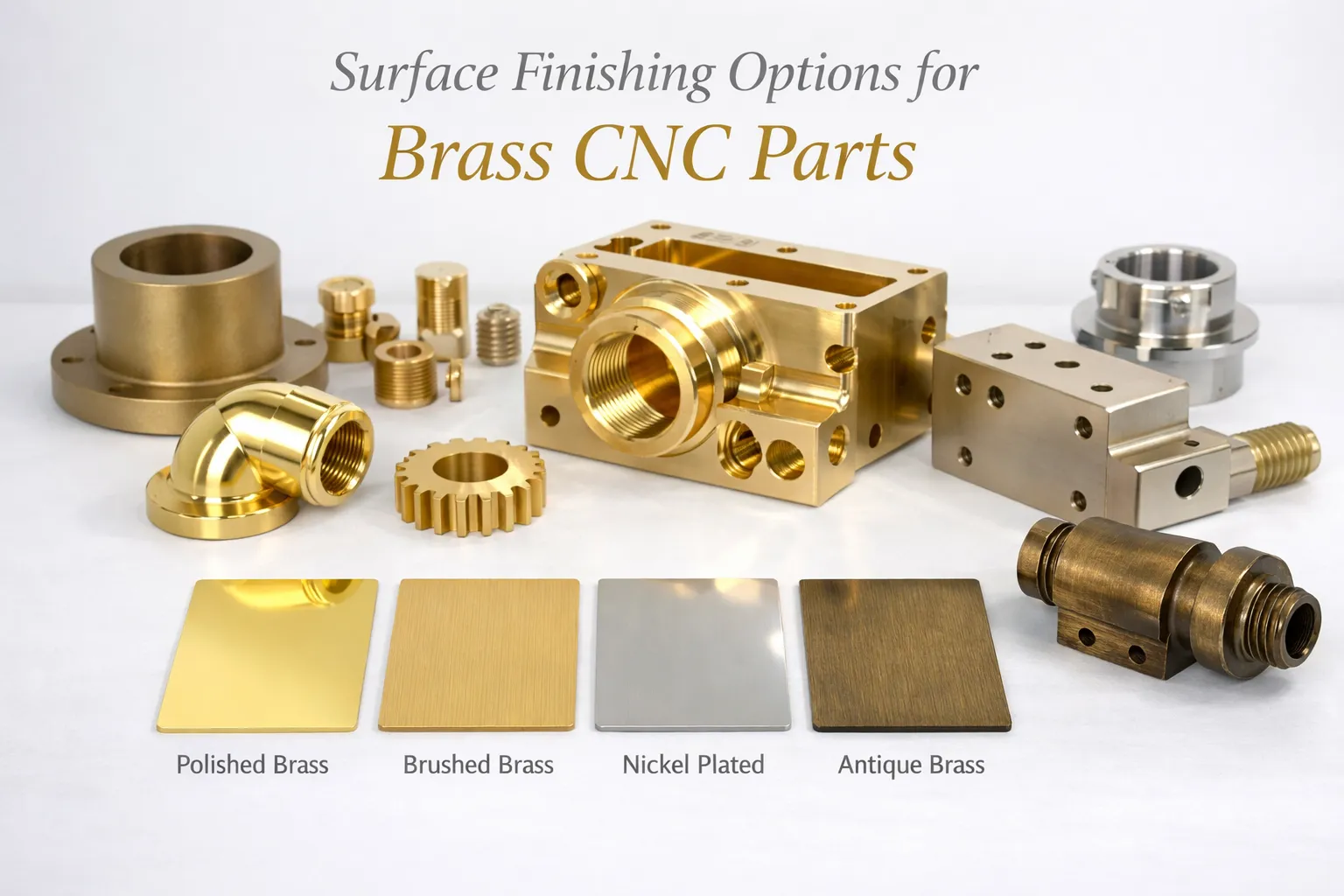
Brass parts offer versatility when it comes to surface finishing, and several methods are commonly employed depending on the intended application. One of the most popular techniques is polishing, which can range from mechanical polishing with abrasive compounds to buffing with specialized wheels to achieve a mirror-like or satin finish. Polishing improves visual appeal, highlights the natural color of brass, and reduces surface roughness that could trap dirt or moisture. Plating is another widely used method, providing both protective and decorative benefits. Common plating options include nickel, chrome, and gold, each offering specific corrosion resistance, hardness, and aesthetic qualities. When applying plating to brass, proper surface preparation is critical to ensure adhesion and uniform coverage. Chemical treatments, such as passivation or specialized brass coatings, create a thin protective oxide layer that enhances corrosion resistance without significantly altering the appearance of the part. These treatments are particularly useful for components exposed to harsh environments or frequent handling. Brushing and satin finishes are preferred for applications where texture is desired, such as architectural hardware or decorative fixtures. This method involves using abrasive pads or brushes to create consistent linear patterns that reduce glare and hide minor scratches. In some cases, powder coating or painting may be applied to brass parts to provide additional color options and protective layers, though this requires careful surface preparation to prevent peeling or uneven coverage. Each of these finishing methods has its own advantages, limitations, and cost considerations, making it essential to evaluate the specific functional and aesthetic needs of a project. Partnering with an experienced CNC machining provider like WeYoung CNC ensures that the selected finishing method is applied correctly and consistently, producing high-quality brass components ready for end use.
Selecting the appropriate surface finish for brass CNC parts involves balancing multiple factors, including functionality, aesthetics, environmental conditions, and cost. Functionally, certain finishes like plating or chemical passivation may be essential to protect the part from corrosion, wear, or tarnish, especially for components used in industrial or marine applications. A polished or brushed finish might be sufficient for decorative pieces, while precision components in mechanical assemblies may require specific coatings to reduce friction or improve mating with other parts. Aesthetic considerations are equally important, particularly for products where appearance influences market perception. The choice between a mirror-like polished finish, satin brushed texture, or colored plating can affect customer perception and brand positioning. Environmental exposure must also be factored in; parts exposed to moisture, chemicals, or high temperatures often require more robust finishing methods to maintain performance over time. Additionally, project constraints such as lead time and budget play a critical role. Some finishes, such as multi-step plating or custom chemical treatments, may increase production time and cost, while simpler polishing or brushing can offer a faster, cost-effective solution without compromising quality. It is essential to assess the entire lifecycle of the brass component, including handling, assembly, and maintenance requirements, to make an informed decision. Collaborating with knowledgeable CNC machining providers like WeYoung CNC can simplify this decision-making process. Their expertise allows clients to select finishes that meet technical specifications, aesthetic goals, and project timelines simultaneously, ensuring consistent, high-quality results for every brass CNC part.
Surface finishing brass CNC parts comes with its own set of challenges that manufacturers must carefully navigate to achieve consistent quality. One common challenge is discoloration or tarnishing, which can occur if the part is exposed to air or moisture before proper finishing. Brass naturally develops a patina over time, and without appropriate protective treatments, polished or plated surfaces may lose their luster or develop uneven color. To prevent this, it is essential to handle parts in controlled environments and consider applying protective coatings immediately after machining. Another issue arises when dealing with small or intricate geometries. Brass components often include detailed features, threads, or tight cavities that are difficult to reach with conventional polishing, brushing, or plating equipment. Manufacturers must use specialized tools, custom jigs, or advanced techniques to ensure uniform coverage in these areas, preventing weak spots or inconsistencies in surface quality. Warping or deformation can also occur if parts are subjected to excessive heat during processes such as buffing, plating, or chemical treatment. Controlling process temperatures, using proper fixturing, and sequencing finishing operations carefully are critical to maintaining dimensional integrity. Additionally, cost and lead time considerations often influence the selection of finishing methods. Multi-step finishing processes can improve appearance and durability but may increase production time and expenses. Balancing quality requirements with project constraints requires careful planning and expertise. Working with an experienced CNC machining provider like WeYoung CNC allows manufacturers and designers to overcome these challenges efficiently. Their team can recommend the most suitable finishing techniques, implement precise quality controls, and ensure that even complex brass parts are finished to high standards, ready for immediate use or assembly.
When it comes to high-quality brass CNC parts, partnering with a reliable machining and finishing provider is crucial. WeYoung CNC offers extensive experience in both precision CNC machining and surface finishing, ensuring that each brass component meets stringent quality standards. One of the company’s key advantages is its ability to provide fast turnaround without sacrificing quality, which is critical for projects with tight deadlines or high-volume requirements. Their team specializes in a wide range of finishing methods, including polishing, brushing, plating, and chemical treatments, allowing clients to select the optimal finish based on both functional and aesthetic needs. Moreover, WeYoung CNC focuses on consistency across production runs, ensuring that every part, whether a prototype or a large batch, exhibits uniform surface quality. This is particularly important for visible or decorative components, where even minor inconsistencies can affect customer perception and product value. The company also emphasizes collaboration with clients, offering guidance on material selection, finishing options, and process optimization to balance cost, performance, and appearance. By leveraging advanced equipment, skilled operators, and proven finishing techniques, WeYoung CNC delivers brass components that are not only precise in dimensions but also superior in surface quality. Whether the goal is to enhance corrosion resistance, improve aesthetic appeal, or prepare parts for additional processes such as plating or assembly, their expertise ensures reliable outcomes. For inquiries or custom finishing requests, clients can easily reach out through WeYoung CNC’s contact page and receive professional support tailored to their project requirements.
