Address
304 North Cardinal St.
Dorchester Center, MA 02124
Work Hours
Monday to Friday: 7AM - 7PM
Weekend: 10AM - 5PM

Address
304 North Cardinal St.
Dorchester Center, MA 02124
Work Hours
Monday to Friday: 7AM - 7PM
Weekend: 10AM - 5PM
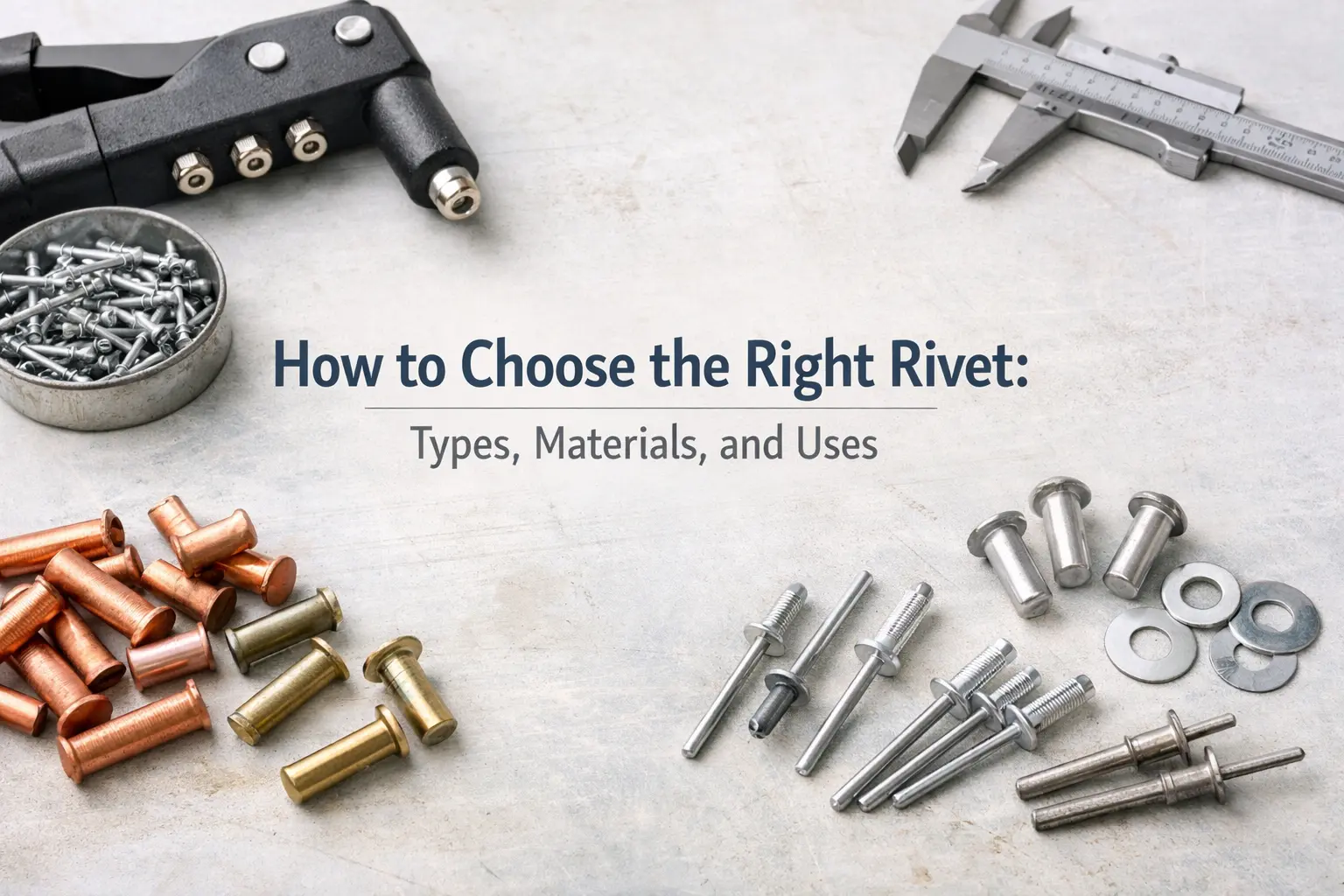
Rivets are one of the most reliable and widely used fastening solutions in modern manufacturing. They provide permanent joints that are highly resistant to vibration, fatigue, and loosening, making them ideal for critical applications. Industries such as aerospace, automotive, construction, and electronics rely heavily on rivets to ensure structural integrity and long-term performance. Unlike threaded fasteners, rivets do not require re-tightening, which reduces maintenance requirements and enhances reliability over time. As product designs become more complex and lightweight materials become more common, rivets continue to play a crucial role in ensuring strong and stable assemblies. Their versatility, combined with their ability to deliver consistent results in both manual and automated processes, makes them an essential component in modern engineering and manufacturing environments.
Choosing the wrong rivet can lead to serious performance and safety issues. If the rivet does not meet the required strength specifications, the joint may fail under load, leading to structural damage or product failure. Incorrect material selection can also result in corrosion, especially when dissimilar metals are used together, causing galvanic reactions that weaken the connection over time. In addition, selecting the wrong size or grip range can result in improper installation, reducing clamping force and compromising joint stability. These problems can increase production costs, lead to costly repairs, and negatively impact product reliability. Therefore, understanding the key characteristics of different rivets and selecting the appropriate type for each application is essential for achieving optimal performance and durability.
Solid rivets are the strongest and most traditional type of rivet, commonly used in applications where maximum strength and reliability are required. They consist of a solid shaft with a head on one end, and installation involves deforming the opposite end to create a second head that holds the materials together. This process requires access to both sides of the workpiece, as well as specialized tools or equipment. Solid rivets are widely used in aerospace structures, bridges, and heavy machinery due to their excellent shear strength and resistance to fatigue. Although they require more time and effort to install compared to other types, their superior performance in high-stress environments makes them the preferred choice for critical structural applications.
Blind rivets, also known as pop rivets, are designed for applications where only one side of the workpiece is accessible. They consist of a hollow rivet body and a mandrel that is pulled through the body during installation, causing it to expand and secure the materials. This design allows for quick and easy installation using simple tools, making blind rivets a popular choice for many industries. They are commonly used in sheet metal fabrication, automotive panels, and household appliances. Blind rivets are available in various materials and sizes, providing flexibility for different applications. While they may not offer the same level of strength as solid rivets, their convenience and efficiency make them ideal for high-volume production and situations where access is limited.
Tubular and semi-tubular rivets feature a hollow or partially hollow shaft, which reduces the amount of force required for installation. This makes them suitable for applications involving softer materials or components that cannot withstand high stress during assembly. Semi-tubular rivets are commonly used in products such as hinges, locks, and mechanical linkages, where smooth movement and repeated operation are important. Their design allows for faster installation and less tool wear, making them well-suited for automated production lines. Although they provide lower strength compared to solid rivets, they offer a good balance between performance, efficiency, and ease of use in many applications.
Specialty rivets are designed to meet specific application requirements that standard rivets cannot address. These include structural rivets for high-strength applications, split rivets for use with soft materials like wood or plastic, and flush rivets for applications requiring a smooth surface finish. Structural rivets are often used in construction and transportation industries where high load capacity is essential. Split rivets are commonly used in lightweight assemblies, while flush rivets are widely used in aerospace applications to maintain aerodynamic surfaces. These specialized designs provide tailored solutions for unique engineering challenges and help improve performance in specific use cases.
Aluminum rivets are widely used due to their lightweight properties and excellent resistance to corrosion. They are particularly suitable for applications where reducing weight is important, such as in aerospace and automotive components. Aluminum rivets are also easy to install and compatible with aluminum materials, which helps prevent galvanic corrosion. However, their lower strength compared to steel limits their use to low and medium load applications. Despite this limitation, their ease of use and cost-effectiveness make them a popular choice in many industries.
Steel rivets provide high strength and durability, making them suitable for heavy-duty applications. Carbon steel rivets are commonly used in construction and industrial equipment, where strength is a primary requirement. Stainless steel rivets offer additional corrosion resistance, making them ideal for outdoor, marine, and chemical environments. They maintain their strength even under harsh conditions, but they require more force during installation and may increase production costs. Choosing between carbon steel and stainless steel depends on the specific environmental and performance requirements of the application.
Copper and brass rivets are often selected for their unique properties, including good electrical conductivity and attractive appearance. Copper rivets are commonly used in electrical applications and roofing, while brass rivets are favored for decorative purposes and corrosion resistance. These materials are softer than steel, making them easier to install in certain applications. However, their lower strength limits their use in structural applications. They are best suited for specialized uses where aesthetics or conductivity are more important than load-bearing capacity.
Material compatibility is a critical factor when selecting rivets. Using dissimilar metals can lead to galvanic corrosion, which occurs when two different metals come into contact in the presence of moisture or other electrolytes. This can significantly reduce the lifespan of the joint and compromise its integrity. To avoid this issue, it is recommended to use rivets made from the same or similar materials as the components being joined. Protective coatings and surface treatments can also help minimize corrosion risks and improve overall durability.
Understanding the load requirements is essential when selecting a rivet. The rivet must be able to withstand both shear and tensile forces without failure. Shear strength refers to the ability to resist forces that cause materials to slide against each other, while tensile strength refers to resistance against forces that attempt to pull the joint apart. Selecting a rivet with the appropriate strength ensures long-term reliability and safety in the final application.
The grip range of a rivet defines the thickness of the materials it can securely fasten. Choosing the correct grip range is critical for achieving a proper fit and strong joint. If the rivet is too short, it may not form a secure head, while an overly long rivet can result in deformation and reduced clamping force. Proper selection of rivet diameter and length helps ensure optimal performance and prevents installation issues.
Environmental conditions such as temperature, humidity, and exposure to chemicals can have a significant impact on rivet performance. In corrosive environments, materials like stainless steel or coated rivets are preferred to prevent degradation. High-temperature applications may require specialized materials that maintain strength under heat. Considering these factors during the selection process helps extend the service life of the assembly and reduce maintenance requirements.
The installation method and accessibility of the workpiece are important considerations when choosing a rivet. Some rivets require access to both sides of the assembly, while others, such as blind rivets, can be installed from one side only. The choice of installation method affects tooling requirements, labor costs, and production efficiency. Selecting the right type of rivet for the available access conditions ensures a smoother and more efficient assembly process.
Cost and production efficiency play a key role in rivet selection. While higher-quality rivets may have a higher initial cost, they can reduce long-term maintenance and failure rates. Additionally, rivets that are easy to install can significantly improve assembly speed and reduce labor costs. Balancing cost, performance, and efficiency is essential for achieving the best overall value in any manufacturing project.
Rivets play a critical role in the aerospace industry, where safety, reliability, and weight reduction are top priorities. Aircraft structures rely heavily on riveted joints to connect thin sheets of aluminum and other lightweight alloys. Solid and flush rivets are commonly used in fuselage and wing assemblies because they provide high shear strength and create smooth surfaces that reduce aerodynamic drag. These rivets must withstand extreme conditions, including temperature fluctuations, vibration, and cyclic loading, without failure. Precision is essential in aerospace riveting, as even small inconsistencies can impact performance and safety. As a result, strict quality control standards and advanced installation techniques are used to ensure every rivet meets exact specifications.
In the automotive industry, rivets are widely used for assembling body panels, frames, and structural components. With the increasing use of lightweight materials such as aluminum and composites, rivets have become even more important for joining dissimilar materials that cannot be easily welded. Blind rivets and structural rivets are commonly used due to their ease of installation and strong holding power. They are often found in doors, hoods, chassis components, and interior assemblies. Rivets also help improve production efficiency by enabling faster assembly processes, especially in high-volume manufacturing environments. Their ability to provide durable and vibration-resistant joints makes them a reliable choice for automotive applications.
Rivets have long been used in construction and infrastructure projects, particularly in steel structures such as bridges, buildings, and towers. Although welding has replaced rivets in some applications, they are still used in situations where reliability and long-term durability are essential. Structural rivets are designed to handle heavy loads and harsh environmental conditions, making them suitable for outdoor applications exposed to moisture, temperature changes, and corrosion. In addition, rivets are often used in facade systems, roofing, and metal cladding, where secure and visually clean fastening is required. Their proven performance over decades of use makes them a trusted solution in the construction industry.
In electronics and consumer products, rivets are used for small-scale fastening where precision and appearance are important. They are commonly found in enclosures, brackets, and internal components of devices such as computers, appliances, and handheld products. Blind rivets and semi-tubular rivets are often used due to their ease of installation and suitability for thin materials. In addition to providing structural support, rivets can also contribute to the overall design by offering a clean and professional finish. Their ability to securely fasten components without damaging sensitive materials makes them ideal for these applications.
One of the most common mistakes in rivet selection is choosing the wrong material. Using a rivet material that is incompatible with the base materials can lead to galvanic corrosion, which weakens the joint over time. For example, combining aluminum with certain types of steel in a corrosive environment can accelerate deterioration. It is important to consider both the mechanical properties and environmental resistance of the material to ensure long-term performance. Selecting the appropriate material helps prevent premature failure and reduces maintenance costs.
Selecting the wrong rivet size can significantly impact the strength and stability of the joint. If the rivet diameter is too small, it may not provide sufficient strength to تحمل the applied loads. If it is too large, it may damage the materials or create unnecessary stress concentrations. Similarly, choosing the wrong grip range can result in improper installation, leading to loose or weak joints. Accurate measurement of material thickness and careful selection of rivet dimensions are essential for achieving a secure connection.
Failing to consider load requirements is another critical mistake. Each application has specific shear and tensile forces that the rivet must withstand. Choosing a rivet without evaluating these forces can lead to joint failure under stress. This is especially important in structural and safety-critical applications, where failure can have serious consequences. Engineers must carefully assess the expected loads and select rivets that meet or exceed those requirements to ensure reliability.
Installation constraints are often overlooked during the selection process. Some rivets require access to both sides of the workpiece, while others are designed for one-sided installation. Choosing the wrong type can complicate the assembly process or even make installation impossible. Additionally, the availability of tools and equipment must be considered, as certain rivets require specialized tools for proper installation. Taking these factors into account helps avoid delays and ensures efficient production.
WeYoung CNC specializes in delivering high-precision machined components that are optimized for rivet assembly. Accurate hole sizing, tight tolerances, and smooth surface finishes are essential for ensuring proper rivet installation and joint strength. By using advanced CNC machining technology, WeYoung CNC ensures that every component meets strict quality standards, reducing the risk of assembly issues and improving overall performance.
Speed is a key advantage in today’s competitive manufacturing environment. WeYoung CNC offers rapid turnaround times for both prototypes and production parts, helping customers accelerate their product development cycles. Whether you need a single prototype or a large production run, the company’s efficient processes and experienced team ensure timely delivery without compromising quality.
WeYoung CNC supports a wide variety of materials, including aluminum, steel, stainless steel, brass, and plastics, allowing customers to select the best option for their specific application. In addition, a range of surface finishing options is available to enhance durability, corrosion resistance, and appearance. This flexibility makes it easier to achieve the desired performance and aesthetic requirements for riveted assemblies.
Quality and reliability are at the core of WeYoung CNC’s services. The company implements strict quality control procedures at every stage of production to ensure consistency and accuracy. In addition, experienced engineers provide technical support to help customers optimize their designs for manufacturability and performance. This collaborative approach helps reduce errors, improve efficiency, and deliver better results for every project.
Selecting the right rivet is essential for ensuring strong, reliable, and long-lasting joints in any application. From understanding different rivet types and materials to evaluating load requirements, environmental conditions, and installation constraints, every factor plays a role in achieving optimal performance. Making informed decisions during the selection process helps prevent common issues such as joint failure, corrosion, and inefficient assembly.
Working with an experienced manufacturing partner can make a significant difference in the success of your project. With the right expertise, advanced equipment, and commitment to quality, WeYoung CNC can help you produce high-precision components that are perfectly suited for rivet assembly. By combining smart design with reliable manufacturing solutions, you can improve product performance, reduce costs, and bring your ideas to market faster.
