Address
304 North Cardinal St.
Dorchester Center, MA 02124
Work Hours
Monday to Friday: 7AM - 7PM
Weekend: 10AM - 5PM

Address
304 North Cardinal St.
Dorchester Center, MA 02124
Work Hours
Monday to Friday: 7AM - 7PM
Weekend: 10AM - 5PM
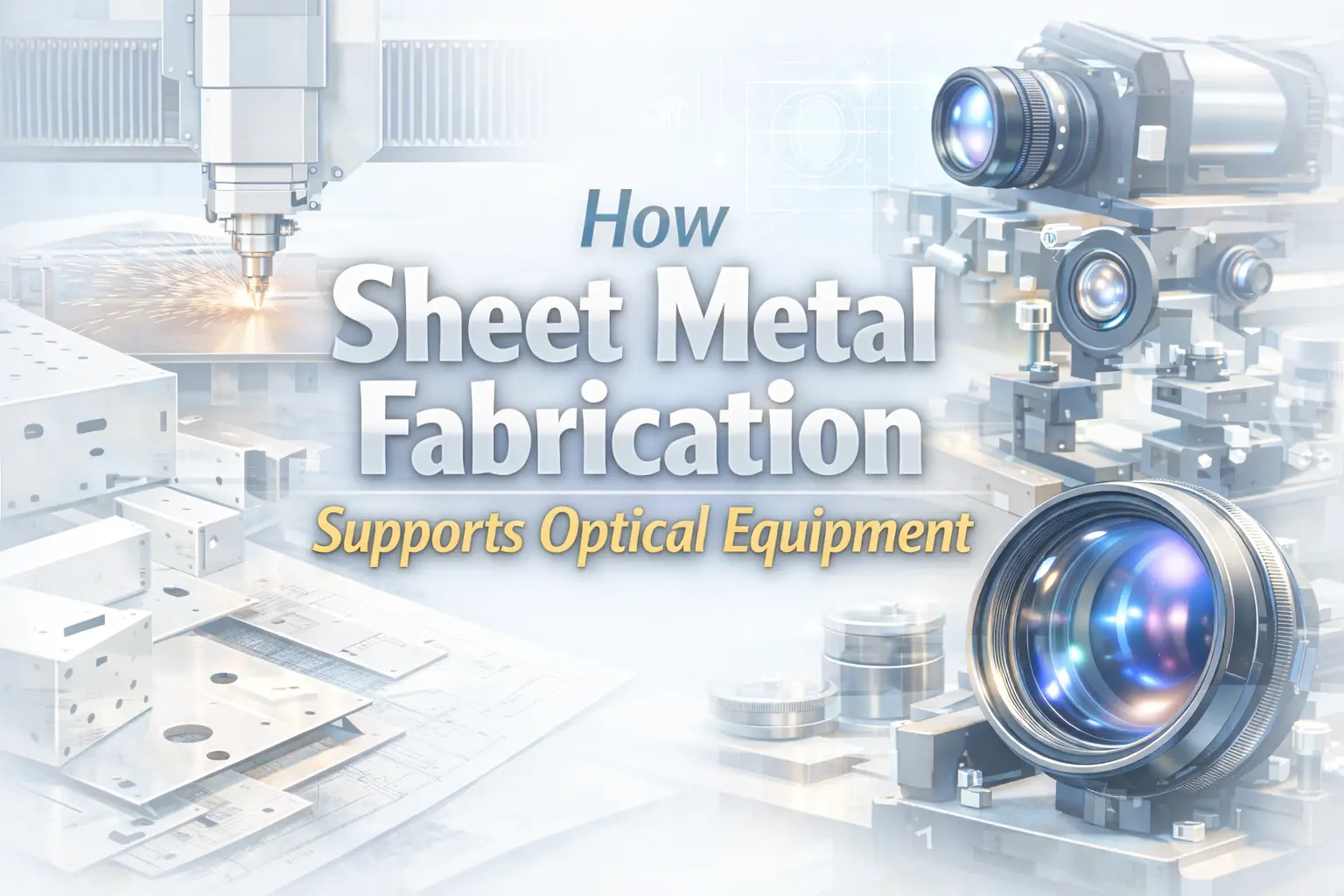
Sheet metal fabrication plays a crucial role in modern optical equipment, providing the structural backbone that keeps lenses, mirrors, and sensors perfectly aligned. From cameras and microscopes to telescopes and laser devices, carefully fabricated metal components ensure precision, durability, and reliability while keeping the overall design lightweight and compact.
Precision sheet metal fabrication is key to making optical equipment work reliably. It keeps lenses, mirrors, and sensors perfectly aligned, makes devices sturdy, and ensures parts can be assembled consistently. High-quality sheet metal components help optical devices perform accurately, last longer, and work smoothly with electronics and heat management. This kind of precision is what makes both professional instruments and everyday consumer products dependable and high-performing.
Precision sheet metal fabrication provides the stable and rigid structures needed to keep all optical elements in the right position. Devices such as cameras, telescopes, microscopes, and laser systems depend on this exact alignment. Even a small misalignment can distort images, reduce accuracy, or affect overall performance.
High-precision sheet metal parts resist bending, warping, and vibrations, ensuring that optical paths remain consistent in all conditions. This mechanical stability is important for professional laboratory instruments as well as consumer products, where reliability and image clarity are highly valued.
Precision fabrication allows for repeatable and consistent assembly, which is important for both prototyping and large-scale production. Each part, whether a lens mount, mirror bracket, or housing frame, can be produced to exact tolerances. Modern optical equipment often integrates electronics, sensors, and thermal management systems. Precisely fabricated sheet metal parts provide secure mounts, effective heat dissipation, and electromagnetic shielding when required.
Precision sheet metal fabrication is not just about making metal parts. It enables optical equipment to perform reliably, accurately, and efficiently, meeting the high standards demanded by both professional and consumer applications.
Sheet metal fabrication plays a crucial role in the production of optical equipment. It provides strong, precise, and stable components that keep lenses, mirrors, and sensors perfectly aligned. Using the right sheet metal services ensures optical devices perform accurately, last longer, and integrate smoothly with electronics and thermal management systems.
Accurate cutting is essential in optics to create components that fit perfectly. CNC cutting, laser cutting, and waterjet cutting allow manufacturers to produce complex shapes with tight tolerances. Precise cuts reduce assembly errors and make it easier to achieve the high level of accuracy optical devices require.
Bending and forming sheet metal enables the creation of brackets, mounts, and housings that are both lightweight and strong. These processes allow metal components to take on complex shapes without losing stability, which is vital for holding lenses, mirrors, and other delicate optical parts securely.
Welding and assembly services join multiple sheet metal parts with precision and durability. Proper fabrication techniques ensure components stay aligned, resist vibrations, and maintain stability, which is critical for optical performance in devices such as microscopes, telescopes, cameras, and laser systems.
Surface treatments like anodizing, powder coating, and polishing protect metal components from corrosion and wear. They also help maintain accuracy and provide a professional appearance, which is especially important for consumer optical products and laboratory instruments.
Optical equipment often requires prototyping or small-batch production for testing and iteration. Sheet metal fabrication services can produce these parts quickly and accurately, allowing engineers to validate designs before moving to full-scale manufacturing.
Choosing the right sheet metal material is essential for building reliable and precise optical equipment. Different metals offer different strengths, weight, corrosion resistance, and ease of fabrication. Using the right material ensures lenses, mirrors, and sensors stay perfectly aligned while keeping the device durable and lightweight.
Aluminum is widely used in optical equipment because it is lightweight, strong, and easy to machine. It also offers excellent corrosion resistance, which is important for devices exposed to moisture or varying temperatures. Aluminum can be anodized or powder coated for added protection and a polished appearance, making it ideal for camera housings, lens mounts, and microscope frames.
Stainless steel is heavier than aluminum but provides superior strength and durability. It is highly resistant to corrosion and wear, which makes it suitable for optical devices used in harsh environments or laboratory settings. Stainless steel is often used for brackets, structural frames, and mounting hardware that need to maintain precise alignment over long periods.
Copper is valued for its excellent thermal and electrical conductivity. In optical equipment, copper is often used in components that require heat dissipation or electromagnetic shielding, such as laser modules or high-power LED optical systems. Copper can be combined with other metals for enhanced structural or thermal performance.
Brass combines good machinability with corrosion resistance and stability. It is often used for fine optical mounts, adjustment knobs, and decorative components. Its ease of machining allows for precise holes and slots, which is important for maintaining the accuracy of optical paths.
Titanium is strong, lightweight, and extremely resistant to corrosion. It is ideal for high-end optical devices or aerospace-grade optics where weight reduction and long-term reliability are critical. Titanium components are usually used in precision brackets, frames, or parts exposed to extreme conditions.
Choosing the right sheet metal material is key to building optical devices that are precise, durable, and reliable. The material affects the stability of lenses and mirrors, the weight of the device, and even heat management. Making the right choice ensures your optical project performs at its best.
Different materials have different strengths and rigidity. For parts that hold lenses or mirrors, you need a material that won’t bend or warp over time. Aluminum is lightweight and strong for most consumer optical devices, while stainless steel or titanium may be better for professional or high-stress applications.
Optical devices often encounter moisture, temperature changes, or other environmental factors. Materials like aluminum, stainless steel, and titanium resist corrosion and help ensure your equipment lasts longer without affecting performance. This is especially important for devices used in outdoor or laboratory settings.
Weight is a critical factor in handheld or portable optical devices. Aluminum and titanium offer high strength with low weight, making them ideal for cameras, binoculars, and telescopes. Heavier metals like stainless steel provide durability but may not be suitable for lightweight designs.
Some optical systems generate heat or require electromagnetic shielding. Materials like copper and brass are excellent for heat dissipation and EMI protection, while aluminum can also serve for heat management in lightweight designs. Consider how your material choice will affect temperature control and device stability.
The ease of cutting, bending, and forming the material affects both cost and precision. Aluminum and brass are easy to work with, which makes prototyping and production faster. Stainless steel and titanium may be more expensive and harder to machine, but they offer superior strength and durability for critical components.
Finishing and surface treatments are essential for sheet metal components used in optical equipment. They protect parts from corrosion, wear, and environmental damage, while also improving appearance and ensuring precision. Choosing the right finishing process helps optical devices perform reliably and last longer.
Anodizing is commonly used on aluminum components. It creates a protective oxide layer that resists corrosion and wear. Anodizing can also be dyed in different colors, which adds aesthetic value while maintaining precise dimensions. This makes it ideal for lens mounts, housings, and structural frames in optical devices.
Powder coating provides a durable, uniform, and corrosion-resistant finish on metal parts. It is available in a wide range of colors and textures, making it suitable for both functional and decorative purposes. Powder-coated sheet metal components maintain strength and stability while giving optical equipment a polished, professional look.
Polishing and buffing improve the surface smoothness and visual quality of sheet metal parts. This process is especially useful for components that are visible to the user, such as camera housings, knobs, or brackets. A smooth surface can also reduce friction for moving parts and prevent dirt accumulation.
Passivation is commonly applied to stainless steel components. It removes free iron from the surface and enhances corrosion resistance. Chemical treatments can also prepare metal surfaces for painting, anodizing, or bonding with other materials, ensuring long-term stability and performance.
For delicate optical components, protective films or coatings can be applied to prevent scratches during assembly and transport. These coatings maintain surface integrity and ensure that components meet strict optical tolerances, which is critical for lenses, mirrors, and precision mounts.
Need precision sheet metal parts for your optical projects? Reach out to WEYOUNG CNC. With years of hands-on experience, we’ve produced high-quality components for top optical companies and exported them to Europe and the US. Whether it’s prototypes or full-scale production, we make sure your parts are accurate, reliable, and built to last.
