Address
304 North Cardinal St.
Dorchester Center, MA 02124
Work Hours
Monday to Friday: 7AM - 7PM
Weekend: 10AM - 5PM

Address
304 North Cardinal St.
Dorchester Center, MA 02124
Work Hours
Monday to Friday: 7AM - 7PM
Weekend: 10AM - 5PM
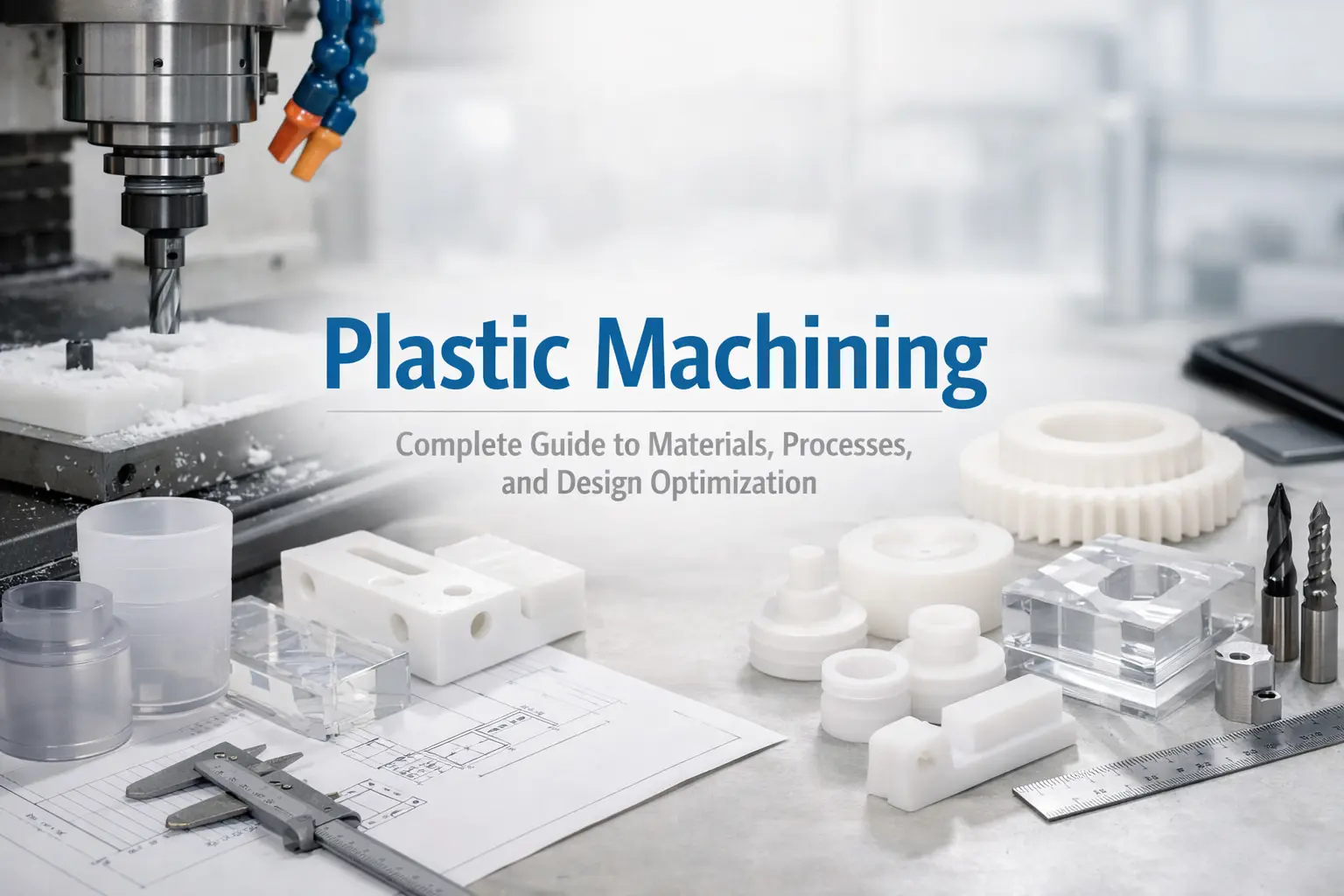
In modern manufacturing, plastic machining has become an essential solution for producing high-performance components across a wide range of industries. As product designs become more complex and lightweight requirements increase, manufacturers are turning to engineered plastics as a viable alternative to traditional metals. Industries such as medical devices, aerospace, automotive, and electronics increasingly rely on precision-machined plastic parts due to their excellent strength-to-weight ratio, corrosion resistance, and electrical insulation properties. Unlike metals, plastics can offer unique combinations of flexibility, chemical resistance, and dimensional stability, making them ideal for specialized applications where performance and cost-efficiency must be balanced.
Plastic machining provides significant advantages compared to other manufacturing processes such as injection molding or casting. One of the most notable benefits is the elimination of expensive tooling, which allows manufacturers to produce parts quickly and cost-effectively, especially in low-volume or prototype scenarios. CNC plastic machining enables rapid iteration during product development, reducing time-to-market and allowing engineers to test and refine designs efficiently. Additionally, it supports tight tolerances and complex geometries that are difficult to achieve with molding processes, particularly when quantities are low or customization is required.
With the increasing demand for agile manufacturing, plastic machining plays a critical role in rapid prototyping and bridge production. Companies can quickly transition from design to physical parts without waiting for mold fabrication, which can take weeks or even months. This flexibility is especially valuable for startups, R&D teams, and industries with frequent design updates. Moreover, CNC machining allows for consistent quality across small batches, ensuring that prototype parts closely match final production specifications. As a result, plastic machining has become a cornerstone of modern manufacturing strategies focused on speed, flexibility, and precision.
Plastic machining is a subtractive manufacturing process in which material is removed from a plastic workpiece using cutting tools to achieve the desired shape and dimensions. This process typically involves CNC (Computer Numerical Control) machines, which ensure high precision, repeatability, and efficiency. Common machining operations include milling, turning, drilling, and tapping, each suited for different part geometries and functional requirements. Unlike additive manufacturing, which builds parts layer by layer, plastic machining starts with a solid block or rod and removes excess material to create the final component.
Although plastic machining shares similarities with metal machining, there are critical differences that must be considered to achieve optimal results. Plastics are generally softer and have lower melting points, making them more sensitive to heat generated during machining. Excessive heat can lead to melting, deformation, or poor surface finish. Additionally, plastics have lower stiffness compared to metals, which can result in deflection or vibration during cutting operations. This requires careful selection of cutting parameters, tool geometry, and fixturing methods. Chip formation also differs, as plastics tend to produce continuous chips that may wrap around tools if not properly managed.
To successfully machine plastic parts, manufacturers must optimize machining parameters such as cutting speed, feed rate, and tool selection. Sharp cutting tools are essential to minimize friction and heat buildup, while proper cooling techniques—such as air blasts or mist cooling—help maintain dimensional stability. Material-specific knowledge is also crucial, as different plastics respond differently to machining conditions. By understanding these factors, manufacturers can achieve high-quality finishes, tight tolerances, and consistent performance across production runs.
Engineering plastics are widely used in CNC machining due to their superior mechanical and thermal properties. Materials such as POM (Delrin), Nylon, PTFE, and PEEK offer excellent strength, wear resistance, and chemical stability. POM is known for its low friction and high dimensional stability, making it ideal for precision components such as gears and bearings. Nylon provides good toughness and impact resistance, while PTFE offers exceptional chemical resistance and low friction properties. PEEK, a high-performance thermoplastic, is often used in demanding applications such as aerospace and medical devices due to its ability to withstand high temperatures and harsh environments.
Commodity plastics such as ABS, PVC, and Polycarbonate are commonly used for general-purpose applications where cost is a primary consideration. ABS is easy to machine and provides good impact resistance, making it suitable for housings and enclosures. PVC offers excellent chemical resistance and is often used in piping and fluid handling systems. Polycarbonate is valued for its transparency and high impact strength, making it ideal for protective covers and optical components. While these materials may not match the performance of engineering plastics, they provide a cost-effective solution for many applications.
High-performance plastics, including PEEK and Ultem (PEI), are designed for extreme conditions and critical applications. These materials offer exceptional thermal stability, flame resistance, and mechanical strength, making them suitable for aerospace, medical, and semiconductor industries. Although they are more expensive and challenging to machine, their superior performance justifies the cost in applications where reliability and durability are paramount. Selecting the right material requires a thorough understanding of the application requirements, including mechanical loads, environmental conditions, and regulatory standards.
CNC milling is one of the most widely used processes in plastic machining, capable of producing complex geometries and intricate features. Multi-axis milling machines allow for high precision and flexibility, enabling the creation of detailed components with tight tolerances. This process is particularly suitable for flat or contoured surfaces, pockets, and slots. Proper tool selection and cutting parameters are essential to prevent issues such as melting or poor surface finish. CNC milling is commonly used in industries such as electronics and medical devices, where precision and surface quality are critical.
CNC turning is ideal for producing cylindrical plastic parts such as shafts, bushings, and fittings. In this process, the workpiece rotates while a cutting tool removes material to achieve the desired shape. Turning offers high accuracy and repeatability, making it suitable for both prototypes and production runs. However, due to the lower rigidity of plastics, careful control of cutting forces and speeds is necessary to avoid deformation. CNC turning is widely used in automotive and industrial applications where rotational symmetry is required.
Drilling and tapping are essential operations for creating holes and threads in plastic components. However, these processes present unique challenges due to the material properties of plastics. Improper drilling can cause cracking, melting, or dimensional inaccuracies, while tapping requires careful control to ensure strong and reliable threads. In many cases, threaded inserts are used to improve durability and load-bearing capacity. By optimizing tool design and machining parameters, manufacturers can achieve high-quality holes and threads that meet functional requirements.
Choosing the right machining process depends on the part design, material, and application requirements. In many cases, a combination of milling, turning, and drilling is used to achieve the final geometry. By leveraging advanced CNC technology and process optimization, manufacturers can produce high-quality plastic parts with excellent precision, consistency, and performance.
One of the most significant advantages of plastic machining is its cost-effectiveness for low-volume production and prototyping. Unlike injection molding, which requires expensive molds and long setup times, CNC plastic machining eliminates the need for tooling, allowing manufacturers to start production immediately. This makes it an ideal solution for startups, product developers, and companies that require small batches or customized parts. The ability to produce parts on demand also reduces inventory costs and minimizes waste, which is especially valuable in industries with rapidly changing designs or short product life cycles.
Plastic machining offers excellent dimensional accuracy and repeatability, making it suitable for applications that require tight tolerances and complex geometries. Modern CNC machines can achieve tolerances within a few microns, depending on the material and design. This level of precision is critical in industries such as medical devices, aerospace, and electronics, where even minor deviations can affect performance. Additionally, machining allows for consistent quality across multiple parts, ensuring that each component meets the required specifications without variation.
Another key advantage is the wide range of machinable plastics available, from cost-effective commodity materials to high-performance engineering polymers. This flexibility enables manufacturers to select materials that best meet the functional requirements of their applications, whether it’s chemical resistance, thermal stability, electrical insulation, or mechanical strength. Furthermore, CNC machining supports a high degree of design flexibility, allowing for rapid modifications and iterations without additional tooling costs. This is particularly beneficial during product development and testing phases.
Speed is a critical factor in modern manufacturing, and plastic machining excels in delivering fast turnaround times. Without the need for mold fabrication, parts can be produced in days rather than weeks. This rapid production capability allows companies to accelerate product development cycles, respond quickly to market demands, and reduce time-to-market. For industries that rely on just-in-time manufacturing, plastic machining provides a reliable and efficient solution for meeting tight deadlines.
One of the primary challenges in plastic machining is heat generation during cutting operations. Plastics generally have lower melting points than metals, making them more susceptible to thermal damage. Excessive heat can lead to melting, poor surface finish, and dimensional inaccuracies. To overcome this issue, manufacturers must optimize cutting parameters such as speed and feed rate, use sharp cutting tools, and implement effective cooling methods such as air blasts or mist cooling. Proper toolpath strategies can also help reduce heat buildup and improve machining performance.
Due to their lower stiffness and higher elasticity, plastics are more prone to deformation during machining. This can result in dimensional inaccuracies, especially in thin-walled or complex parts. To minimize deformation, proper fixturing techniques should be used to securely hold the workpiece without causing stress. Additionally, reducing cutting forces and using support structures can help maintain part stability. In some cases, stress-relieving processes may be applied before or after machining to improve dimensional accuracy.
Achieving a high-quality surface finish can be challenging when machining plastics, as improper cutting conditions can lead to rough surfaces, smearing, or burr formation. Using sharp tools with appropriate geometries is essential to produce clean cuts and minimize defects. Adjusting cutting speeds and feeds, as well as selecting the right tool materials, can significantly improve surface quality. Post-processing techniques such as polishing or deburring may also be required to achieve the desired finish, particularly for aesthetic or functional applications.
Unlike metals, plastics often produce long, continuous chips that can wrap around cutting tools and interfere with the machining process. This can lead to poor surface finish and increased tool wear. Effective chip control strategies, such as using chip breakers or adjusting cutting parameters, are necessary to maintain smooth operations. Although plastics generally cause less tool wear than metals, certain materials—especially those with fillers or reinforcements—can be abrasive and require specialized tooling. Regular tool inspection and maintenance are essential to ensure consistent performance.
When designing plastic parts for machining, maintaining appropriate wall thickness is crucial to ensure structural integrity and dimensional stability. Thin walls are more susceptible to deformation and vibration during machining, which can lead to inaccuracies or part failure. Designers should aim for uniform wall thickness wherever possible to avoid internal stresses and warping. Gradual transitions between different հաստnesses are recommended to improve strength and manufacturability.
While CNC machining can achieve tight tolerances, it is important to consider the inherent properties of plastic materials. Factors such as thermal expansion, moisture absorption, and material flexibility can affect dimensional accuracy. Designers should specify realistic tolerances based on the selected material and application requirements. Overly tight tolerances can increase machining costs and lead to unnecessary complications, so a balance between precision and practicality is essential.
Threads in plastic parts require special attention due to the material’s lower strength compared to metals. Directly machined threads may wear out over time, especially in applications involving repeated assembly and disassembly. To improve durability, threaded inserts made of metal are often used. These inserts provide stronger and more reliable connections, particularly in load-bearing applications. Additionally, designers should consider alternative fastening methods such as snap fits or adhesives when appropriate.
Sharp internal corners can create stress concentrations that weaken the part and increase the risk of cracking or failure. Incorporating fillets and radii into the design helps distribute stress more evenly and improves machinability. Rounded corners also facilitate smoother tool movement and reduce tool wear. By considering these factors during the design phase, manufacturers can produce parts that are both functional and durable while minimizing machining challenges.
Plastic machining plays a vital role in the medical and healthcare sector, where precision and material performance are critical. Machined plastic components are used in surgical instruments, diagnostic equipment, and implantable devices. Materials such as PEEK and PTFE are commonly selected for their biocompatibility, chemical resistance, and ability to withstand sterilization processes. The high precision of CNC machining ensures that medical components meet strict regulatory standards and perform reliably in critical applications.
In the aerospace industry, weight reduction and performance are key priorities. Machined plastic parts are used in various applications, including interior components, insulation systems, and lightweight structural elements. High-performance plastics such as PEEK and Ultem offer excellent strength-to-weight ratios, thermal stability, and flame resistance, making them suitable for demanding aerospace environments. CNC machining allows for the production of complex geometries required in advanced aerospace designs.
The electronics industry relies heavily on plastic machining for the production of insulating and protective components. Plastics such as ABS, Polycarbonate, and Nylon are used to manufacture housings, connectors, and circuit board components. These materials provide excellent electrical insulation, impact resistance, and dimensional stability. CNC machining enables the precise fabrication of small and intricate parts required in modern electronic devices.
In the automotive and industrial sectors, plastic machining is used to produce a wide range of functional components, including bushings, gears, seals, and enclosures. Plastics offer advantages such as reduced weight, corrosion resistance, and noise reduction compared to metal parts. CNC machining allows manufacturers to produce high-quality components that meet performance requirements while maintaining cost efficiency. As industries continue to focus on efficiency and sustainability, the use of machined plastic parts is expected to grow further.
Plastic machining and injection molding are two widely used manufacturing methods, each with distinct advantages depending on production needs. Plastic machining is a subtractive process that removes material from solid stock using CNC equipment, while injection molding involves injecting molten plastic into a custom mold to form parts. The most significant difference lies in the cost structure. Injection molding requires high upfront tooling investment, often ranging from thousands to tens of thousands of dollars, making it less suitable for low-volume production. In contrast, plastic machining eliminates tooling costs, allowing manufacturers to start production quickly and economically for small batches or prototypes.
One of the major advantages of plastic machining is its flexibility. Design changes can be implemented quickly without the need to modify or recreate molds, which is both time-consuming and expensive in injection molding. This makes CNC machining ideal for product development, prototyping, and projects that require frequent revisions. Injection molding, on the other hand, is better suited for stable designs with high production volumes, where the cost per unit decreases significantly as production scales up.
Lead time is another critical factor when choosing between these two processes. Plastic machining offers much shorter lead times since there is no need for mold fabrication. Parts can often be delivered within days, depending on complexity and quantity. Injection molding requires additional time for mold design, manufacturing, and testing, which can delay production by several weeks. However, once the mold is ready, injection molding can produce large quantities of parts بسرعة and consistently, making it highly efficient for mass production.
Plastic machining is the preferred choice for low-volume production, rapid prototyping, and complex geometries that require high precision. It is also ideal when material selection needs to be flexible or when parts must be delivered quickly. Injection molding is more suitable for high-volume production runs where the initial tooling cost can be amortized over a large number of parts. Understanding these differences helps manufacturers select the most cost-effective and efficient process for their specific needs.
Selecting the right plastic machining supplier is critical to ensuring the success of your project. A reliable supplier should have extensive experience working with a wide range of plastic materials, including engineering and high-performance polymers. Understanding material behavior during machining—such as thermal sensitivity, dimensional stability, and chemical resistance—is essential for producing high-quality parts. Suppliers with strong technical expertise can also provide valuable guidance on material selection and design optimization.
Advanced CNC equipment and strict quality control processes are key indicators of a capable machining supplier. Multi-axis CNC machines, precision inspection tools, and automated processes contribute to higher accuracy and consistency. A reputable supplier should have a robust quality management system in place, including inspection protocols and documentation to ensure that all parts meet specified tolerances and standards. Certifications and adherence to industry standards further demonstrate a commitment to quality.
In today’s fast-paced manufacturing environment, lead time is a critical factor. A good supplier should be able to deliver parts quickly without compromising quality. This requires efficient production planning, skilled operators, and sufficient capacity to handle varying order sizes. Whether you need a single prototype or a small production run, the supplier should be able to scale production בהתאם to your requirements while maintaining consistent quality and delivery timelines.
Effective communication is essential for a successful partnership. A reliable supplier should be responsive, transparent, and willing to collaborate throughout the project lifecycle. This includes providing clear quotations, regular updates, and technical support when needed. Strong customer service ensures that any issues are addressed promptly, reducing the risk of delays or misunderstandings. Choosing a supplier with a customer-focused approach can significantly improve the overall project experience.
WeYoung CNC is committed to providing fast and reliable plastic machining services to customers worldwide. With streamlined production processes and efficient workflow management, we ensure that parts are delivered on time, even for urgent projects. Our ability to handle rapid prototyping and low-volume production makes us an ideal partner for businesses looking to accelerate their product development cycles.
Equipped with state-of-the-art CNC machines and supported by a team of experienced engineers and technicians, WeYoung CNC delivers high-precision plastic parts with consistent quality. Our expertise in machining a wide range of materials—from commodity plastics to high-performance polymers—allows us to meet diverse application requirements. We continuously invest in technology and training to maintain our competitive edge in the industry.
We offer a comprehensive selection of plastic materials, including ABS, POM, Nylon, PTFE, PEEK, and more. Our team works closely with clients to recommend the most suitable materials based on performance, cost, and application requirements. Whether you need simple components or complex custom parts, we provide tailored solutions to meet your specific needs.
Quality is at the core of everything we do. From material sourcing to final inspection, every step of our process is carefully controlled to ensure that parts meet the highest standards. We prioritize customer satisfaction by delivering reliable products, competitive pricing, and exceptional service. Our goal is to build long-term partnerships with clients by consistently exceeding expectations.
Plastic machining offers a powerful combination of flexibility, precision, and efficiency, making it an essential solution in modern manufacturing. By eliminating the need for costly tooling and enabling rapid production, CNC machining allows businesses to respond quickly to market demands and accelerate product development. The ability to work with a wide range of materials further enhances its versatility, making it suitable for diverse applications across multiple industries.
To fully maximize the value of plastic machining, it is crucial to consider design optimization and supplier selection. Well-designed parts not only improve performance but also reduce manufacturing costs and lead times. Partnering with an experienced and reliable supplier ensures that projects are executed efficiently, with consistent quality and on-time delivery. These factors play a significant role in achieving successful outcomes and maintaining a competitive advantage.
As industries continue to evolve, plastic machining will remain a key enabler of innovation and efficiency. Its ability to support rapid prototyping, customization, and low-volume production makes it an indispensable tool for modern manufacturers. By leveraging advanced machining technologies and best practices, businesses can unlock new opportunities and drive growth in an increasingly competitive market.
The best plastic depends on your application requirements. Materials like POM (Delrin) and Nylon are commonly used for general engineering applications due to their strength and machinability, while PEEK is preferred for high-performance environments requiring heat and chemical resistance.
Yes, CNC plastic machining can achieve tight tolerances, often within ±0.01 mm depending on the material and part design. However, factors such as thermal expansion and material flexibility must be considered when specifying tolerances.
Plastic machining is highly cost-effective for low-volume production and prototyping because it eliminates the need for expensive molds. It also reduces lead times, allowing for faster product development and iteration.
To prevent melting, manufacturers use sharp cutting tools, optimize cutting speeds and feed rates, and apply cooling methods such as air blasts or mist cooling. Proper process control is essential to maintain material integrity and surface quality.
Industries such as medical, aerospace, electronics, and automotive benefit significantly from plastic machining due to the need for precision, lightweight materials, and customization.
