Address
304 North Cardinal St.
Dorchester Center, MA 02124
Work Hours
Monday to Friday: 7AM - 7PM
Weekend: 10AM - 5PM

Address
304 North Cardinal St.
Dorchester Center, MA 02124
Work Hours
Monday to Friday: 7AM - 7PM
Weekend: 10AM - 5PM
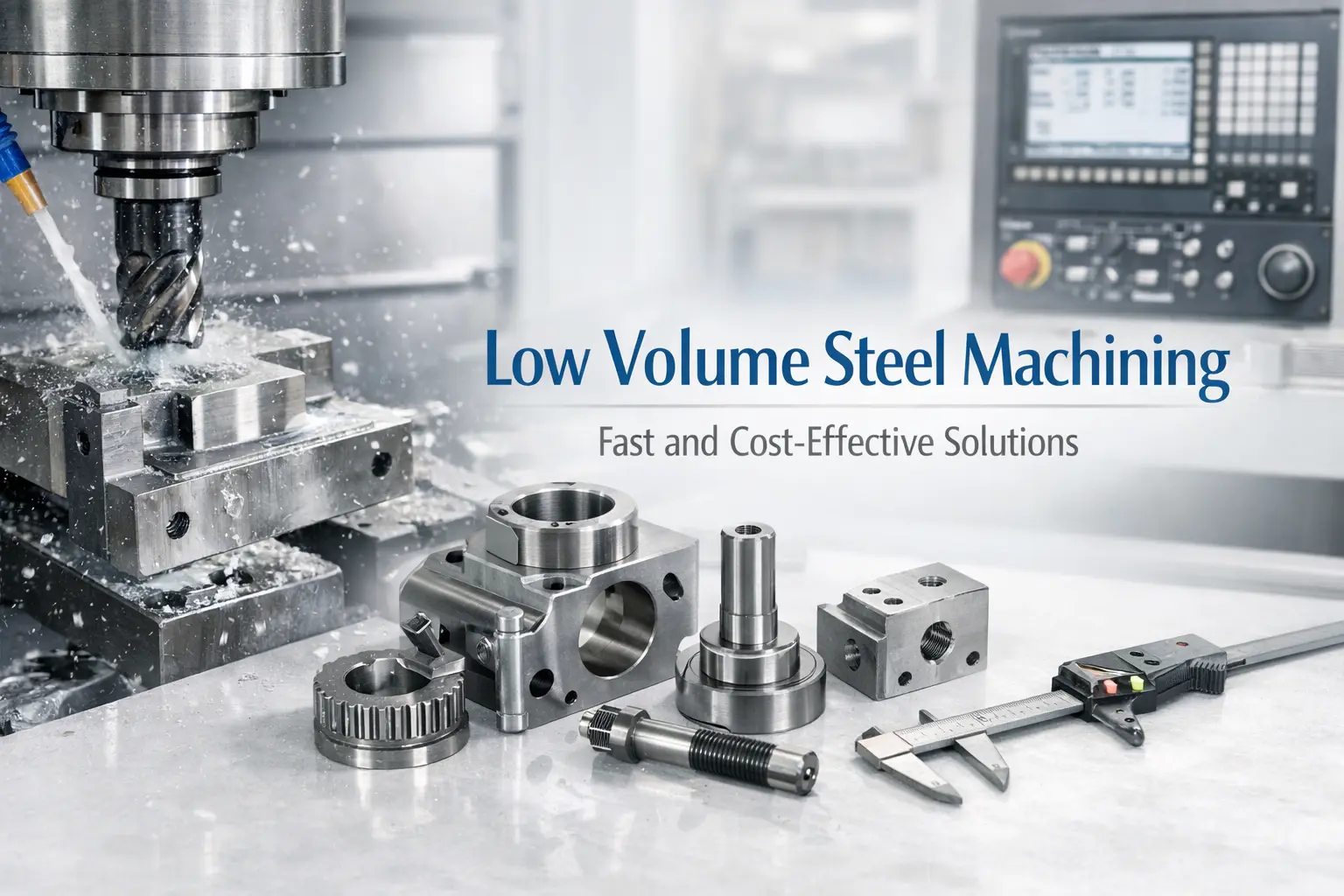
In today’s fast-paced manufacturing landscape, companies are increasingly seeking solutions that provide both speed and precision without committing to large production volumes. Low volume steel machining has emerged as a critical solution for businesses that need high-quality components quickly and cost-effectively. Unlike mass production, which requires significant upfront investment in tooling and long lead times, low volume steel machining allows manufacturers to produce small batches of parts with flexibility, reducing both financial and time-related risks. This approach is particularly valuable for prototyping, custom components, and low-demand industrial applications, where agility and adaptability are paramount.
The primary advantage of low volume machining lies in its ability to bridge the gap between conceptual designs and functional products. Engineers and designers can iterate rapidly, testing different configurations and materials without the financial burden associated with large-scale production. For instance, automotive startups developing electric vehicles can leverage low volume steel machining to produce critical chassis or motor components for initial testing, allowing faster product development cycles. Similarly, industrial equipment manufacturers can use this method to produce replacement parts or specialized components on demand, avoiding costly inventory storage and reducing downtime.
Low volume steel machining supports innovation and customization. Companies can tailor parts to specific project requirements without being constrained by economies of scale. This flexibility is a decisive advantage in industries where product differentiation is key, such as aerospace, robotics, and medical devices. Choosing a partner like WeYoung CNC ensures access to advanced machinery, technical expertise, and rapid turnaround times, making it easier for businesses to stay competitive while managing costs effectively.
Low volume steel machining refers to the production of steel components in small batches, usually ranging from a few units to several hundred, depending on project requirements. Unlike large-scale manufacturing, which emphasizes economies of scale, low volume machining prioritizes flexibility, precision, and rapid turnaround. The process is suitable for a wide range of industries, including automotive, aerospace, robotics, and medical equipment, where bespoke parts or rapid prototyping are essential.
The choice of steel material is a critical factor in low volume machining. Common options include carbon steel, stainless steel, and alloy steel, each offering different mechanical properties and cost considerations. Carbon steel is widely used for its strength and machinability, while stainless steel provides corrosion resistance and aesthetic appeal. Alloy steels can offer specific advantages, such as improved hardness or wear resistance, making them suitable for high-performance applications. Understanding the material’s characteristics is essential to selecting the right machining parameters and achieving optimal results.
Machining techniques for low volume steel components vary based on design complexity, tolerance requirements, and material properties. CNC milling and turning are among the most common methods, providing high precision and repeatability. Advanced techniques such as multi-axis CNC machining allow the creation of complex geometries without the need for additional fixtures or assembly. Additionally, processes like laser cutting, waterjet cutting, and EDM can be integrated into low volume workflows to achieve intricate designs efficiently. Partnering with WeYoung CNC ensures access to optimized techniques and skilled operators to maintain quality while reducing lead time.
One of the most significant advantages of low volume steel machining is rapid prototyping. Companies can quickly transform conceptual designs into functional parts, testing fit, form, and function without the constraints of large-scale production. This capability accelerates product development, enabling faster time-to-market and improved innovation cycles. Rapid prototyping also reduces risk, allowing designers to identify potential design flaws before committing to expensive tooling or large production runs.
Low volume machining reduces material waste by producing only the quantity needed, which minimizes inventory costs and avoids unnecessary stockpiling. Using standardized materials and efficient machining processes further lowers production expenses. Small batch production also eliminates the need for extensive custom tooling, allowing companies to focus resources on quality and design improvement rather than mass production overheads.
Advanced CNC machines and skilled operators ensure that each part meets strict tolerance requirements, maintaining consistency across all units. Flexibility is another key benefit, allowing manufacturers to adjust designs, incorporate feedback, or produce custom variations without significant cost or delay. Additionally, producing only the necessary quantity reduces material consumption and energy usage, contributing to more sustainable manufacturing practices. Leveraging a trusted partner like WeYoung CNC maximizes these benefits, ensuring high-quality, adaptable, and eco-friendly production.
One of the most effective ways to reduce costs in low volume steel machining is through thoughtful part design. Simplifying geometries, minimizing complex features, and avoiding unnecessary tight tolerances can significantly decrease machining time and tooling wear. Features like deep pockets, sharp internal corners, and extremely thin walls may require specialized tools or additional setups, which increase costs for small batches. Instead, adopting rounded corners, uniform wall thickness, and standardized hole sizes can reduce production complexity while maintaining structural integrity. Early collaboration with experienced machining partners like WeYoung CNC can help engineers identify design modifications that reduce both cost and lead time without compromising performance.
Material selection plays a crucial role in cost management for low volume production. Choosing commonly available steel grades such as 1018 or 4140 can lower raw material costs while ensuring machinability and durability. Exotic alloys or specialty steels, while sometimes necessary for high-performance applications, can dramatically increase expenses due to higher material costs and longer machining cycles. Standardizing dimensions and using readily available stock sizes for plates, rods, and tubes also helps minimize waste. Additionally, bulk purchasing small quantities from trusted suppliers can reduce unit costs while ensuring consistent quality, a strategy often recommended by WeYoung CNC for low-volume clients.
Efficiency in the machining process directly impacts cost-effectiveness. Reducing the number of setups, combining operations where possible, and carefully planning tool paths can significantly shorten production time. Multi-axis CNC machining is particularly advantageous for low volume batches because it allows complex features to be completed in a single setup, reducing labor hours and machine time. Preventive maintenance, optimized cutting parameters, and proper fixturing also help avoid unnecessary downtime and tool replacement costs. Companies partnering with WeYoung CNC gain access to expert process planning, which ensures that small batch production is both fast and cost-efficient.
Modern technologies, including CAM software, real-time monitoring, and automated tool changers, enhance the cost-effectiveness of low volume machining. CAM programs optimize tool paths, reducing machine wear and cycle times, while real-time monitoring ensures quality consistency across every unit. Automation in tool changes and part handling minimizes human error, increases repeatability, and shortens lead times. These technologies, combined with skilled operators, allow companies to produce small batches at costs comparable to larger runs while maintaining high precision and quality standards.
Small batch steel machining presents unique challenges. One major concern is tool wear, particularly when machining harder alloys or complex features. Frequent tool replacement can add unexpected costs, making process optimization essential. By selecting the appropriate cutting tools, using efficient tool paths, and leveraging modern CNC capabilities, manufacturers can extend tool life and maintain consistent tolerances. Experienced partners like WeYoung CNC are skilled at balancing machining speed with tool longevity to ensure efficiency without sacrificing part quality.
Another challenge in low volume machining is balancing turnaround speed with precision and budget. While rapid delivery is critical, maintaining high tolerances and surface finishes is equally important, especially for industries like aerospace, automotive, and medical devices. Achieving this balance requires careful planning, advanced machining strategies, and iterative quality checks throughout production. Collaborating with an experienced machining provider ensures that both schedule and quality goals are met, minimizing costly rework or delays.
Low volume projects often involve frequent design changes, which can disrupt production flow and increase costs if not managed effectively. Flexible manufacturing setups, modular fixturing, and multi-axis CNC machines allow for rapid adaptation without extensive retooling. This adaptability ensures that updates in design or specification can be incorporated seamlessly, maintaining project timelines and minimizing waste. Companies like WeYoung CNC specialize in handling such dynamic requirements efficiently, providing a competitive advantage for clients who need agile production solutions.
Even in small batches, quality cannot be compromised. Consistency across parts is crucial, especially for functional components or safety-critical applications. Implementing stringent quality control measures, such as in-process inspections, coordinate measuring machine (CMM) checks, and final part verification, ensures that every unit meets customer specifications. Partnering with machining providers who emphasize quality management helps mitigate risks and ensures client satisfaction.
WeYoung CNC has established itself as a trusted partner for low volume steel machining, offering unmatched speed, precision, and flexibility. With advanced CNC equipment and highly skilled operators, the company can handle complex geometries, tight tolerances, and diverse steel grades efficiently. Clients benefit from rapid production cycles, ensuring that prototypes, custom parts, or small batch runs are delivered on time without compromising quality.
Beyond CNC machining, WeYoung CNC provides a full range of manufacturing services including sheet metal fabrication, injection molding, 3D printing, and surface finishing. This integrated approach allows clients to streamline production, reduce outsourcing complexity, and maintain consistent quality across multiple processes. By centralizing manufacturing capabilities, WeYoung CNC simplifies project management for low volume orders, providing both efficiency and cost savings.
A key differentiator is WeYoung CNC’s commitment to client support and flexibility. From initial design consultation to final delivery, the team works closely with customers to optimize parts for manufacturability, reduce costs, and accelerate lead times. Their responsive approach ensures that design modifications, urgent orders, or specialized requirements are accommodated efficiently. Prospective clients can easily reach out for personalized solutions via WeYoung CNC contact page.
WeYoung CNC’s portfolio demonstrates its ability to deliver high-quality low volume steel components across diverse industries. By consistently meeting stringent tolerances, maintaining rapid delivery schedules, and providing cost-effective solutions, the company has built a reputation for reliability and excellence. Businesses looking for a partner who can combine agility, precision, and efficiency find a dependable solution in WeYoung CNC.
Low volume steel machining offers a unique combination of speed, flexibility, and cost-efficiency that is essential for modern manufacturing. Rapid prototyping, precise small batch production, and the ability to adapt to evolving design requirements make it an ideal choice for industries ranging from automotive to medical devices.
Companies leveraging low volume machining reduce inventory costs, minimize material waste, and accelerate product development cycles. The ability to produce high-quality components quickly ensures that businesses can respond to market changes, customer needs, and new technological demands effectively.
Selecting an experienced machining partner like WeYoung CNC guarantees access to advanced equipment, skilled operators, and comprehensive manufacturing services. By combining technical expertise with a client-focused approach, WeYoung CNC ensures that low volume steel projects are delivered on time, within budget, and to exacting quality standards.
For companies seeking fast, flexible, and cost-effective steel machining solutions, contacting WeYoung CNC is the first step toward achieving efficient production and superior results. Whether for prototyping, small batch production, or custom parts, WeYoung CNC provides the tools, expertise, and support to bring projects from concept to completion with confidence.
