Address
304 North Cardinal St.
Dorchester Center, MA 02124
Work Hours
Monday to Friday: 7AM - 7PM
Weekend: 10AM - 5PM

Address
304 North Cardinal St.
Dorchester Center, MA 02124
Work Hours
Monday to Friday: 7AM - 7PM
Weekend: 10AM - 5PM
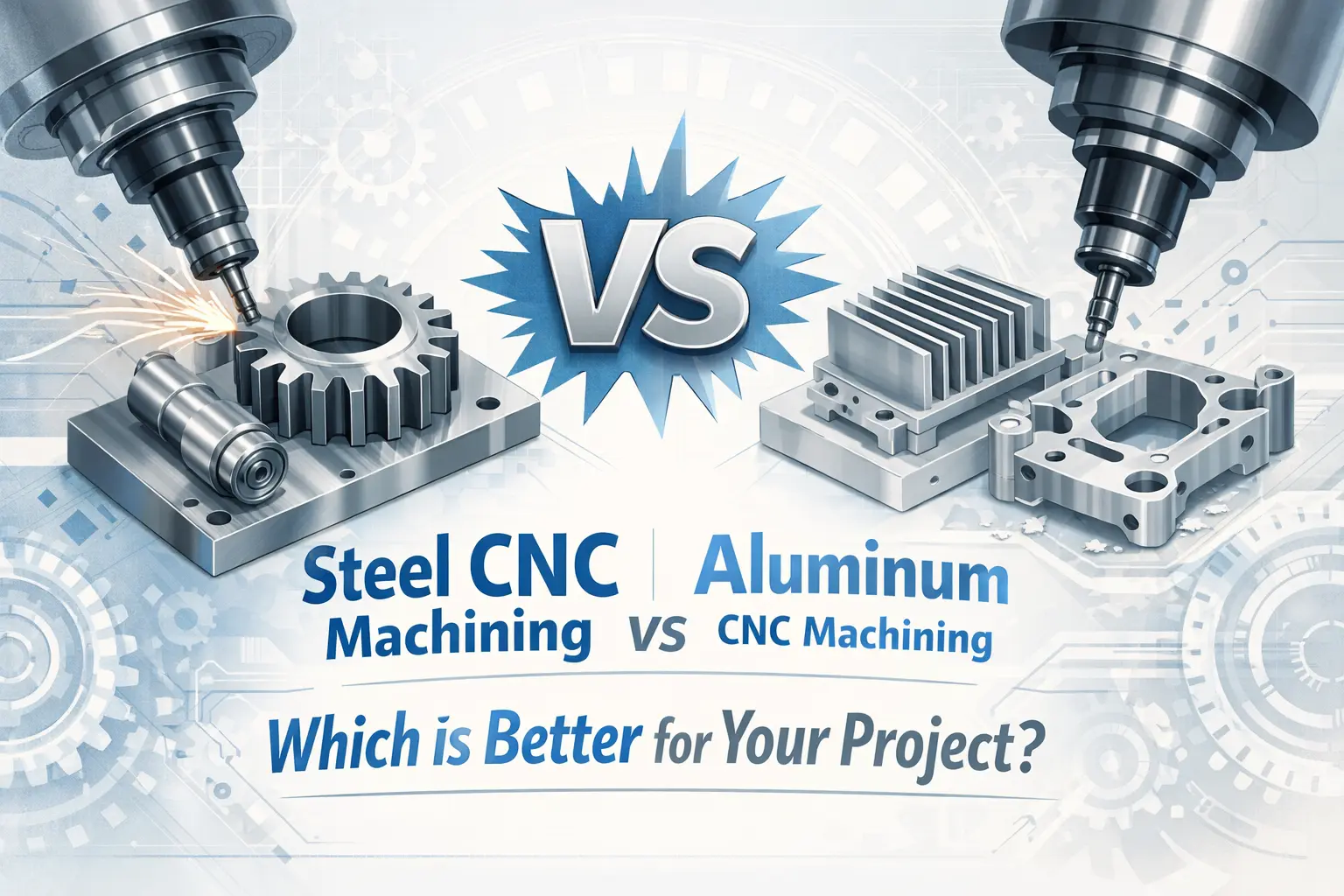
Choosing the right material is one of the most critical decisions in CNC machining projects. The material not only affects the performance, durability, and aesthetics of the final part but also impacts manufacturing efficiency and overall cost. For engineers, designers, and project managers, understanding the differences between steel and aluminum is essential to make informed decisions. Steel, known for its high strength and durability, is often favored in applications requiring structural integrity and wear resistance. Aluminum, on the other hand, is lightweight, corrosion-resistant, and easier to machine, making it ideal for applications where weight reduction and speed are critical. Selecting the wrong material can lead to unnecessary expenses, longer lead times, and compromised product performance. At WeYoung CNC, we specialize in delivering high-quality CNC machined parts from both steel and aluminum, helping clients optimize their projects from prototype to full production. By evaluating material properties, machining considerations, and application requirements, you can ensure that your components meet both performance and cost expectations. Understanding these differences upfront allows you to reduce trial-and-error, avoid over-engineering, and achieve efficient production cycles. Whether you are designing components for automotive, aerospace, robotics, or consumer products, this guide will help clarify which material is best suited for your project’s unique requirements.
Steel is a versatile material widely used in CNC machining due to its exceptional strength, hardness, and durability. It is available in various forms such as carbon steel, stainless steel, and alloy steel, each offering unique mechanical properties. Carbon steel is strong and cost-effective but prone to corrosion without proper treatment. Stainless steel provides excellent corrosion resistance and maintains strength across a wide temperature range, making it suitable for medical, food, and marine applications. Alloy steels can be engineered to achieve specific properties like enhanced toughness or wear resistance. While steel’s density and hardness offer durability, they also require careful consideration during CNC machining to prevent excessive tool wear or longer machining times. Proper tooling, cutting speeds, and coolant usage are essential to maintain precision and surface finish. At WeYoung CNC, we leverage advanced machining techniques to handle steel efficiently, minimizing lead times while ensuring high-quality results. Steel parts are ideal when structural integrity, load-bearing capability, or wear resistance is a priority.
Aluminum stands out for its lightweight nature, corrosion resistance, and excellent machinability. Common alloys like 6061 and 7075 offer a balance of strength and ease of machining, making them popular in aerospace, automotive, and robotics applications. Aluminum’s low density allows for weight reduction, which is crucial in high-performance projects where every gram counts. It also offers superior thermal conductivity, making it ideal for heat sinks and electronic housings. One of aluminum’s major advantages in CNC machining is its ease of cutting, which allows for faster production times and lower tool wear compared to steel. However, aluminum is softer, so considerations for surface finish, deformation, or part warping are necessary during machining. WeYoung CNC has extensive experience working with aluminum, optimizing cutting parameters to produce parts with precise tolerances and smooth surfaces. Selecting aluminum can lead to cost savings, faster project turnaround, and reduced shipping or handling challenges due to lighter part weight.
When comparing steel and aluminum, mechanical properties are a major differentiator. Steel generally offers superior tensile strength and hardness, which translates to higher load-bearing capacity and resistance to wear and deformation. This makes steel suitable for heavy-duty applications such as automotive frames, machinery components, and industrial tools. Aluminum, while lighter, has lower tensile strength and is softer, which can limit its use in high-stress environments. However, certain aluminum alloys like 7075 provide near-steel-level strength while maintaining a lightweight profile, offering a compromise between performance and weight savings. Material selection should consider both static and dynamic loads, environmental exposure, and expected part lifespan. At WeYoung CNC, we guide clients in selecting alloys that balance strength and machinability, ensuring that components meet both functional and economic requirements.
Steel typically exhibits excellent impact resistance and fatigue life, making it reliable in applications with repeated loading or vibration. Aluminum, while less robust under high-stress cycling, is advantageous in applications requiring flexibility and energy absorption. Designers should evaluate the mechanical demands of each component, including shock resistance, bending forces, and potential wear points. Choosing the appropriate material not only ensures durability but also reduces maintenance and replacement costs over the product lifecycle. With WeYoung CNC’s expertise, clients can compare material performance under real-world conditions and select the optimal solution for their projects.
Machining steel can be challenging due to its hardness and strength. Hard steels may require specialized cutting tools, slower feed rates, and effective cooling to prevent tool wear and heat buildup. Stainless steel and alloy steels can be particularly tough, potentially increasing machining time and cost if not properly planned. Despite these challenges, steel offers excellent dimensional stability and can maintain precise tolerances under high loads. At WeYoung CNC, our skilled machinists and advanced CNC equipment allow us to efficiently handle steel, achieving tight tolerances and high-quality surface finishes while minimizing production delays. Understanding steel’s machinability characteristics is essential for project planning, cost estimation, and optimizing manufacturing workflows.
Aluminum’s machinability is generally superior to steel, allowing faster cutting speeds, lower tool wear, and reduced energy consumption. Its softness and ductility, however, require careful handling to avoid deformation, chatter marks, or burrs. Aluminum is ideal for complex geometries, intricate designs, and high-volume production where efficiency is key. WeYoung CNC applies precision machining strategies, optimized tooling, and effective cooling to produce aluminum parts with consistent quality. Selecting aluminum can lead to significant time and cost savings, especially for rapid prototyping, small-batch production, or lightweight component manufacturing.
Weight is a critical factor in many industries, particularly aerospace, automotive, robotics, and consumer electronics. Aluminum’s low density gives it a clear advantage in lightweighting applications, improving fuel efficiency, reducing mechanical stress, and enhancing portability. Components like enclosures, brackets, and heat sinks benefit from aluminum’s combination of strength-to-weight ratio and corrosion resistance. Conversely, steel’s higher density may be acceptable or even preferred when structural rigidity and durability outweigh weight concerns. In heavy machinery, load-bearing frames, or industrial equipment, steel provides the robustness necessary to ensure longevity and reliability. At WeYoung CNC, we work closely with clients to match material choice with design priorities, balancing weight, strength, and performance requirements.
Different industries have varying material needs. In automotive applications, aluminum is often used to reduce vehicle weight, whereas steel is selected for chassis, engine components, or safety-critical parts. In aerospace, aluminum’s lightweight properties dominate, but high-strength steel is necessary for landing gear or engine components. Designers should assess operating conditions, environmental exposure, and mechanical loads before deciding. WeYoung CNC offers tailored guidance and machining expertise for both steel and aluminum, helping clients achieve optimal material performance for their specific applications.
When evaluating steel versus aluminum, cost considerations are crucial for any CNC project. Steel is generally less expensive per kilogram compared to high-grade aluminum alloys, making it appealing for large or heavy components. However, machining steel can be more time-consuming due to its hardness, which can lead to higher tooling costs and longer production times. Specialized cutting tools, slower feed rates, and additional cooling requirements can increase labor and machine usage costs. Aluminum, while often more expensive as raw material, typically reduces overall manufacturing expenses because of faster cutting speeds, lower tool wear, and shorter cycle times. Additionally, aluminum’s lower density can lead to savings in shipping, handling, and assembly. WeYoung CNC helps clients perform a full cost-benefit analysis, considering both material and machining expenses to identify the most economical solution. By understanding these trade-offs early, designers can avoid over-engineering, reduce waste, and optimize the budget while maintaining high-quality results. Efficient material selection can also improve project scalability and speed to market, crucial for both prototyping and low-volume production.
Beyond initial material and machining costs, long-term value is an important factor. Steel parts may require less frequent replacement due to superior strength and durability, reducing maintenance and downtime in industrial applications. Aluminum parts, though lighter and easier to machine, may need periodic inspection or replacement if subjected to high stress or impact. Environmental conditions such as corrosion, thermal cycling, and mechanical wear also influence lifecycle costs. At WeYoung CNC, we guide clients to consider both short-term and long-term project economics. By evaluating durability, maintenance needs, and replacement frequency, companies can select the material that offers the best overall return on investment for their specific application. This holistic approach ensures that your CNC project not only meets performance requirements but also remains cost-efficient throughout its operational life.
Steel has been the material of choice in projects where strength, toughness, and wear resistance are critical. For instance, automotive components like engine mounts, transmission housings, and suspension brackets benefit from steel’s rigidity and fatigue resistance. Industrial machinery components, including gears, shafts, and structural frames, also rely on steel to withstand high loads and repeated stress cycles. At WeYoung CNC, we have successfully machined complex steel parts with tight tolerances and intricate geometries for clients in heavy machinery and automotive sectors. Our advanced CNC systems ensure consistent quality, precise dimensions, and excellent surface finish, even with challenging steel alloys. Real-world applications demonstrate that steel delivers reliability and longevity, particularly in high-stress environments where failure is not an option.
Aluminum’s lightweight and corrosion-resistant properties make it ideal for applications such as aerospace brackets, drone frames, heat sinks, and automotive body panels. For example, an electric vehicle prototype we produced required multiple aluminum components to reduce weight while maintaining strength. Our CNC machining process enabled rapid production with high precision, ensuring that the parts fit seamlessly during assembly. Aluminum is also favored in electronics enclosures, robotics, and consumer products due to its thermal conductivity, ease of finishing, and design flexibility. By leveraging WeYoung CNC’s expertise, clients can achieve faster turnaround times, lower tooling costs, and high-quality surface finishes, demonstrating that aluminum is optimal for projects prioritizing speed, weight reduction, and efficiency.
Selecting between steel and aluminum requires a thorough understanding of your project’s functional requirements. Key factors include load-bearing needs, impact resistance, weight constraints, environmental exposure, and cost targets. Projects requiring maximum strength, structural integrity, or wear resistance often benefit from steel, while applications emphasizing lightweight design, rapid production, and corrosion resistance are better suited for aluminum. Designers should also consider machining complexity, surface finishing requirements, and post-processing needs. Using a structured evaluation process allows engineers to balance performance, cost, and manufacturability efficiently.
A practical approach is to create a comparison table highlighting mechanical properties, machining difficulty, cost, and project-specific constraints. For high-stress or industrial applications, steel usually comes out ahead. For rapid prototyping, lightweight parts, or intricate geometries, aluminum is often the optimal choice. At WeYoung CNC, we provide expert guidance on material selection, helping clients evaluate trade-offs and choose the best option for both small-batch and low-volume production. By involving CNC experts early in the design process, you can minimize risks, reduce unnecessary iterations, and ensure your parts are manufacturable with high precision.
WeYoung CNC specializes in high-precision machining of both steel and aluminum, offering rapid prototyping, pre-production, and low-volume manufacturing services. Our advanced CNC equipment and skilled machinists allow us to handle a wide range of alloys, achieving tight tolerances and superior surface finishes. We prioritize efficiency, cost-effectiveness, and delivery speed, making us a trusted partner for engineers and product designers. Whether your project involves complex steel components or lightweight aluminum parts, we provide tailored solutions to meet your requirements.
In addition to machining expertise, we offer consultation on material selection, design optimization, and post-processing options. Clients benefit from faster production cycles, lower costs, and reliable quality assurance. Our process-oriented approach ensures that every part, from prototype to production, meets or exceeds expectations. You can reach out to our team anytime for a consultation through WeYoung CNC Contact, ensuring your project receives personalized attention and expert recommendations.
Choosing between steel and aluminum depends on project-specific priorities such as strength, weight, machinability, and cost. Steel provides durability, wear resistance, and high strength, making it ideal for industrial and high-stress applications. Aluminum excels in lightweight, corrosion-resistant, and fast-machining scenarios, making it suitable for aerospace, automotive, and consumer electronics projects. Evaluating your project requirements, understanding material properties, and consulting CNC experts will help ensure the right choice.
At WeYoung CNC, we combine material expertise, precision machining, and rapid production capabilities to deliver high-quality parts from steel and aluminum. By leveraging our knowledge, clients can optimize designs, reduce lead times, and achieve reliable performance in every application. Contact us today through WeYoung CNC Contact to discuss your project requirements and receive expert guidance on material selection and CNC machining solutions.
