Address
304 North Cardinal St.
Dorchester Center, MA 02124
Work Hours
Monday to Friday: 7AM - 7PM
Weekend: 10AM - 5PM

Address
304 North Cardinal St.
Dorchester Center, MA 02124
Work Hours
Monday to Friday: 7AM - 7PM
Weekend: 10AM - 5PM

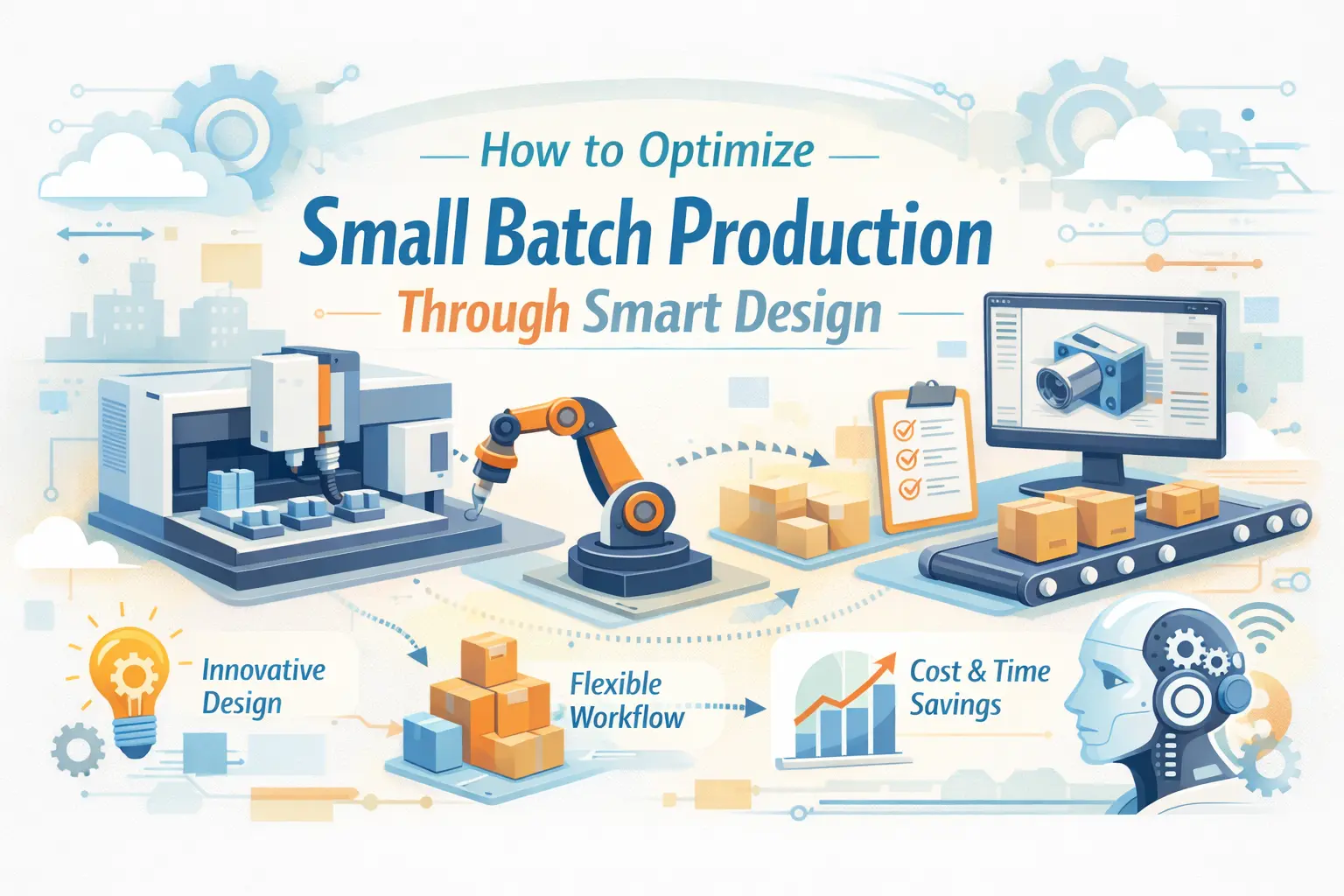
Small batch production is a manufacturing approach focused on producing limited quantities of parts or products, often for prototyping, custom orders, or niche markets. Unlike mass production, small batch runs allow for flexibility, faster iteration, and lower inventory costs. However, producing parts efficiently in small quantities can be challenging without thoughtful planning. Smart design is key, as it ensures parts are easy to manufacture, cost-effective, and meet quality standards. By considering manufacturability, assembly, and material usage from the start, companies can reduce production bottlenecks, minimize waste, and shorten lead times.
Design is not just about how a part looks—it directly impacts production efficiency. Early-stage design decisions regarding material choice, geometry, assembly complexity, and post-processing requirements can dramatically reduce production time and costs. At WeYoung CNC, our rapid manufacturing services, including CNC machining, 3D printing, and low-volume injection molding, benefit greatly from smart part design. Well-optimized designs allow our team to deliver high-quality small batch parts efficiently while maintaining tight tolerances and functional integrity.
Smart design ensures a smoother workflow from prototype to final product. It helps prevent errors, avoids costly redesigns, and enables manufacturers to respond quickly to changing requirements. Companies that integrate production considerations into their design process gain both flexibility and efficiency, making it easier to scale or modify products. For businesses looking to optimize small batch production, we recommend reaching out via our contact page for personalized guidance and solutions.
Material choice is one of the most critical factors in small batch production. Selecting materials that are readily available in small quantities reduces procurement delays and helps control costs. Exotic metals or specialty polymers often require high minimum orders or long lead times, which can disrupt schedules and increase expenses. Designers should focus on materials that balance performance, cost, and availability to maintain efficiency in small batch runs.
Different manufacturing methods—such as CNC machining, injection molding, or 3D printing—have unique constraints. Features like deep cavities, intricate undercuts, or multi-level surfaces may require specialized tooling, which can be costly or impractical for small batches. Designing parts compatible with standard machine capabilities reduces setup time, minimizes errors, and lowers production costs. At WeYoung CNC, we work closely with clients to review designs and provide recommendations that align with our equipment, ensuring smooth and efficient small batch production.
Even small components, fasteners, or off-the-shelf parts can impact timelines if lead times are not considered. Smart design reduces dependency on long-lead items by standardizing parts and incorporating modularity where possible. Planning for available components in advance allows manufacturers to maintain steady production and avoid delays. Understanding these constraints early ensures that small batch projects remain on time, on budget, and high in quality.
One of the most effective ways to optimize small batch production is to simplify part geometry. Complex features such as deep undercuts, intricate channels, multi-level surfaces, or sharp internal corners can dramatically increase production time and cost. Every additional machining step or tool change adds setup time and raises the risk of errors, which is especially significant in low-volume runs. By focusing only on essential features that fulfill functional requirements, designers can reduce complexity without compromising part performance. Simplified parts are easier to machine, inspect, and assemble, ensuring faster turnaround and higher consistency across the batch.
Standardizing holes, threads, slot widths, and other common features further streamlines production. Using off-the-shelf specifications eliminates the need for custom tooling and reduces setup time, allowing manufacturers to produce parts efficiently even in small quantities. This approach not only lowers cost but also simplifies assembly and post-processing. For example, aligning all threaded holes to standard sizes means fasteners are easily interchangeable, reducing inventory complexity and assembly errors. At WeYoung CNC, we advise clients on how to standardize critical features while maintaining the part’s functional integrity, helping small batch production run smoothly.
Modular design is another powerful strategy for small batch efficiency. By breaking a complex product into smaller, interchangeable modules, manufacturers can produce only the required components for each batch, reducing material waste and production time. Modular parts are also easier to update or modify, which is particularly useful during prototyping or iterative design cycles. Changes can be implemented in one module without redesigning the entire assembly, providing both flexibility and cost savings. Businesses looking for practical guidance on simplifying geometry and applying modular principles can explore our CNC machining services for real-world solutions.
Efficient small batch production requires minimizing assembly complexity. Parts designed for easy assembly—such as snap-fits, interlocking features, or fewer fasteners—can save significant time and labor costs. Complex assemblies not only take longer to put together but also increase the risk of errors, which is particularly costly when producing small batches where each part counts. Simplifying assembly steps also benefits quality control, as fewer components reduce potential points of failure. At WeYoung CNC, we help clients review designs to ensure assembly-friendly features are incorporated from the start, improving overall efficiency and consistency in low-volume runs.
Post-processing is often a time-consuming and expensive part of production. Smart design anticipates finishing needs, reducing unnecessary operations. Parts can be designed with smooth transitions, minimal tight corners, or uniform surfaces to facilitate finishing methods like polishing, anodizing, or black oxide coating. By considering surface treatment requirements during the design phase, manufacturers can reduce labor, cost, and production time. For guidance on designing parts compatible with different surface finishes, our surface finishing services provide practical insights for small batch projects.
Designing parts with inspection in mind helps maintain quality without slowing production. Features that are easy to measure or check reduce errors and rework, which is essential when producing small batches. Standardized features, accessible tolerances, and clear critical dimensions streamline quality assurance processes. Smart design ensures that inspection can be performed quickly and accurately, allowing batches to move smoothly from production to delivery while maintaining high quality.
Additive manufacturing technologies like 3D printing provide flexibility and speed for small batch production. Prototypes can be quickly validated, functional testing can be performed, and design adjustments can be made before committing to more expensive manufacturing methods. This reduces waste and accelerates development timelines. By integrating additive processes into the early stages of design, businesses can optimize parts for both performance and manufacturability. WeYoung CNC’s 3D printing services are ideal for producing low-volume components efficiently while maintaining high precision.
For CNC machining, part geometry can be tailored to minimize tool changes, reduce cutting time, and lower material waste. Smart design considers machining strategies, such as using uniform wall thickness, avoiding deep pockets, and aligning features with standard tool access. Optimizing tool paths reduces production time and ensures consistent part quality, which is especially important for small batch runs where efficiency and accuracy are critical.
Investing in flexible tooling or modular jigs rather than custom, fixed tooling allows manufacturers to produce multiple parts with minimal setup changes. This is cost-effective for small batches and supports rapid design iterations. By combining intelligent design with adaptable tooling, businesses can achieve both high quality and fast turnaround. At WeYoung CNC, we leverage versatile tooling solutions to ensure that low-volume production remains both efficient and scalable.
Reducing material waste is key to cost-efficient small batch production. Designers can optimize part orientation, nesting, and layout to maximize material utilization. Simplifying geometry and avoiding unnecessary material removal also lowers machining and post-processing costs. Thoughtful material usage helps keep production sustainable and economical without compromising part performance.
Standardizing parts across multiple products or batches allows manufacturers to take advantage of economies of scale even in low-volume production. Fewer variations mean less setup, less tooling adjustment, and reduced risk of errors. Companies can save time and resources by reusing common components, leading to a more predictable and cost-effective production process.
Tight tolerances increase production difficulty, machining time, and cost. Designers should apply precise tolerances only where necessary for functional performance. Overly strict specifications can be expensive and slow down small batch production. Smart design balances functional requirements with manufacturability to achieve optimal efficiency and cost-effectiveness. For guidance on achieving this balance, WeYoung CNC provides expert consultation through our contact page.
Several industries have successfully implemented smart design principles to optimize small batch production. For example, in the automotive sector, modular components designed with standardized features reduce machining time and assembly complexity. In electronics, simplified enclosures and optimized material selection allow for faster prototyping and quicker market launches. By analyzing real-world examples, businesses can see measurable improvements in lead time, cost savings, and production quality.
Smart design principles apply broadly—from medical devices to consumer electronics. Companies that incorporate early design-for-manufacture thinking experience fewer delays, lower production costs, and higher customer satisfaction. Small batch production becomes not just feasible but highly efficient when supported by thoughtful design and strategic manufacturing decisions.
Optimizing small batch production begins with smart design. By understanding production constraints, simplifying geometry, planning for assembly and post-processing, leveraging advanced manufacturing techniques, and designing for cost efficiency, businesses can significantly improve workflow, reduce costs, and maintain high quality. Early collaboration between designers and manufacturers ensures that every part is optimized for production, reducing errors, lead times, and material waste.
For businesses ready to implement these strategies, partnering with an experienced rapid manufacturing provider like WeYoung CNC ensures that small batch projects are completed efficiently, on time, and to the highest quality standards. Contact us today via our contact page to explore tailored solutions for your small batch production needs.
