Address
304 North Cardinal St.
Dorchester Center, MA 02124
Work Hours
Monday to Friday: 7AM - 7PM
Weekend: 10AM - 5PM

Address
304 North Cardinal St.
Dorchester Center, MA 02124
Work Hours
Monday to Friday: 7AM - 7PM
Weekend: 10AM - 5PM

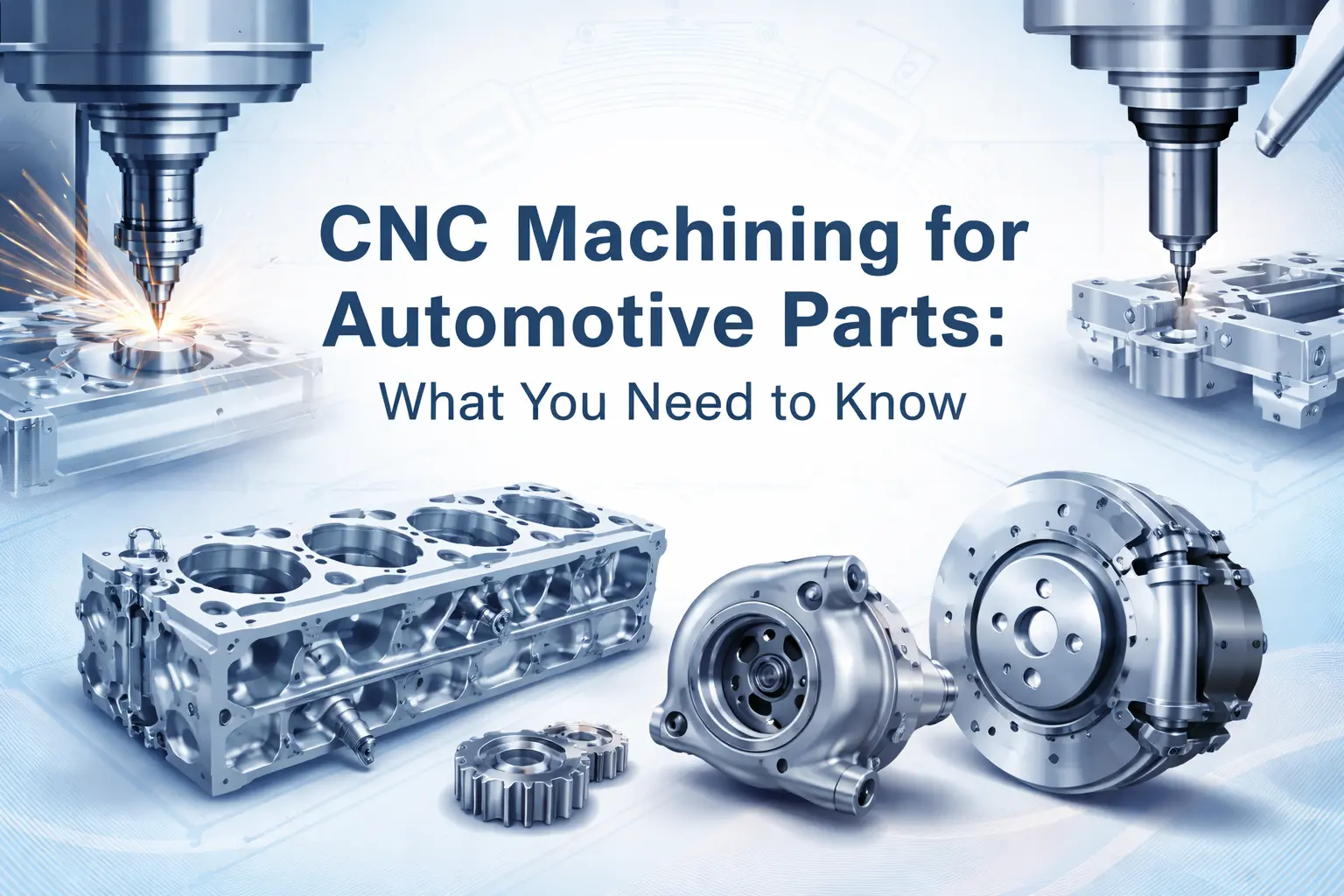
CNC machining, or Computer Numerical Control machining, is a highly automated manufacturing process that uses pre-programmed software to control cutting tools and machinery. In the automotive industry, CNC machining has become an indispensable technology for producing components with extremely tight tolerances, consistent quality, and repeatable performance. By translating digital CAD models into physical parts, CNC machining allows manufacturers to produce complex geometries that are difficult or impossible with traditional manual methods. This capability is particularly valuable in automotive applications, where precision is critical for both safety and performance.
Modern vehicles, including both traditional internal combustion engines and electric vehicles (EVs), require a wide range of precisely engineered parts. From engine components that withstand high heat and pressure to intricate structural and interior parts, CNC machining ensures that each piece meets the strict standards demanded by automotive OEMs. The technology also supports rapid prototyping, allowing engineers to test and refine designs before committing to large-scale production. This flexibility is crucial for automotive startups and established manufacturers alike, as it shortens development cycles and reduces overall costs.
Several CNC machining processes are commonly used in automotive manufacturing. Milling involves removing material from a workpiece using rotating cutters, enabling the creation of complex shapes and surfaces. Turning uses a rotating workpiece and stationary cutting tool to produce cylindrical components, which is ideal for shafts, gears, and engine parts. Drilling and tapping are also standard processes, allowing precise holes and threads for assembly. Some advanced CNC setups combine multiple processes in a single machine, improving efficiency and reducing production time.
The benefits of CNC machining go beyond precision. It allows manufacturers to produce both prototypes and low-volume production parts with minimal setup changes, making it highly adaptable to evolving designs. Its ability to work with a wide range of materials, including metals and engineering plastics, further enhances its utility in automotive applications. Overall, CNC machining bridges the gap between design and production, enabling automotive companies to innovate faster while maintaining quality and reliability.
CNC machining is widely used to manufacture engine and transmission components that demand high precision and durability. Engine parts such as cylinder heads, pistons, crankshafts, and valve bodies are subjected to extreme heat, pressure, and wear during operation. Any deviation from specifications can cause reduced performance or mechanical failure. CNC machining ensures these parts are produced to exact tolerances, maintaining optimal engine performance and reliability.
Similarly, transmission components like gears, shafts, housings, and clutch parts require precision machining. These parts must transfer power efficiently and smoothly, and even minor errors in manufacturing can lead to inefficiencies or early wear. CNC machines can produce these parts consistently across both small and large production runs, meeting the strict standards required by automotive manufacturers.
Suspension and chassis components, such as control arms, brackets, and structural supports, also benefit from CNC machining. These parts often require a balance of strength and lightweight design, particularly in modern vehicles where efficiency is a priority. CNC machining enables manufacturers to achieve complex geometries, optimized for durability and weight reduction, which enhances vehicle performance and fuel efficiency.
In addition, CNC machining is used to produce interior and exterior custom parts, including dashboard components, trim pieces, and other detailed fittings. The technology allows for high surface finish quality, intricate designs, and rapid prototyping. This flexibility is particularly valuable during the development phase, where design iterations and testing are frequent. Overall, CNC machining supports a wide range of automotive applications, from critical engine components to precision aesthetic parts, making it an essential part of modern vehicle manufacturing.
Metals are the most commonly used materials in automotive CNC machining due to their strength, durability, and thermal resistance. Aluminum is widely favored for components such as engine blocks, housings, and structural parts because of its excellent strength-to-weight ratio, corrosion resistance, and machinability. Its lightweight nature is particularly important in electric vehicles (EVs) and modern fuel-efficient cars, where reducing vehicle weight can improve performance and efficiency.
Steel and stainless steel are also extensively used, especially for high-stress parts such as shafts, gears, fasteners, and structural components. Steel provides exceptional hardness and wear resistance, while stainless steel offers added corrosion resistance for parts exposed to harsh conditions. In some high-performance or specialized applications, titanium may be used due to its superior strength and lightweight properties, though its cost is significantly higher.
In addition to metals, engineering plastics play a critical role in automotive CNC machining. Materials such as ABS, POM (Delrin), and nylon are commonly used for interior components, electrical housings, and non-structural parts. These plastics provide sufficient strength while offering advantages such as reduced weight, chemical resistance, and electrical insulation. They are also more cost-effective than metals for certain applications, particularly in low-volume production or prototyping.
With the increasing focus on lightweight and sustainable vehicle design, automotive engineers are continuously exploring new material options. CNC machining supports this trend by allowing precise production of both traditional and innovative materials. This flexibility ensures that manufacturers can balance performance, durability, cost, and weight, meeting the evolving demands of modern vehicles.
One of the main advantages of CNC machining in automotive manufacturing is its exceptional precision and accuracy. Components such as engine parts, transmission gears, and suspension elements must meet extremely tight tolerances to ensure optimal performance. CNC machines operate based on digital CAD data, which minimizes human error and allows manufacturers to produce identical parts repeatedly. This consistency is essential for modern vehicles, where even slight deviations can affect assembly, efficiency, or safety.
CNC machining offers fast turnaround times, which is particularly valuable for automotive prototyping and low-volume production. Engineers can quickly modify designs and produce new iterations without extensive tooling changes. This flexibility allows automotive companies to test, refine, and validate components efficiently, reducing development cycles and overall costs. Additionally, CNC machining can handle both small and complex batch production, making it suitable for both custom parts and larger production runs.
While CNC machining requires an initial investment in equipment and programming, it is cost-effective for producing high-precision automotive parts, especially in low to medium volumes. The scalability of CNC processes allows manufacturers to transition smoothly from prototyping to production without compromising quality. This makes CNC machining an ideal solution for startups and established OEMs seeking to optimize manufacturing costs while maintaining performance standards.
Another key benefit of CNC machining is its repeatability. Whether producing a single prototype or thousands of components, CNC machines ensure each part meets the same specifications. This consistency reduces waste, minimizes rework, and maintains high product quality throughout the supply chain. For automotive manufacturers, this reliability is crucial, as it directly impacts vehicle performance, safety, and customer satisfaction.
Injection molding is commonly used for plastic automotive components due to its efficiency in mass production. However, CNC machining offers superior precision, surface finish, and the ability to work with metals as well as plastics. CNC is more suitable for low-volume production, prototypes, or complex geometries that are difficult to mold.
Casting is ideal for producing complex metal shapes in high volumes but often requires additional finishing operations and lacks the precision of CNC machining. CNC machining provides tighter tolerances and better surface quality, which is essential for critical components such as engine and transmission parts.
3D printing is excellent for rapid prototyping and creating intricate designs but has limitations in material strength and surface finish. CNC machining produces stronger, more durable components suitable for functional automotive parts, making it the preferred method when performance and reliability are critical.
Selecting the appropriate manufacturing method depends on part requirements, production volume, material, and cost considerations. CNC machining is often the best choice when precision, consistency, and flexibility are top priorities, especially for critical or customized automotive components.
Electric vehicles rely on high-precision battery housings, motor components, and cooling systems. CNC machining allows manufacturers to produce battery casings and structural parts with tight tolerances, ensuring safety, thermal management, and energy efficiency.
Weight reduction is critical in EV design for maximizing range and efficiency. CNC-machined aluminum, titanium, or composite components help achieve lightweight yet strong structures, including chassis, suspension brackets, and body panels.
EV performance depends on effective heat dissipation. CNC machining enables precise production of heat sinks, cooling plates, and other thermal management components, ensuring optimal battery and motor performance under various conditions.
Startups and specialized EV manufacturers often require rapid prototyping of custom parts. CNC machining supports iterative design and testing, allowing engineers to optimize vehicle performance while reducing time-to-market.
Modern automotive parts often feature intricate designs, which can be challenging to machine efficiently. Complex geometries require advanced programming, multi-axis CNC machines, and precise tool selection.
Automotive supply chains operate under strict timelines. Delivering high-precision parts quickly while maintaining quality is a major challenge, especially for low-volume or custom orders.
High-strength metals, including stainless steel and titanium, increase tool wear and machining time. Proper tooling, coolant management, and process optimization are critical to maintain efficiency and part quality.
While CNC machining is cost-effective for certain volumes, high-complexity parts or specialized materials can increase production costs. Balancing quality, speed, and cost is an ongoing challenge for manufacturers.
Choosing a reliable CNC machining supplier starts with evaluating their certifications and quality management systems. Look for ISO 9001 or IATF 16949 certification, which demonstrate adherence to industry standards for automotive manufacturing.
Assess whether the supplier can handle your production volume and meet deadlines. Fast turnaround is critical for prototypes and low-volume production. WeYoung CNC specializes in delivering rapid prototypes and production parts, ensuring your project stays on schedule without compromising quality.
A good CNC supplier provides engineering support, including design-for-manufacturing (DFM) feedback. This helps optimize part designs, reduce machining time, and improve overall cost-efficiency. WeYoung CNC’s experienced engineering team works closely with clients to refine designs and ensure manufacturability.
Verify that the supplier can machine the materials you need, from aluminum and steel to plastics and specialty alloys. Multi-process capability—including milling, turning, and surface finishing—ensures all your automotive component requirements can be met under one roof.
Consider suppliers with a proven track record in automotive projects. WeYoung CNC has experience producing engine, transmission, and structural components for various clients, demonstrating reliability and expertise in the automotive sector.
WeYoung CNC specializes in providing automotive parts with exceptionally short lead times, making it an ideal partner for projects that require speed and precision. Whether you need rapid prototypes or low-volume production, our team ensures that your components are delivered on schedule without compromising quality.
From aluminum, steel, and titanium to engineering plastics, WeYoung CNC can machine a broad range of materials to meet the diverse needs of the automotive industry. Our multi-process capabilities, including CNC milling, turning, and surface finishing, allow us to handle complex parts in a single workflow, reducing production time and cost.
Our engineers work closely with clients to provide design-for-manufacturing (DFM) feedback, optimize part geometry, and suggest material or process improvements. This collaborative approach ensures manufacturability, reduces errors, and improves overall efficiency in automotive projects.
WeYoung CNC supports clients worldwide, offering reliable logistics and responsive customer service. From initial inquiry to final delivery, our team provides seamless communication and support to meet your project needs.
With extensive experience producing engine components, transmission parts, chassis elements, and interior/exterior precision components, WeYoung CNC has demonstrated its capability to meet the rigorous standards of the automotive industry. Partnering with us ensures precision, reliability, and faster time-to-market for your automotive projects.
CNC machining has become a cornerstone of modern automotive manufacturing, offering precision, consistency, and flexibility that are essential for producing high-quality components. From engine and transmission parts to chassis and interior components, CNC machining enables manufacturers to meet tight tolerances, optimize performance, and reduce development time.
For automotive companies seeking reliable production of prototypes or low-volume parts, CNC machining is often the most effective choice. It balances speed, cost, and quality, providing an adaptable solution for both traditional vehicles and electric vehicles. Choosing the right CNC supplier is equally important to ensure your parts meet industry standards and deadlines.
WeYoung CNC stands out as a trusted partner in the automotive industry, offering fast lead times, a wide range of materials and processes, engineering support, and global delivery capabilities. Whether you are developing a new EV prototype, optimizing a traditional engine component, or producing custom automotive parts, CNC machining with WeYoung CNC provides the precision, efficiency, and reliability your project needs.
