Address
304 North Cardinal St.
Dorchester Center, MA 02124
Work Hours
Monday to Friday: 7AM - 7PM
Weekend: 10AM - 5PM

Address
304 North Cardinal St.
Dorchester Center, MA 02124
Work Hours
Monday to Friday: 7AM - 7PM
Weekend: 10AM - 5PM
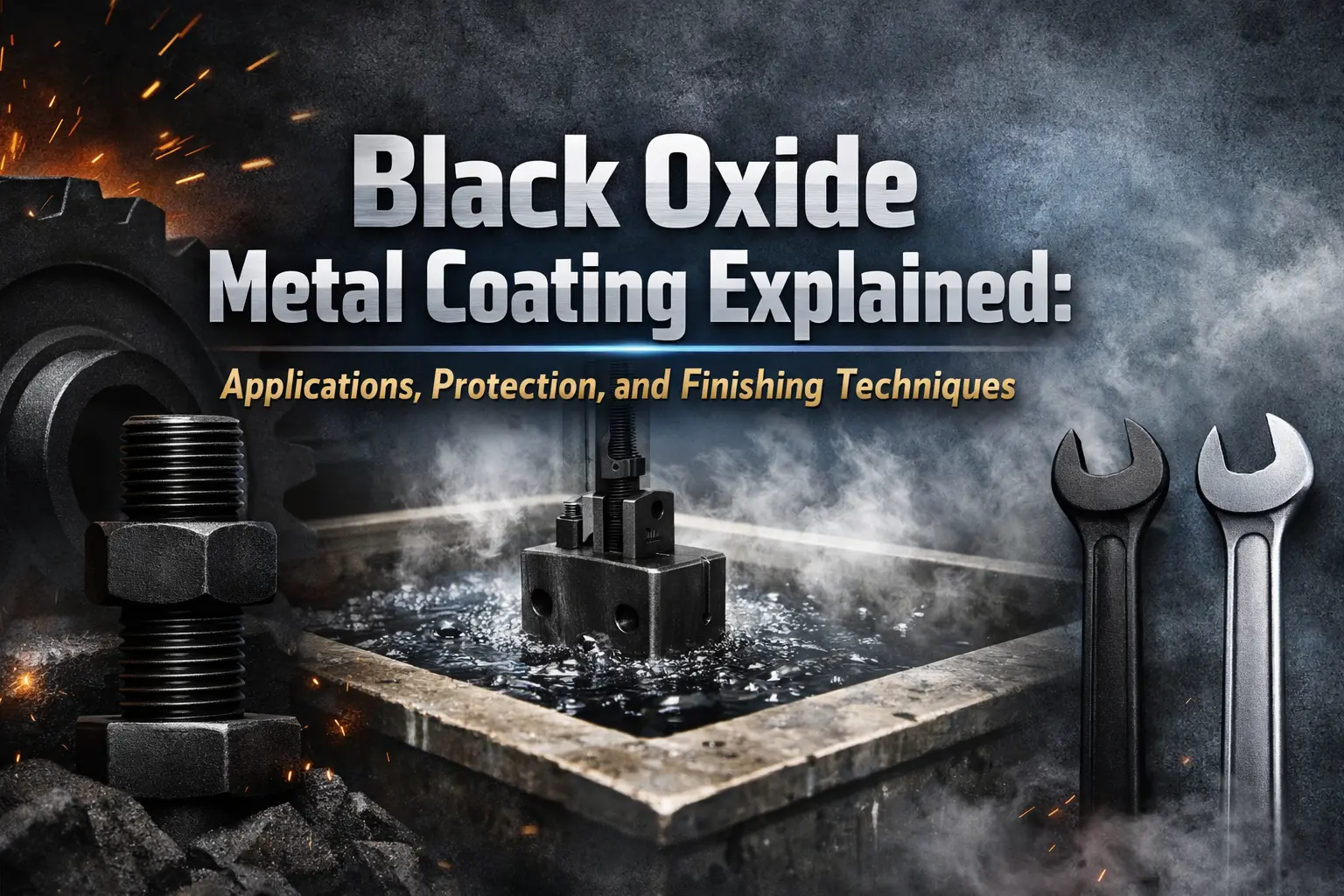
Black oxide coating is an essential process in modern metal finishing, widely used to enhance the durability, appearance, and performance of metal parts. By forming a thin, protective layer on steel, stainless steel, and other metals, this coating improves corrosion resistance, reduces glare, and provides a smooth surface that can hold lubricants. Whether for industrial machinery, automotive components, or precision tools, black oxide coating offers a cost-effective solution that balances functionality with aesthetics. In this guide, we’ll explore what black oxide coating is, how it works, and why it has become a popular choice in metal finishing today.
Black oxide coating is a chemical process that creates a thin, protective layer on the surface of metal parts, most commonly steel, stainless steel, and iron. Unlike traditional paint or plating, black oxide does not add significant thickness to the metal, which helps maintain precise dimensions and tolerances. This coating improves corrosion resistance, reduces glare, and gives metal components a sleek, uniform black finish. Additionally, it enhances surface lubricity when paired with oils or waxes, making it a versatile solution for both functional and aesthetic purposes in metal finishing.
Black oxide coating is essentially a conversion coating that changes the metal surface chemically rather than adding a layer on top. The process produces a black, matte-to-glossy finish depending on the method and materials used. This layer protects against oxidation and can serve as a base for further treatments, such as oiling, which improves wear resistance and extends the lifespan of metal parts. Its thinness makes it particularly suitable for precision components where dimensional accuracy is critical.
The black oxide process has been used in metalworking for over a century. It first gained attention in the early 20th century for military and industrial applications, especially for protecting firearms, hand tools, and machinery from rust. Over time, advancements in chemical formulations and coating techniques have expanded its use to modern industries like automotive, aerospace, and electronics. Today, black oxide remains a cost-effective method that combines protection, functionality, and aesthetic appeal.
Black oxide coating has earned its popularity because it offers a unique combination of benefits. It improves corrosion resistance without significantly altering part dimensions, enhances the visual appeal with a uniform black finish, and increases surface lubricity when combined with oils or waxes. Compared to other metal finishing methods, it is environmentally friendly and adaptable to a wide range of industrial applications. These qualities make black oxide coating a preferred choice for manufacturers seeking both performance and cost efficiency.
The black oxide coating process is a chemical conversion method that transforms the surface of metal into a protective black layer. Unlike paint or plating, which adds a layer on top of the metal, black oxide reacts with the metal itself to form a thin, uniform coating. This chemical reaction not only improves corrosion resistance but also provides a smooth surface that can retain oils or lubricants for enhanced wear protection.
The process typically involves immersing the metal in a hot alkaline solution containing oxidizing agents. For steel, this results in the formation of magnetite (Fe₃O₄) on the surface. This black layer is tightly bonded to the metal, providing both aesthetic appeal and functional protection. Depending on the specific chemical bath and temperature, the coating can vary in appearance from matte black to a subtle glossy finish.
There are several methods of black oxide coating, each with distinct advantages:
Hot Black Oxide: The most common method, ideal for steel, providing excellent corrosion resistance when paired with oil or wax.
Cold Black Oxide: Applied at room temperature, suitable for parts that cannot tolerate high heat. Often used for fasteners or small components.
Copper-Based Black Oxide: Includes copper salts in the bath to provide enhanced corrosion resistance and a more uniform finish.
Black oxide coating works best on ferrous metals such as steel and iron. Some formulations are also compatible with stainless steel and copper alloys, though the appearance and corrosion protection may vary. It is not generally used for aluminum, zinc, or non-ferrous metals unless specialized coatings are applied. Manufacturers often select the type of black oxide process based on the metal type, part geometry, and desired performance characteristics.
Black oxide coating is widely used across various industries due to its protective and aesthetic properties. At WeYoung CNC, we provide precision black oxide finishing for a range of metal components, ensuring both durability and visual appeal.
Black oxide coating is commonly applied to automotive parts such as gears, fasteners, and engine components. The coating protects against corrosion caused by moisture and chemicals while maintaining precise dimensions, which is critical for high-performance vehicles. At WeYoung CNC, we deliver automotive parts with consistent quality and enhanced surface protection.
In aerospace applications, metal components must withstand extreme conditions while remaining lightweight and precise. Black oxide coating helps protect fasteners, brackets, and other metal parts from oxidation and wear. Our team at WeYoung CNC ensures that aerospace components meet stringent industry standards and maintain long-term reliability.
Hand tools, machine tools, and fasteners benefit from black oxide coating because it increases wear resistance and reduces friction. The sleek black finish also improves part identification and handling. WeYoung CNC specializes in treating tools and fasteners with consistent black oxide layers for both functionality and visual appeal.
Metal components in electronics require both dimensional accuracy and surface protection. Black oxide coating reduces glare, enhances surface durability, and provides a suitable base for lubricants where necessary. WeYoung CNC applies black oxide finishing to electronic components, ensuring they meet the high standards demanded by the industry.
Industrial machinery parts, including shafts, rollers, and brackets, benefit from black oxide coating because it extends service life and minimizes maintenance requirements. At WeYoung CNC, we provide coating solutions tailored to heavy-duty machinery, ensuring consistent performance and protection.
Achieving a high-quality black oxide finish requires careful preparation, precise application, and proper post-treatment. At WeYoung CNC, we follow industry best practices to ensure each component meets stringent quality standards.
Before black oxide coating, metal parts must be thoroughly cleaned to remove oils, grease, and surface contaminants. This step ensures uniform coating adhesion and optimal protection. Common pre-treatment methods include alkaline cleaning, degreasing, and acid pickling. At WeYoung CNC, we tailor pre-treatment processes based on the material type and part geometry to achieve the best results.
The black oxide process typically involves immersing the cleaned metal in a hot chemical bath, where the surface undergoes a chemical reaction to form a black oxide layer. The process can be adjusted depending on the part’s size, complexity, and material. After the coating forms, parts may be rinsed and dried before post-treatment. WeYoung CNC applies advanced techniques to ensure consistent thickness and color across all components.
Post-treatment enhances the corrosion resistance and wear properties of black oxide coated parts. Common options include applying oils, waxes, or specialized sealants. These treatments not only improve protection but also give parts a uniform, polished appearance. At WeYoung CNC, we select the most suitable post-treatment for each application, ensuring durability and performance.
Quality control is crucial to ensure black oxide coating meets functional and aesthetic requirements. Inspections may include visual checks, adhesion tests, and thickness measurements. At WeYoung CNC, we implement strict quality protocols to guarantee that each component is coated to exact specifications, maintaining high standards for every project.
While black oxide coating offers many benefits, it also has certain limitations that manufacturers and designers need to consider. At WeYoung CNC, we help clients understand these challenges and provide solutions to maximize performance and durability.
The black oxide process involves chemical baths that require proper handling and disposal to comply with environmental regulations. Safety precautions, such as protective equipment and controlled ventilation, are essential during application. WeYoung CNC strictly follows environmental and safety standards, ensuring both high-quality finishes and responsible manufacturing practices.
Although black oxide improves corrosion resistance, it is not as protective as thicker coatings like zinc plating or powder coating. For parts exposed to highly corrosive environments, additional protective measures such as oils, waxes, or sealants are recommended. WeYoung CNC advises clients on the best combination of coatings and post-treatments to meet their specific application needs.
Black oxide coated components require proper maintenance to retain their protective properties. Regular cleaning and reapplication of lubricants or oils may be necessary for parts exposed to harsh conditions. At WeYoung CNC, we provide guidance on maintenance practices to ensure long-lasting performance of black oxide finished parts.
Selecting a reliable black oxide coating provider is critical to ensure your metal parts receive consistent protection, durability, and aesthetic quality. At WeYoung CNC, we combine advanced CNC manufacturing with precision black oxide finishing to meet the highest industry standards.
When choosing a provider, consider factors such as experience, equipment capabilities, quality control processes, and adherence to environmental regulations. A trustworthy partner should be able to handle both small-scale prototyping and large production runs without compromising precision or coating consistency.
WeYoung CNC stands out as a leader in black oxide coating because of our commitment to quality and precision. Our experienced team ensures:
Consistent and uniform coatings across all metal components.
Customized post-treatment solutions to enhance corrosion resistance and wear properties.
Advanced quality control protocols to maintain strict tolerance and visual standards.
Environmentally responsible practices throughout the coating process.
By choosing WeYoung CNC, clients can have confidence that their metal parts will not only meet technical specifications but also achieve superior surface performance and visual appeal. Our integrated approach to CNC manufacturing and black oxide finishing provides a one-stop solution for precision metal parts.
How long does black oxide coating last?
The lifespan of black oxide coating depends on the material, environmental exposure, and post-treatment. Properly treated and maintained black oxide parts can last for several years, especially when combined with oils or sealants. WeYoung CNC ensures that each coating meets high durability standards.
Can black oxide be applied to all metals?
Black oxide works best on ferrous metals such as steel and iron. Some stainless steel and copper alloys can also be treated, but aluminum and non-ferrous metals require specialized coatings. At WeYoung CNC, we select the optimal coating process for each material to achieve the best results.
Is black oxide coating environmentally friendly?
Compared to heavy metal plating, black oxide coating uses fewer hazardous materials and consumes less energy. Proper handling and disposal are still required. WeYoung CNC strictly follows environmental regulations to minimize impact while delivering high-quality finishes.
Does black oxide affect part dimensions?
No, black oxide coating is extremely thin and does not significantly alter part dimensions, making it ideal for precision components.
Black oxide coating is a versatile and cost-effective solution in metal finishing, offering corrosion resistance, enhanced appearance, and improved wear properties. From automotive and aerospace parts to precision tools and industrial machinery, black oxide provides reliable protection while maintaining dimensional accuracy.
At WeYoung CNC, we specialize in precision black oxide finishing, combining advanced CNC manufacturing with industry-leading coating techniques. Our commitment to quality, consistency, and environmentally responsible practices ensures that every component meets your exact specifications and performance requirements. Whether for prototyping or large-scale production, WeYoung CNC is your trusted partner for high-quality black oxide metal finishing.
