Address
304 North Cardinal St.
Dorchester Center, MA 02124
Work Hours
Monday to Friday: 7AM - 7PM
Weekend: 10AM - 5PM

Address
304 North Cardinal St.
Dorchester Center, MA 02124
Work Hours
Monday to Friday: 7AM - 7PM
Weekend: 10AM - 5PM

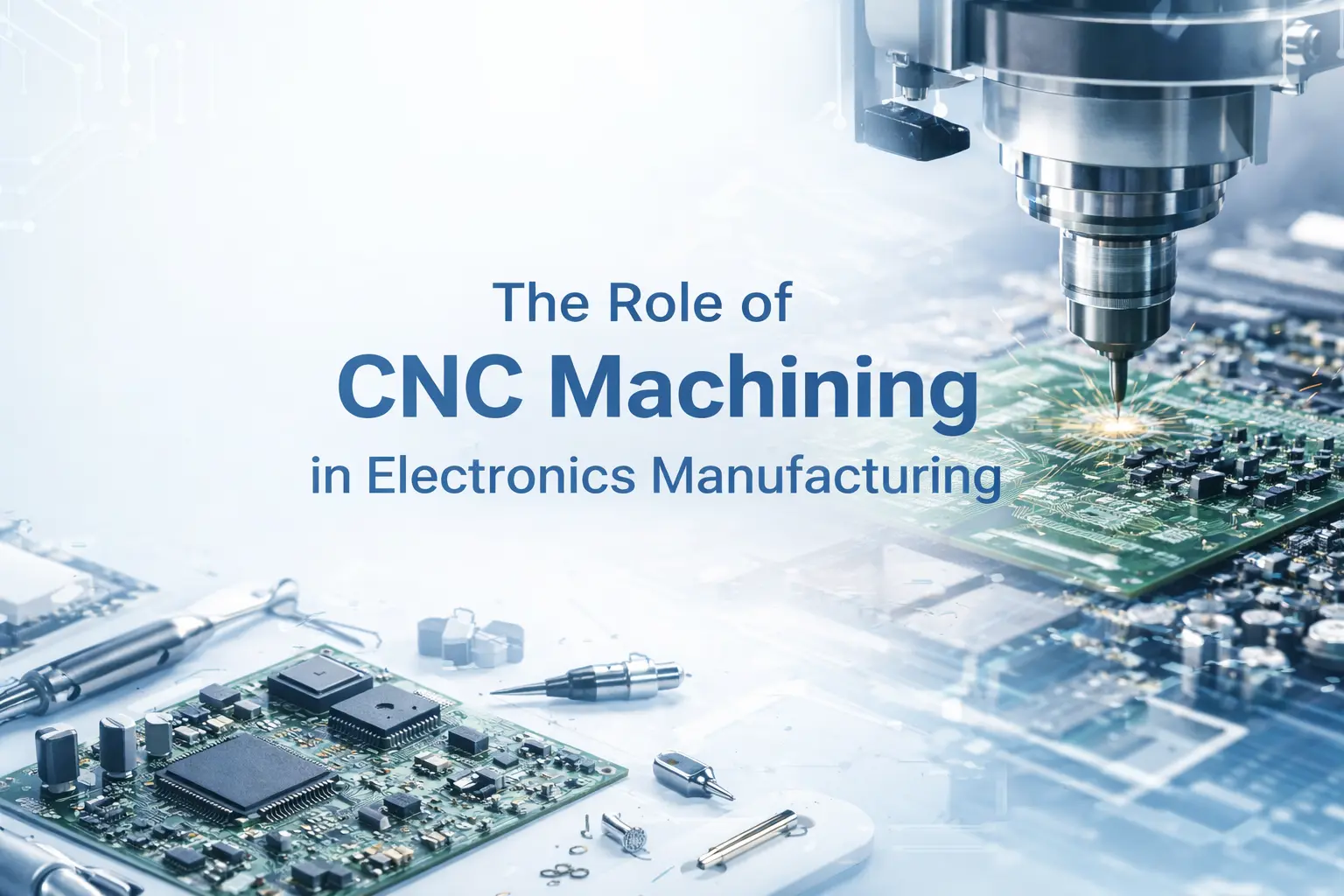
In today’s rapidly evolving electronics industry, precision, reliability, and efficiency are more important than ever. CNC machining plays a crucial role in producing high-quality electronic components, from enclosures and heat sinks to connectors and custom fixtures. By using computer-controlled machines to achieve tight tolerances and consistent surface finishes, manufacturers can ensure that their components meet the demanding standards of modern electronic devices. Whether for rapid prototyping, low-volume production, or specialized parts, CNC machining enables electronics companies to accelerate product development while maintaining performance and quality.
CNC machining in electronics manufacturing refers to the use of computer-controlled machines to produce high-precision parts and components for electronic devices, equipment, and systems. CNC machines operate based on digital design files, allowing complex geometries and tight tolerances to be achieved with a high level of consistency and repeatability. This makes CNC machining an essential manufacturing method in the electronics industry, where accuracy, reliability, and miniaturization are critical.
Unlike traditional manual machining, CNC machining automates cutting, milling, drilling, and turning processes. This automation significantly reduces human error while enabling manufacturers to meet the strict dimensional and surface finish requirements commonly found in electronic components.
CNC machining technology relies on computer numerical control systems to guide machine tools with extreme precision. Engineers first create a 3D CAD model of the electronic part, which is then converted into machine-readable code. This code directs the CNC machine on tool paths, cutting speeds, and depths, ensuring each part is produced exactly as designed.
In electronics manufacturing, CNC milling machines and CNC lathes are most commonly used. These machines can handle a wide range of materials, including metals and plastics, and are capable of producing intricate features such as thin walls, fine holes, slots, and mounting interfaces. The high level of control offered by CNC machining allows manufacturers to maintain tight tolerances and consistent quality across both prototypes and production parts.
Electronic components often require precise dimensions to ensure proper assembly, electrical performance, and thermal management. Even minor dimensional deviations can affect circuit alignment, connector fit, or heat dissipation. CNC machining provides the accuracy and repeatability needed to meet these demanding requirements.
Another key reason CNC machining is critical in electronics manufacturing is its flexibility. Design changes are common during product development, and CNC machining allows engineers to quickly modify designs without the need for expensive tooling changes. This makes it ideal for rapid prototyping, functional testing, and low- to medium-volume production.
Additionally, CNC machining supports the production of durable and high-quality electronic parts with excellent surface finishes. This is especially important for components such as enclosures, heat sinks, and precision fixtures, where both functional performance and appearance matter. By combining precision, material versatility, and fast turnaround times, CNC machining plays a vital role in enabling innovation and reliability in modern electronics manufacturing.
With its high precision, material versatility, and design flexibility, CNC machining is widely applied across various segments of the electronics industry. From consumer electronics to industrial systems and laboratory equipment, CNC-machined components play a key role in ensuring structural integrity, functional performance, and reliable assembly.
In electronics manufacturing, CNC machining is commonly used to produce both internal functional parts and external structural components. These parts often require tight tolerances, clean finishes, and consistent quality—making CNC machining an ideal solution for electronic applications.
One of the most common applications of CNC machining in the electronics industry is the production of enclosures and housings. These components protect sensitive electronic assemblies from mechanical damage, dust, moisture, and electromagnetic interference.
CNC machining allows manufacturers to produce enclosures with precise cutouts for connectors, buttons, displays, and ventilation features. Materials such as aluminum and engineering plastics are frequently used, offering a balance of strength, lightweight performance, and thermal stability. CNC-machined enclosures are widely used in consumer electronics, industrial control systems, medical devices, and communication equipment.
CNC machining is also used to manufacture precision components that support printed circuit boards (PCBs) and electrical connectors. These include mounting brackets, frames, spacers, standoffs, and alignment fixtures that ensure accurate positioning and secure installation of electronic assemblies.
Because PCB assemblies often require exact alignment and spacing, CNC machining provides the dimensional accuracy needed to avoid assembly issues and electrical failures. Tight tolerances and repeatable quality make CNC-machined parts especially suitable for high-precision electronic systems and testing equipment.
Effective thermal management is critical in electronics manufacturing, particularly for high-power or high-density electronic devices. CNC machining is widely used to produce heat sinks, cold plates, and other thermal management components that help dissipate heat and maintain stable operating temperatures.
CNC-machined heat sinks can be customized with complex fin geometries, optimized airflow paths, and precise mounting features. Aluminum and copper are commonly used due to their excellent thermal conductivity. Compared to standard off-the-shelf solutions, CNC-machined thermal components offer greater design flexibility and improved performance for demanding electronic applications.
In semiconductor manufacturing and electronic testing environments, precision and cleanliness are essential. CNC machining is frequently used to produce components for semiconductor tools, inspection systems, and electronic test equipment, including frames, fixtures, chambers, and precision mounts.
These components often require tight tolerances, smooth surface finishes, and stable mechanical performance. CNC machining enables manufacturers to meet these requirements while supporting custom designs and low-volume production runs commonly found in specialized electronic and semiconductor applications.
With its high precision, material versatility, and design flexibility, CNC machining is widely applied across various segments of the electronics industry. From consumer electronics to industrial systems and laboratory equipment, CNC-machined components play a key role in ensuring structural integrity, functional performance, and reliable assembly.
In electronics manufacturing, CNC machining is commonly used to produce both internal functional parts and external structural components. These parts often require tight tolerances, clean finishes, and consistent quality—making CNC machining an ideal solution for electronic applications.
One of the most common applications of CNC machining in the electronics industry is the production of enclosures and housings. These components protect sensitive electronic assemblies from mechanical damage, dust, moisture, and electromagnetic interference.
CNC machining allows manufacturers to produce enclosures with precise cutouts for connectors, buttons, displays, and ventilation features. Materials such as aluminum and engineering plastics are frequently used, offering a balance of strength, lightweight performance, and thermal stability. CNC-machined enclosures are widely used in consumer electronics, industrial control systems, medical devices, and communication equipment.
CNC machining is also used to manufacture precision components that support printed circuit boards (PCBs) and electrical connectors. These include mounting brackets, frames, spacers, standoffs, and alignment fixtures that ensure accurate positioning and secure installation of electronic assemblies.
Because PCB assemblies often require exact alignment and spacing, CNC machining provides the dimensional accuracy needed to avoid assembly issues and electrical failures. Tight tolerances and repeatable quality make CNC-machined parts especially suitable for high-precision electronic systems and testing equipment.
Effective thermal management is critical in electronics manufacturing, particularly for high-power or high-density electronic devices. CNC machining is widely used to produce heat sinks, cold plates, and other thermal management components that help dissipate heat and maintain stable operating temperatures.
CNC-machined heat sinks can be customized with complex fin geometries, optimized airflow paths, and precise mounting features. Aluminum and copper are commonly used due to their excellent thermal conductivity. Compared to standard off-the-shelf solutions, CNC-machined thermal components offer greater design flexibility and improved performance for demanding electronic applications.
In semiconductor manufacturing and electronic testing environments, precision and cleanliness are essential. CNC machining is frequently used to produce components for semiconductor tools, inspection systems, and electronic test equipment, including frames, fixtures, chambers, and precision mounts.
These components often require tight tolerances, smooth surface finishes, and stable mechanical performance. CNC machining enables manufacturers to meet these requirements while supporting custom designs and low-volume production runs commonly found in specialized electronic and semiconductor applications.
Material selection plays a critical role in CNC machining for electronics manufacturing. Electronic components often have strict requirements related to thermal performance, electrical conductivity, strength, weight, and environmental resistance. CNC machining supports a wide range of metals and plastics, allowing manufacturers to choose the most suitable material based on the specific application and performance needs.
Below are some of the most commonly used materials in CNC machining for electronics.
Aluminum alloys are among the most widely used materials in electronics CNC machining. They offer an excellent balance of lightweight strength, corrosion resistance, and thermal conductivity, making them ideal for electronic enclosures, heat sinks, frames, and structural components.
Aluminum is easy to machine, allowing for tight tolerances and high-quality surface finishes. Common aluminum grades used in electronics manufacturing provide good heat dissipation, which is essential for managing thermal loads in electronic devices. These advantages make aluminum a preferred choice for both prototyping and production in the electronics industry.
Copper and brass are frequently used in electronic applications that require high electrical or thermal conductivity. CNC machining allows these materials to be precisely shaped into components such as connectors, contacts, bus bars, and thermal plates.
Copper offers excellent conductivity but can be more challenging to machine due to its softness and tendency to generate heat. Brass, on the other hand, provides good electrical performance with improved machinability. CNC machining enables manufacturers to achieve accurate dimensions and clean surfaces while maintaining the functional properties required for electrical components.
Engineering plastics are widely used in electronics CNC machining for applications that require electrical insulation, lightweight construction, or chemical resistance. Materials such as ABS, polycarbonate, POM, and other high-performance plastics are commonly machined into housings, brackets, insulators, and internal supports.
CNC machining allows plastic components to be produced with precise features and smooth finishes without the need for molding tools. This makes plastic machining especially suitable for prototypes, custom parts, and low-volume electronic production. In addition, plastic materials can help reduce overall weight and cost while meeting functional and safety requirements.
For electronic applications that require high strength, wear resistance, or environmental durability, stainless steel and specialty metals are often used. These materials are commonly found in industrial electronics, outdoor equipment, and applications exposed to mechanical stress or harsh environments.
CNC machining enables precise fabrication of stainless steel components such as brackets, frames, fasteners, and protective housings. Although these materials are more challenging to machine than aluminum or plastics, CNC technology ensures consistent quality and reliable performance for demanding electronic applications.
CNC machining offers numerous advantages that make it a preferred manufacturing method in the electronics industry. As electronic products continue to become smaller, more complex, and more performance-driven, manufacturers require production processes that deliver precision, reliability, and flexibility. CNC machining meets these demands across prototyping and production stages.
The following advantages highlight why CNC machining plays a critical role in modern electronics manufacturing.
One of the most significant advantages of CNC machining in electronics manufacturing is its ability to achieve high precision and tight tolerances. Electronic components often require exact dimensions to ensure proper fit, electrical connectivity, and mechanical alignment.
CNC machines operate based on programmed instructions, allowing them to repeatedly produce parts with consistent accuracy. This level of precision is essential for components such as PCB mounts, connectors, heat sinks, and enclosures, where even small dimensional deviations can impact performance or assembly.
CNC machining is capable of producing smooth and high-quality surface finishes without extensive post-processing. This is particularly important in electronics manufacturing, where surface quality can affect both functionality and appearance.
Well-finished surfaces help improve thermal contact, reduce wear, and enhance corrosion resistance. At the same time, CNC-machined parts with clean edges and refined finishes contribute to a professional appearance, especially for visible components such as electronic housings and panels.
CNC machining supports fast turnaround times, making it an ideal solution for electronic prototyping and product development. Design changes are common during the development of electronic products, and CNC machining allows engineers to quickly modify designs without the need for new tooling.
This rapid prototyping capability helps shorten development cycles, reduce time to market, and allow functional testing at early stages. CNC machining enables manufacturers to validate designs, test assemblies, and optimize performance before moving into larger-scale production.
Consistency is critical in electronics manufacturing, especially when producing multiple parts that must fit and function together. CNC machining ensures repeatable results across production runs, maintaining the same quality standards from the first part to the last.
This repeatability reduces variability, minimizes defects, and improves overall production efficiency. Whether producing small batches or medium-volume orders, CNC machining provides reliable quality that electronics manufacturers can depend on.
CNC machining is widely used in both electronics prototyping and mass production, but its role and advantages differ depending on the production stage. From early concept validation to full-scale manufacturing, CNC machining provides flexibility, accuracy, and reliability that support the entire electronics product lifecycle.
Understanding how CNC machining is applied in prototyping versus mass production helps manufacturers choose the most efficient and cost-effective approach for their electronics projects.
CNC machining is an ideal solution for electronics prototyping due to its speed and design flexibility. During the early development stages, electronic products often go through multiple design iterations, and CNC machining allows engineers to quickly produce functional prototypes without investing in expensive tooling.
Prototyped parts can be machined from the same materials intended for final production, enabling accurate testing of mechanical fit, thermal performance, and structural integrity. This helps identify potential design issues early and reduces the risk of costly changes later in the production process.
Between prototyping and mass production, CNC machining is often used for low-volume or bridge production. This stage is common in electronics manufacturing when products are being tested in the market or when injection molds and other tooling are still under development.
CNC machining allows manufacturers to produce small to medium batches with consistent quality and tight tolerances. It also provides the flexibility to make design adjustments without interrupting production, making it an effective solution for short production runs and customized electronic components.
While CNC machining offers many advantages, it is often most effective when combined with other manufacturing processes in mass production. For example, CNC machining may be used to produce prototypes, critical precision components, or tooling, while high-volume parts are manufactured using injection molding, die casting, or stamping.
By integrating CNC machining with other production methods, electronics manufacturers can optimize cost, efficiency, and scalability. This hybrid approach ensures high-quality results while meeting volume and budget requirements as products move from development to full-scale production.
Proper design is essential to fully leverage the benefits of CNC machining in electronics manufacturing. Electronic components often require a balance between precision, functionality, thermal performance, and manufacturability. By considering CNC machining constraints early in the design phase, manufacturers can reduce production issues, control costs, and improve overall product performance.
The following design considerations are especially important when developing CNC-machined electronic components.
Tolerance control is a critical factor in electronic component design. Many electronic assemblies rely on precise alignment between PCBs, connectors, and mechanical supports. Overly tight tolerances can increase machining cost and lead time, while loose tolerances may cause assembly problems or performance issues.
When designing CNC-machined electronic parts, tolerances should be specified based on functional requirements rather than applied uniformly. Identifying which dimensions are critical to performance helps optimize machining efficiency while maintaining reliable assembly and operation.
Design for Manufacturability (DFM) plays a key role in CNC machining for electronics. Features such as deep pockets, thin walls, sharp internal corners, and excessive tool changes can increase machining complexity and cost.
Optimizing designs with appropriate wall thicknesses, realistic corner radii, and accessible machining features helps improve tool life and production consistency. Applying DFM principles early allows CNC-machined electronic components to be produced more efficiently without compromising functionality or quality.
Electronic components often face challenges related to heat dissipation, electromagnetic interference (EMI), and mechanical stability. CNC machining allows designers to integrate functional features such as ventilation slots, heat sink fins, shielding structures, and reinforcement ribs directly into the part design.
When designing CNC-machined electronic components, it is important to consider how material choice, geometry, and surface finish affect thermal performance and EMI shielding. Proper structural design also ensures that components maintain strength and stability during assembly and long-term use.
Quality and precision are the backbone of electronics manufacturing. CNC-machined components often need to meet stringent standards to ensure proper functionality, assembly compatibility, and long-term reliability. Adhering to quality requirements not only guarantees product performance but also reduces defects, rework, and production costs.
In the electronics industry, quality standards and precision requirements cover everything from surface finish to dimensional tolerances and inspection protocols.
Electronic components frequently demand smooth surface finishes and precise dimensions to function correctly. For example, connector housings, PCB mounts, and heat sinks must align perfectly with other assembly components. Any deviation can affect electrical performance or assembly efficiency.
CNC machining enables high repeatability and tight control over surface roughness and dimensions. By carefully selecting tools, cutting parameters, and machining strategies, manufacturers can produce parts that consistently meet strict specifications.
Robust inspection and quality control procedures are essential for maintaining high standards in CNC-machined electronic components. Common methods include coordinate measuring machines (CMM), optical inspection systems, and precision calipers. These tools verify critical dimensions, tolerances, and surface quality to ensure each part meets design requirements.
Implementing standardized quality control protocols helps detect errors early, reduce scrap, and maintain uniformity across production batches. It also builds confidence for customers who demand high-reliability electronics components.
Electronics manufacturers often need to comply with industry-specific standards, such as IPC (for PCB assemblies) or MIL-spec (for aerospace and defense electronics). CNC machining provides the precision and repeatability required to consistently meet these specifications.
Beyond industry standards, custom requirements from clients—such as specific tolerances, surface finishes, or material certifications—can also be achieved using CNC machining. This flexibility makes CNC machining a trusted solution for producing high-quality, mission-critical electronic components.
CNC machining offers unmatched precision, flexibility, and reliability, making it an ideal choice for electronics manufacturing projects of all sizes. From prototyping new designs to producing low- and medium-volume runs, CNC machining enables manufacturers to meet demanding technical requirements while reducing risk and production costs.
Choosing CNC machining ensures that electronic components perform reliably, assemble correctly, and maintain consistent quality across batches, which is particularly important for high-performance, miniaturized, or complex devices.
Electronic products are becoming increasingly compact and feature-rich, often requiring complex geometries that are difficult or impossible to achieve with traditional manufacturing methods. CNC machining allows designers to produce intricate shapes, precise holes, slots, and patterns with minimal design constraints.
This flexibility is critical for custom electronics, prototypes, and specialized components where unique designs must be manufactured accurately and efficiently. CNC machining also allows for easy design adjustments, helping engineers iterate quickly without the need for expensive tooling changes.
CNC machining provides a seamless bridge from prototyping to production. Parts created during the prototype phase can often be used in low- or medium-volume production runs without modification, saving time and cost. This scalability makes CNC machining a versatile solution for electronics projects at every stage of the product lifecycle.
By combining rapid prototyping with consistent production capabilities, CNC machining reduces time to market, minimizes development risks, and allows manufacturers to respond quickly to market or design changes.
Innovation in electronics often depends on the ability to test, refine, and produce components with precision and speed. CNC machining supports this innovation by delivering high-quality, repeatable parts that meet demanding technical specifications. Manufacturers can explore new designs, implement advanced materials, and optimize performance without compromising quality or reliability.
For electronics companies aiming to push the boundaries of performance, miniaturization, or design complexity, CNC machining is an essential tool for achieving their goals.
Choosing the right CNC machining partner is as important as selecting the right manufacturing process. WeYoung CNC provides precision machining services specifically for the electronics industry, ensuring high-quality components, on-time delivery, and material expertise. By partnering with an experienced provider like WeYoung CNC, electronics companies can focus on innovation while minimizing production risks.
At WeYoung CNC, we have years of experience producing high-precision electronic components, including enclosures, heat sinks, connectors, and precision fixtures. Our team ensures every part meets strict dimensional tolerances, surface finish requirements, and functional specifications.
With our extensive industry experience, we also provide guidance on material selection, design optimization, and manufacturability. This helps engineers reduce errors, improve assembly efficiency, and accelerate product development. Over the years, WeYoung CNC has successfully supplied components for top electronics companies, demonstrating our ability to handle both standard and highly specialized parts.
WeYoung CNC has a strong track record in exporting electronic components to North America, Europe, and other international markets. We handle all aspects of global logistics, including customs documentation, shipping, and compliance with local regulations.
Our experience ensures that parts arrive on time and meet international quality standards, which is crucial for electronics companies supplying mission-critical products abroad. Customers can rely on WeYoung CNC to maintain consistency, traceability, and reliability in every shipment.
Beyond standard machining services, WeYoung CNC offers customized solutions to meet the unique needs of each electronics project. Whether it’s prototyping, low-volume production, or complex precision components, we provide flexible manufacturing strategies, material recommendations, and process optimizations tailored to your requirements.
By working with WeYoung CNC, electronics companies gain a trusted partner capable of accelerating innovation, reducing risk, and delivering high-quality CNC-machined components from design to delivery.
CNC machining in electronics manufacturing is a computer-controlled process used to create high-precision electronic components, such as enclosures, PCB fixtures, connectors, and heat sinks. By following precise CAD designs, CNC machines achieve tight tolerances and consistent quality. WeYoung CNC specializes in delivering CNC-machined parts for both prototyping and production in the electronics industry, ensuring reliability and performance for every project.
Common materials used in CNC machining for electronics include aluminum alloys for lightweight structures and heat dissipation, copper and brass for electrical conductivity, engineering plastics like polycarbonate or POM for insulation, and stainless steel for high-strength or durable applications. WeYoung CNC works with these and other advanced materials to produce custom electronic components that meet specific functional and environmental requirements.
CNC machining provides high precision, tight tolerances, and excellent surface finishes for electronic components. It supports rapid prototyping, low- to medium-volume production, and complex geometries that are difficult to achieve with other manufacturing methods. Choosing CNC machining ensures consistent quality, reduced production errors, and faster time to market. WeYoung CNC leverages these advantages to help electronics manufacturers achieve reliable and high-quality parts.
For electronics prototyping, CNC machining enables fast design iterations, functional testing, and validation without the need for expensive tooling. In low-volume or bridge production, CNC machining maintains tight tolerances and consistent quality while accommodating design changes. For mass production, CNC machining can be integrated with other processes like injection molding or die casting to optimize cost and efficiency. WeYoung CNC offers solutions across all stages, from prototypes to full-scale production.
Key design considerations include defining appropriate tolerances, applying Design for Manufacturability (DFM) principles, and addressing thermal management, electromagnetic interference (EMI), and structural strength. Optimizing these factors ensures that CNC-machined parts fit precisely, perform reliably, and are easy to assemble. WeYoung CNC provides engineering guidance to optimize designs for both manufacturability and performance.
WeYoung CNC implements rigorous quality control processes, including coordinate measuring machines (CMM), optical inspection systems, and surface finish verification. We follow international industry standards and client-specific requirements to deliver parts with exact dimensions, smooth finishes, and repeatable quality. This ensures that electronic components meet strict reliability and functional standards.
WeYoung CNC has extensive experience producing high-precision electronic components for global clients. We provide end-to-end CNC machining services, including prototyping, low-volume production, material selection, design consultation, and export solutions. Our expertise in electronics manufacturing ensures consistent quality, reduced production risks, and accelerated time to market, making us a trusted partner for electronics companies worldwide.
