Address
304 North Cardinal St.
Dorchester Center, MA 02124
Work Hours
Monday to Friday: 7AM - 7PM
Weekend: 10AM - 5PM

Address
304 North Cardinal St.
Dorchester Center, MA 02124
Work Hours
Monday to Friday: 7AM - 7PM
Weekend: 10AM - 5PM
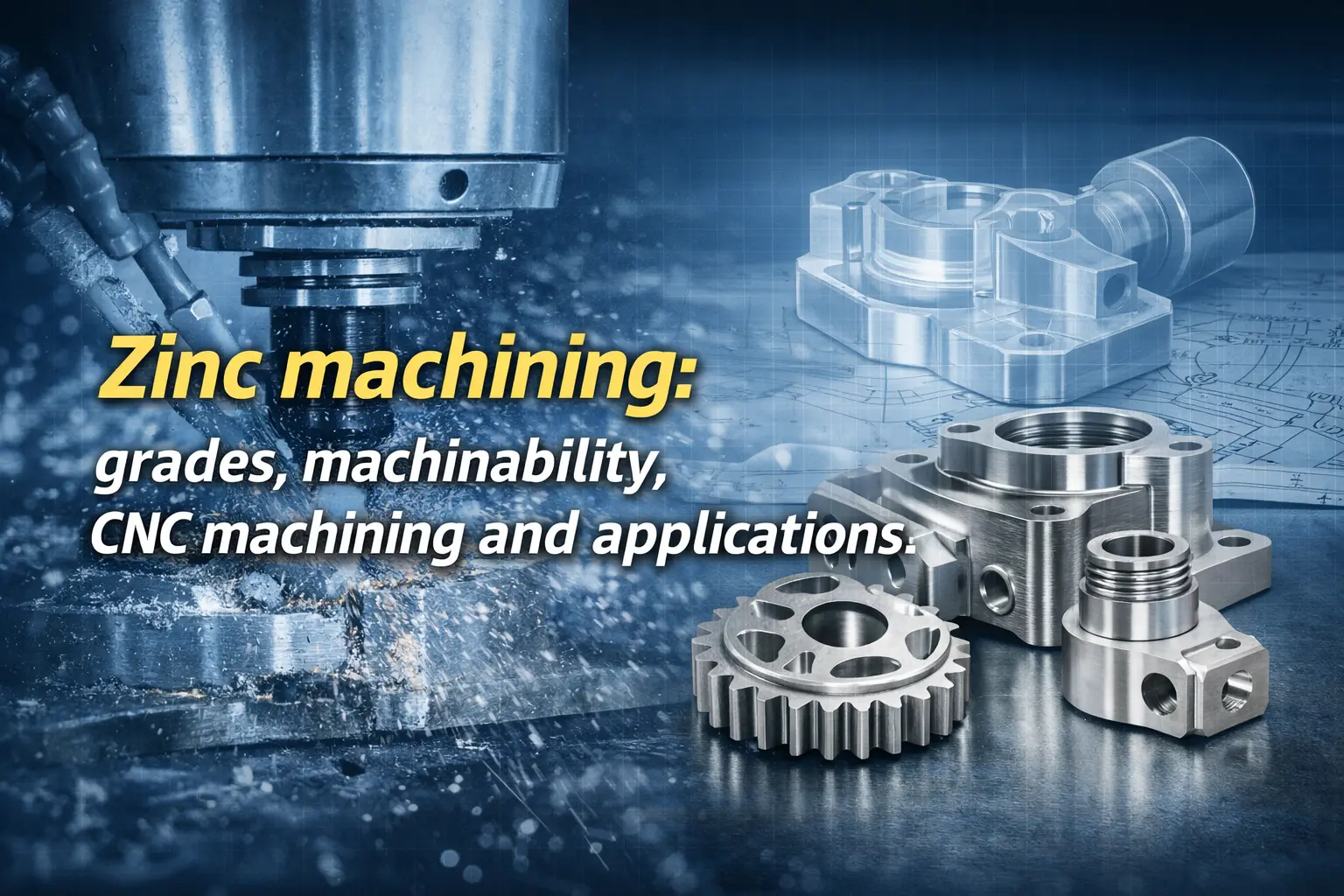
In the world of precision manufacturing, zinc is often overlooked as a machining material. Compared with aluminum, stainless steel, or brass, zinc rarely becomes the first choice when engineers think about CNC machining. However, this perception does not reflect zinc’s true capabilities. Under the right circumstances, zinc and zinc alloys can deliver exceptional machinability, excellent surface finish, fast production cycles, and competitive costs.
Zinc machining is particularly valuable in rapid prototyping, low-volume production, and applications requiring complex geometries or tight tolerances without the high tooling costs associated with die casting. When properly understood and applied, zinc becomes a highly efficient and practical material for precision components.
This article is the first part of a two-part series on Zinc Machining: Grades, Machinability, Operations & Applications.
Part 1 focuses on zinc material fundamentals, common grades, and machinability, providing a solid foundation for understanding how and why zinc performs so well in CNC machining.
Zinc machining refers to the use of subtractive manufacturing processes—such as CNC milling, turning, drilling, and tapping—to produce components from zinc or zinc alloys. Unlike zinc die casting, which requires molds and is best suited for high-volume production, CNC machining allows zinc parts to be produced quickly and flexibly without tooling investment.
While zinc is most commonly associated with die casting, CNC machining plays a critical role in situations such as:
Because of zinc’s low cutting resistance and excellent chip formation, machining operations are typically faster and more tool-friendly compared to many other metals.
Understanding zinc’s physical and mechanical properties is essential to appreciating its machinability and application potential.
Zinc has a density of approximately 7.1 g/cm³, making it:
This density gives zinc parts a solid, substantial feel while still allowing for compact designs. In applications where weight is not the primary constraint, zinc offers excellent stability and vibration damping.
Zinc has a relatively low melting point of around 419°C (786°F). While this property makes zinc ideal for die casting, it also affects CNC machining:
However, care must be taken to avoid excessive heat buildup during aggressive machining, as zinc can soften more quickly than high-melting-point metals.
Pure zinc is relatively soft, but zinc alloys significantly improve mechanical performance. Typical characteristics include:
These properties allow zinc to be machined with very fine details, thin walls, and intricate geometries without cracking or chipping.
Zinc offers natural corrosion resistance, especially in indoor and mild outdoor environments. It forms a protective oxide layer that slows further oxidation. This makes zinc suitable for:
In harsher environments, additional surface treatments such as plating or coating can further enhance durability.
Zinc is rarely machined in its pure form. Instead, zinc alloys—particularly those developed for casting—are commonly used for CNC machining due to their improved strength and stability.
Pure zinc is rarely selected for CNC machining because it is very soft and lacks structural strength. However, it may still be used in specialized applications such as:
For most industrial applications, zinc alloys are preferred.
The most widely used zinc alloys in machining are Zamak alloys, which contain aluminum as the primary alloying element, along with small amounts of magnesium and copper.
Common Zamak grades include:
Zamak 3 is often selected for precision components requiring tight tolerances and consistent quality.
Zamak 5 is suitable for parts that require higher mechanical strength while still maintaining good machinability.
This grade is less common but may be used when strength is a primary requirement.
ZA alloys (such as ZA-8, ZA-12, and ZA-27) contain significantly more aluminum than Zamak alloys. These materials offer:
However, they are less commonly used in CNC machining due to higher cutting forces and slightly reduced machinability compared to Zamak alloys.
One of zinc’s most significant advantages is its exceptional machinability. In many cases, zinc alloys outperform aluminum and brass in terms of ease of cutting and surface finish.
Zinc alloys require very low cutting forces, which leads to:
This makes zinc ideal for high-speed machining and production environments focused on efficiency.
Zinc produces short, well-controlled chips that do not easily entangle around cutting tools. This contributes to:
In many cases, zinc parts can achieve a smooth, near-polished appearance without secondary finishing operations.
Zinc alloys exhibit excellent dimensional stability during machining. They do not work-harden or distort easily, allowing manufacturers to achieve:
This makes zinc a strong candidate for precision mechanical components and assemblies.
When compared to common CNC materials:
These advantages can significantly reduce machining costs for suitable applications.
Despite its advantages, zinc is not suitable for every application. Key limitations include:
Understanding these limitations is essential for proper material selection.
Zinc machining is particularly well-suited for:
When chosen appropriately, zinc can provide a powerful balance of performance, speed, and cost efficiency.
Zinc and zinc alloys are compatible with nearly all standard CNC machining operations. Thanks to their low cutting resistance and excellent chip control, zinc parts can often be produced faster and with less tool wear than many alternative metals.
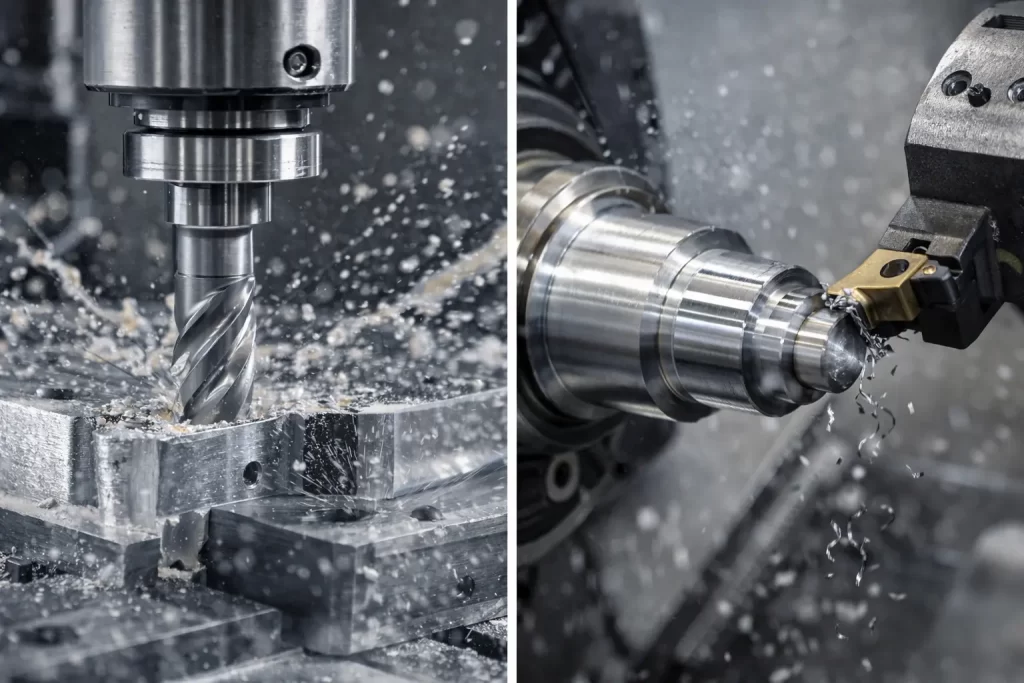
CNC milling is widely used for zinc parts with complex geometries, pockets, contours, and multi-axis features.
Key advantages of milling zinc include:
Zinc alloys allow aggressive cutting parameters, which significantly reduces cycle time. Even thin walls and fine features can be machined reliably without distortion.
CNC turning is commonly applied to zinc components with rotational symmetry, such as bushings, sleeves, connectors, and cylindrical housings.
Benefits of turning zinc include:
Zinc’s machinability makes it ideal for high-speed turning operations, especially in short-run or prototype production.
Zinc alloys perform exceptionally well in drilling and tapping operations.
Typical characteristics include:
Both metric and imperial threads can be produced with high consistency, making zinc suitable for threaded inserts, fasteners, and assembly components.
For complex parts requiring 4-axis or 5-axis CNC machining, zinc offers additional advantages:
This makes zinc well-suited for intricate designs that would be challenging or costly to manufacture from harder materials.
Zinc components often require surface finishing for aesthetic, functional, or environmental reasons. Fortunately, zinc supports a wide range of finishing processes.
Thanks to zinc’s natural machinability, many parts can be used directly in an as-machined condition. This finish typically offers:
For internal components or non-cosmetic applications, this is often sufficient.
Zinc alloys can be polished to achieve enhanced surface smoothness or visual appeal. Mechanical finishing methods include:
These processes are commonly used for decorative parts, consumer-facing components, and enclosures.
To improve corrosion resistance, wear performance, or aesthetics, zinc parts can be plated or coated using processes such as:
Plating is especially common when zinc parts are used in harsher environments or require a specific visual appearance.
Unlike aluminum, zinc cannot be anodized. This is a common misunderstanding among designers. When anodized-like appearance or performance is required, alternative surface treatments must be selected.
Although zinc machining is less common than aluminum or steel machining, it excels in several application areas where its unique properties offer clear advantages.
Zinc is an excellent material for rapid prototyping due to:
In many cases, CNC-machined zinc prototypes closely match the mechanical and aesthetic properties of final die-cast zinc parts, making zinc ideal for pre-production validation.
Zinc is widely used in electronic and electrical applications, including:
Its natural EMI shielding properties and dimensional stability make it particularly suitable for precision electronic assemblies.
In automotive and transportation industries, zinc machining is used for:
Zinc’s vibration-damping characteristics and ease of machining contribute to improved part performance and manufacturing efficiency.
Zinc alloys are also found in:
ZA alloys, in particular, are sometimes selected for bearing and wear applications due to their enhanced strength and hardness.
Thanks to its excellent surface quality and finishing flexibility, zinc is commonly used for:
Zinc allows manufacturers to achieve premium appearance at a competitive cost.
Designing parts specifically for zinc machining can significantly improve manufacturability, performance, and cost efficiency.
Zinc allows relatively thin walls compared to harder metals. However, best practices include:
Proper design reduces the risk of deformation and improves machining consistency.
Zinc machining supports tight tolerances, but unnecessarily strict tolerances increase cost. Designers should:
This approach balances precision with manufacturing efficiency.
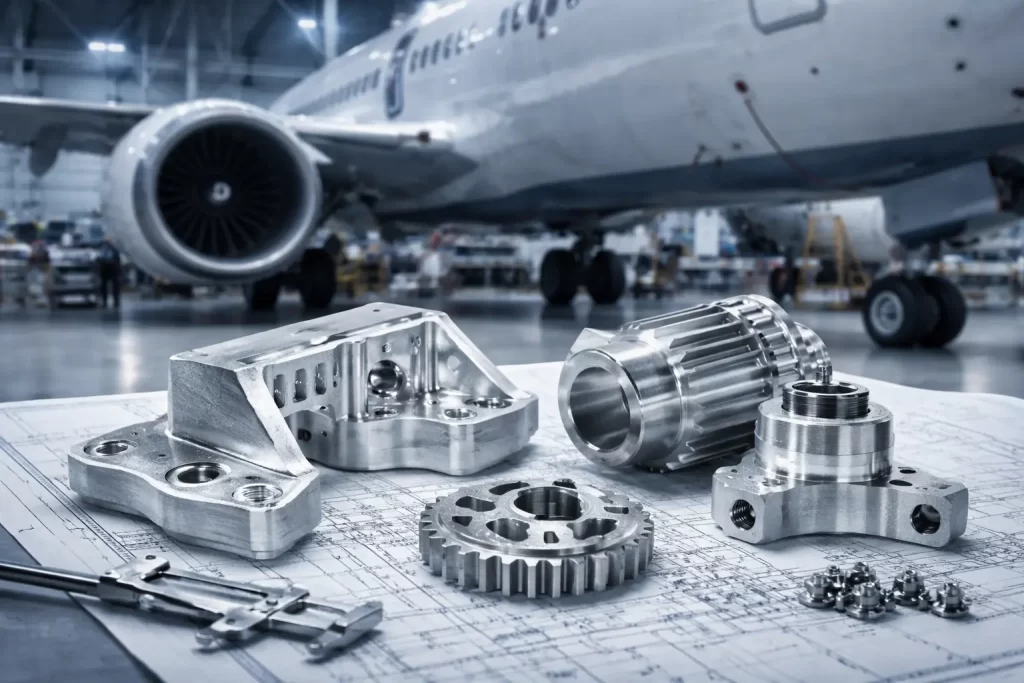
Zinc is not suitable for high-temperature or high-load environments. Designers should avoid using zinc for:
Understanding these limitations ensures long-term part reliability.
A common question is whether zinc machining or zinc die casting is the better choice. The answer depends on production volume, design flexibility, and cost considerations.
Zinc machining is ideal for:
Zinc die casting is ideal for:
In many projects, CNC machining is used first, followed by die casting once the design is finalized.
Zinc machining offers a powerful combination of speed, precision, and cost efficiency when applied correctly. Although it may not replace aluminum or steel in every application, zinc excels in rapid prototyping, low-volume production, and precision components requiring excellent surface quality.
By understanding zinc’s machining behavior, selecting the appropriate alloy, and applying sound design practices, manufacturers can unlock significant advantages that are often overlooked in traditional material selection.
