Address
304 North Cardinal St.
Dorchester Center, MA 02124
Work Hours
Monday to Friday: 7AM - 7PM
Weekend: 10AM - 5PM

Address
304 North Cardinal St.
Dorchester Center, MA 02124
Work Hours
Monday to Friday: 7AM - 7PM
Weekend: 10AM - 5PM
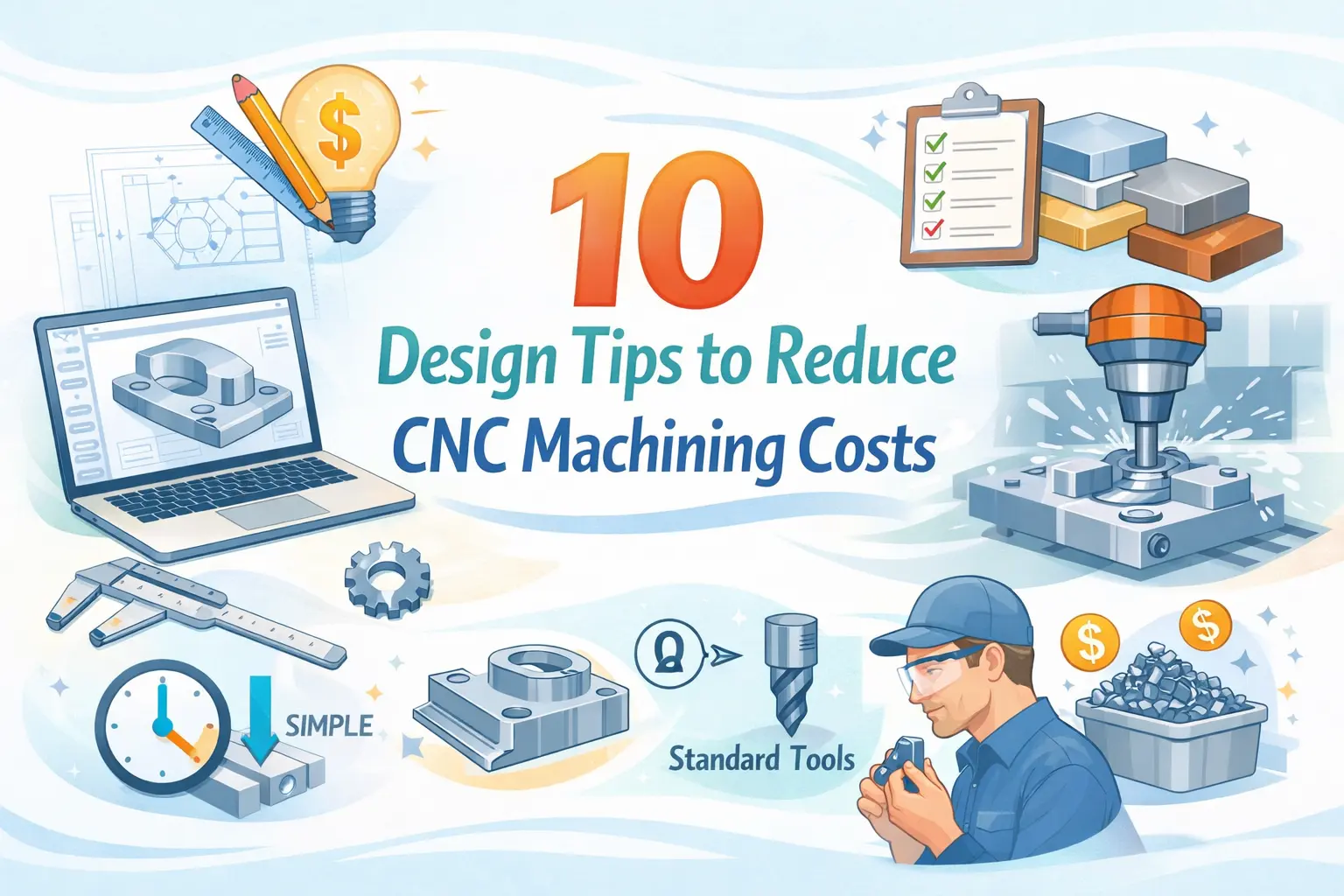
In the world of CNC machining, design decisions made during the early stages of product development can have a profound impact on the overall manufacturing cost. Optimizing a design for cost-effectiveness does not mean compromising on quality or performance; rather, it involves making informed choices that streamline production, reduce waste, and minimize machining time. Cost reduction in CNC machining is particularly important for companies producing prototypes, low-volume batches, or even full-scale production parts, as even small inefficiencies can quickly escalate into significant expenses.
Design optimization for CNC machining typically involves analyzing part geometry, material selection, tolerances, and machining strategies. Each element contributes to the overall cost structure. Complex geometries, hard-to-machine materials, and extremely tight tolerances increase machine time, tooling wear, and setup complexity, all of which directly translate into higher production costs. Conversely, smart design practices can reduce the number of setups, limit tool changes, and enhance machining efficiency.
Early collaboration with your CNC supplier is also crucial. Suppliers often have valuable insights regarding manufacturability, tool accessibility, and cost-saving opportunities that may not be apparent during the design phase. Implementing these insights can prevent costly revisions and ensure the product is optimized for both performance and production efficiency. At WeYoung CNC, we encourage clients to consult with our team during the design phase. By doing so, you can leverage our expertise in rapid prototyping, low-volume production, and high-precision CNC machining to create parts that are both cost-effective and high-quality. You can reach out to us anytime via our contact page to discuss your design requirements.
Ultimately, designing for CNC cost reduction is about balancing functionality with manufacturability. It requires careful consideration of every feature, dimension, and material choice. By applying thoughtful design strategies from the start, you can significantly reduce production costs while maintaining the integrity and performance of your parts. The following sections outline ten practical tips to help designers and engineers optimize their parts for CNC machining, starting with simplifying part geometry.
One of the most effective ways to reduce CNC machining costs is to simplify part geometry. Complex features such as deep pockets, undercuts, blind holes, and intricate contours require specialized tooling and additional machining operations. Each added operation increases cycle time, tooling costs, and the potential for errors or defects. By designing parts with simpler shapes, designers can reduce the number of machining passes, minimize the need for custom tooling, and streamline the production process. This not only lowers costs but also improves overall manufacturing reliability.
When designing a part, consider whether every feature is essential to its functionality. Can a deep pocket be replaced with a shallower one? Can sharp internal corners be replaced with fillets that are easier to machine? Small adjustments in geometry often have a disproportionately large impact on cost savings. Simplified features also reduce the likelihood of workpiece deformation or tool deflection, which can occur when machining thin walls or complex shapes.
Another important aspect of simplifying geometry is minimizing the number of setups required to machine a part. Each setup change consumes time and labor while increasing the chance of misalignment or inaccuracies. Designing parts with accessible surfaces and avoiding features that require multiple reorientations can dramatically cut production time. In many cases, redesigning a component to allow for machining from a single orientation can save hours of setup time per batch, especially for low- to medium-volume production.
At WeYoung CNC, we advise clients to focus on geometric simplicity during the design phase. Our engineers can provide feedback on which features may increase machining complexity and suggest modifications to reduce setups and tool changes. This collaborative approach ensures that your parts are optimized for cost-efficient manufacturing. For personalized design consultation, you can easily contact our team via this link.
Simplifying geometry is not just about cost reduction—it also improves quality, reduces lead times, and enhances repeatability. By carefully evaluating every feature, you can design parts that are easier to produce, maintain high tolerances, and lower overall CNC machining expenses.
Material choice is a key factor in CNC machining costs. Some materials, such as exotic alloys or hard metals, are inherently more expensive and challenging to machine. They require slower cutting speeds, specialized tooling, and increased machine maintenance, all of which drive up costs. On the other hand, commonly available materials like aluminum, mild steel, and certain plastics are easier to machine, widely stocked, and more affordable. Selecting cost-effective materials without compromising part performance can lead to substantial savings, particularly in high-volume production or rapid prototyping.
When selecting a material, consider not only its price per kilogram but also its machinability, availability, and downstream processing requirements. For example, stainless steel is corrosion-resistant but harder to machine than aluminum, resulting in longer cycle times. Similarly, high-performance polymers may offer excellent thermal or chemical resistance but require slower cutting speeds and specialized tools. Balancing these factors during material selection is critical for minimizing machining costs.
Material availability also affects lead time and production cost. Using materials that are readily available in standard stock sizes helps reduce waste and ensures faster procurement. Custom or rare materials may require longer delivery times and additional preparation, increasing overall project costs. By standardizing on widely available materials, designers can simplify inventory management, reduce machine downtime, and avoid unnecessary cost escalations.
At WeYoung CNC, we work closely with clients to provide guidance on material selection for both prototypes and production parts. Our team can recommend alternatives that maintain required mechanical properties while improving machinability and reducing costs. Designers are encouraged to reach out via our contact page for advice on choosing the optimal material for their CNC projects.
Optimizing material selection is not only about price—it’s about manufacturability, availability, and efficiency. A carefully chosen material can shorten lead times, improve machining speed, and reduce the likelihood of defects, all of which contribute to a lower overall cost for your CNC parts.
Using standard hole diameters, thread sizes, and other common dimensions can significantly reduce CNC machining costs. Custom or non-standard features require special tooling or inserts, which increase both setup time and tooling expenses. By adhering to industry-standard sizes, designers can leverage existing tools, simplify production processes, and minimize delays. Standardization also facilitates easier assembly and replacement of components, further enhancing cost efficiency.
Designers should consider the most commonly used drill bits, taps, and end mills in their parts. Choosing standard diameters not only reduces tool inventory costs but also allows for faster machining, as standard tools are optimized for cutting efficiency. Moreover, parts with standardized features are easier to inspect and maintain, reducing downstream quality control costs.
Another practical way to reduce machining costs is to match part dimensions with standard raw material stock sizes. Cutting a part from stock material that closely matches the final dimensions reduces the amount of material to be removed, which in turn lowers machine time and waste. For example, designing a component to fit common sheet metal or round bar sizes can prevent excessive machining and material scrap, directly saving money.
At WeYoung CNC, we advise clients to plan parts around standard sizes whenever possible. Our team can review your design and suggest adjustments to match available stock, optimizing efficiency and reducing unnecessary material removal. For consultation on aligning your designs with standard tooling and material sizes, you can contact us through this page.
Using standard sizes is a simple but effective strategy. It reduces tooling requirements, simplifies machining, and lowers both lead times and production costs without compromising the functionality or quality of the part.
Tolerances are essential for ensuring parts fit and function correctly, but specifying unnecessarily tight tolerances can dramatically increase CNC machining costs. High-precision machining requires slower feed rates, more frequent inspections, and sometimes multiple passes, all of which consume additional time and labor. By applying tight tolerances only to critical dimensions, designers can optimize machining efficiency and reduce costs without affecting part performance.
Before finalizing tolerances, evaluate which dimensions truly impact assembly, functionality, or safety. Non-critical dimensions can often be relaxed, allowing faster cutting speeds and reduced tool wear. This approach also lowers the risk of parts being rejected due to minor deviations in non-critical areas, minimizing scrap and rework costs.
When designing mating parts, selecting standard fits such as H7/g6 or clearance fits where appropriate can further reduce machining difficulty. Extremely tight interference fits may require special processes like reaming or lapping, which significantly increase production time and cost. Allowing for reasonable fits while maintaining proper functionality ensures parts can be machined efficiently while meeting design requirements.
WeYoung CNC emphasizes the importance of tolerance optimization in cost-effective manufacturing. Our engineers can provide guidance on which dimensions require strict tolerances and which can be relaxed to save machining time. Engaging with our team early in the design phase through our contact page ensures that your parts are both manufacturable and cost-efficient.
By minimizing tight tolerances, you streamline CNC operations, reduce tool wear, and decrease the probability of scrap, all of which contribute to significant cost savings over the lifecycle of a project.
Designing parts with thin walls can create significant challenges in CNC machining. Thin walls are prone to vibration, deflection, and even breakage during cutting, which often results in scrapped parts or additional support fixtures. To reduce machining costs and ensure part integrity, designers should maintain adequate wall thickness based on the material and machining process. Adequate thickness not only prevents deformation but also allows standard tools to achieve desired tolerances without the need for slower, specialized cutting strategies.
When planning wall thickness, it is important to consider the mechanical requirements of the part while keeping manufacturability in mind. For example, a 1 mm thick wall in aluminum may be feasible for certain features, but in harder metals like stainless steel, walls need to be thicker to prevent vibration and chatter. Maintaining proper thickness reduces the likelihood of tool breakage, avoids additional support mechanisms, and ensures consistent part quality, all of which contribute to lower production costs.
Deep pockets are another feature that can significantly increase CNC machining costs. Machining deep pockets requires longer tool engagement, which slows feed rates, increases tool wear, and may necessitate multiple setups or specialized long-reach tooling. By designing shallower pockets or reducing pocket depth, machining becomes faster, more predictable, and less costly.
Designers should also consider pocket geometry, such as corner radii and angles. Larger radii at corners reduce tool deflection and allow for faster, more efficient tool paths. Avoiding steep vertical walls and extremely narrow pockets further improves accessibility and reduces machining time.
At WeYoung CNC, we work with clients to evaluate wall thickness and pocket designs early in the development stage. Our engineers provide feedback on features that may drive up machining costs, suggesting design adjustments that maintain part function while optimizing manufacturability. For guidance on designing parts with balanced wall thickness and efficient pocket geometry, you can contact us through our contact page.
By avoiding deep pockets and excessively thin walls, designers can reduce machine time, minimize scrap, and prevent costly rework. Proper planning ensures efficient production and higher-quality parts, resulting in lower overall CNC machining expenses.
Efficient CNC machining relies on the ability of tools to access all required surfaces without excessive repositioning or custom tooling. Parts that are difficult to reach or require long-reach tools increase cycle time, tool deflection, and the risk of errors. By designing with standard tool access in mind, engineers can significantly reduce machining time and associated costs.
When designing parts, ensure that all features are accessible from standard tool angles and orientations. Avoid deep internal cavities or features hidden behind obstructions that require specialized tools or multiple setups. Consider whether each surface can be machined using commonly available end mills, drills, or taps without resorting to custom tooling. This approach not only speeds up production but also reduces tooling costs and improves overall quality.
In addition to accessibility, designing parts for efficient tool paths is critical. Tool paths that require minimal repositioning, smooth transitions, and continuous cutting operations reduce machining time and wear on equipment. Designers should work with their CNC supplier to understand how the part geometry will be translated into tool paths and consider adjustments that minimize idle movement or complex tool maneuvers.
At WeYoung CNC, we encourage early collaboration to ensure parts are designed with tool access in mind. Our team can review your CAD files, provide recommendations for optimizing tool reach, and suggest minor design changes that can drastically improve machining efficiency. Engaging with us during the design phase through our contact page allows you to take advantage of our experience in rapid prototyping and high-precision machining, resulting in faster production and lower costs.
By designing for standard tool access, you ensure that parts are easier to machine, reduce the need for custom tooling, and minimize production delays. This approach directly contributes to lower CNC machining costs while maintaining high-quality output and consistency across batches.
Secondary operations such as deburring, polishing, anodizing, or heat treatment can significantly increase CNC machining costs. Each additional process requires extra machine time, labor, handling, and sometimes specialized equipment. To minimize these costs, designers should aim to integrate features and surface finishes into the primary machining process wherever possible. For example, rounding edges or fillets during initial milling can reduce the need for post-processing, and specifying surface finishes that match standard tooling capabilities can eliminate extra steps.
Choosing features that are easy to machine and finishing surfaces with standard cutter geometries also reduces reliance on secondary operations. This approach not only saves costs but also shortens lead times and lowers the risk of errors introduced during handling between operations. It is particularly important for high-volume production or rapid prototyping projects, where multiple secondary processes can accumulate significant expenses.
Where possible, incorporate design features that can be created during the initial CNC process instead of requiring post-processing. For instance, threaded holes, chamfers, and countersinks can often be machined directly into the part, avoiding additional steps like tapping by hand or using separate finishing tools. Designing with manufacturability in mind allows CNC operations to produce more finished parts directly from the machine, reducing both labor and tooling costs.
At WeYoung CNC, we advise clients to evaluate which features can be completed during the main machining process. Our engineers provide guidance on part designs that minimize secondary operations while maintaining functional and aesthetic requirements. For personalized advice, you can reach out to us via our contact page.
Minimizing secondary operations ensures faster production, lower labor costs, and fewer handling errors, all of which contribute directly to reducing overall CNC machining expenses.
Grouping similar parts together for machining is a highly effective strategy to reduce costs. Batch processing allows the CNC machine to run longer with fewer tool changes, setup adjustments, and machine idle times. By optimizing production runs, manufacturers can take full advantage of machine efficiency and reduce per-part costs, particularly for low- to medium-volume orders.
When planning batches, consider part geometry, material, and tooling requirements. Parts that use the same material and similar tooling can be produced consecutively, reducing changeover time and minimizing downtime. This approach also enables more efficient scheduling of machine time, tooling, and labor.
Each setup change in CNC machining requires recalibration, repositioning, and sometimes additional fixturing. Frequent setup changes increase both labor costs and the risk of inaccuracies or defects. By batching similar parts, these setup changes are minimized, and production runs become more streamlined. This is particularly beneficial when machining complex parts or parts with multiple features, where each setup could otherwise consume significant time.
WeYoung CNC assists clients in planning batch production by analyzing designs and suggesting efficient grouping strategies. Collaborating with our team during the planning phase ensures that batch sizes are optimized for cost efficiency without compromising part quality. You can discuss your project with us anytime via our contact page.
Batching similar parts improves machining efficiency, reduces setup time, and lowers per-part costs, making it a key strategy for cost-effective CNC manufacturing.
Early communication with your CNC supplier can prevent costly mistakes and optimize production efficiency. Suppliers have valuable experience in machining materials, tool selection, and process planning. By discussing your design during the concept phase, you can receive recommendations that enhance manufacturability, reduce tool wear, and shorten machining cycles. Early feedback helps identify features that may be difficult or expensive to produce, allowing designers to make adjustments before production begins.
Experienced CNC suppliers like WeYoung CNC can provide practical suggestions to reduce costs without compromising functionality. These may include changing materials, adjusting tolerances, redesigning certain features for easier machining, or suggesting alternative processes that achieve the same result more efficiently. Engaging with suppliers early ensures that your design aligns with practical manufacturing considerations, helping to control costs and minimize delays.
At WeYoung CNC, we encourage clients to reach out during the design phase to leverage our expertise in rapid prototyping, low-volume production, and high-precision machining. You can contact our team through our contact page for personalized guidance and design review.
Early collaboration with your supplier ensures that parts are manufacturable, cost-effective, and optimized for production efficiency, ultimately saving time and reducing overall CNC machining costs.
Modern CAD and CAM software tools are essential for designing CNC parts efficiently. Using simulation and toolpath planning software allows designers to predict machining times, visualize tool access, and identify potential collisions or issues before production. Predictive simulation helps optimize cutting strategies, reducing unnecessary machine time and tool wear. This proactive approach prevents costly mistakes and ensures that production runs smoothly.
Simulation tools also allow for virtual testing of part designs, enabling engineers to make adjustments before committing to physical prototypes. Designers can evaluate factors like material removal rates, cutting forces, and tool deflection, and adjust geometry or tooling to improve manufacturability. This reduces scrap rates, prevents production delays, and ultimately lowers the total cost of CNC machining.
At WeYoung CNC, we integrate advanced CAD and CAM software into our workflow to provide clients with optimized toolpaths and virtual simulations. By reviewing designs early and testing them virtually, we help clients reduce machining time and cost. You can reach out to our team for support and design consultation through our contact page.
Leveraging simulation and CAD tools ensures accurate, efficient, and cost-effective CNC machining, minimizing trial-and-error processes and improving overall production quality.
Reducing CNC machining costs begins at the design stage. By following the ten strategies outlined in this article—simplifying geometry, optimizing material selection, using standard sizes, minimizing tight tolerances, avoiding deep pockets and thin walls, designing for standard tool access, minimizing secondary operations, batching similar parts, communicating early with suppliers, and leveraging simulation tools—designers can significantly lower production expenses without sacrificing quality or functionality.
Cost-effective CNC machining is not about cutting corners; it’s about making informed decisions that enhance manufacturability, improve efficiency, and reduce waste. Engaging with experienced suppliers like WeYoung CNC early in the design process allows you to receive actionable feedback, optimize part features, and streamline production workflows. Whether you are developing prototypes, low-volume production parts, or full-scale manufacturing, applying these strategies ensures parts are produced efficiently and economically.
For personalized advice on reducing CNC machining costs and optimizing your designs, you can reach out to our team at WeYoung CNC via our contact page. Implementing these cost-saving design strategies will help you achieve faster production, lower expenses, and higher-quality CNC parts.
